For decades, the “marketing funnel” has been the North Star of demand generation. Its premise was simple and linear: a prospect experiences a pain point, conducts a search, visits a website, consumes content, and eventually identifies themselves as a lead. Marketing teams built their strategies around visibility—ensuring their brand appeared at the top of search results and served ads to users who were actively hunting for solutions.
However, the rapid ascent of Artificial Intelligence (AI) and Generative AI (GenAI) search interfaces has fundamentally fractured this model. Buyers are no longer waiting to arrive on a vendor’s website to begin their research. Instead, they are turning to AI models to synthesize categories, compare features, and create shortlists of vendors before they ever interact with a company’s domain.
This shift has created an "upstream" blind spot in the traditional funnel. If a brand is not present in the AI-generated answer, it is effectively invisible during the most critical stage of the buying cycle: the consideration phase.
The Paradigm Shift: From Search to Synthesis
The traditional demand generation model assumed that the journey began when a prospect arrived at a measurable touchpoint. Today, that journey begins within the "black box" of AI interfaces like ChatGPT, Claude, Perplexity, or Gemini. When a buyer asks, "What are the best CRM platforms for mid-market manufacturing?" the AI provides a curated list of recommendations.
This is not merely a change in medium; it is a change in power dynamics. In the past, a brand could influence a prospect through SEO, long-form blog content, and PPC. Now, the AI acts as the primary curator, deciding which brands earn a mention and, by extension, a spot on the buyer’s shortlist.

If your brand is absent from these AI-generated conversations, you aren’t just losing a search click; you are being excluded from the buyer’s mental map of the category. This has forced demand generation teams to re-evaluate their entire strategy. They are no longer just optimizing for traffic; they are optimizing for relevance in a synthetic environment.
Chronology of the AI Disruption
To understand the urgency of this transition, one must look at how the buyer’s journey has evolved over the last three years:
- Pre-2022 (The Search Era): The primary goal was high-volume organic search visibility and PPC dominance. Success was measured by click-through rates (CTR) and landing page visits.
- 2023 (The Generative Inflection): The mainstream adoption of LLMs changed how professionals conduct B2B research. Search volume began to stagnate as "answer engine" usage surged.
- 2024 (The Visibility Gap): Marketers began to realize that their top-ranking websites were not necessarily appearing in AI responses. A disconnect formed between traditional SEO performance and brand presence in AI summaries.
- 2025 and Beyond (The AEO Era): The focus has shifted toward Answer Engine Optimization (AEO). The objective is now to be the cited authority within AI interfaces, bridging the gap between automated research and direct lead capture.
Bridging the Gap: Data-Driven Strategies for AEO
The transition to an AI-first strategy requires a shift from "volume-based" metrics to "context-based" metrics. As HubSpot’s latest data indicates, the stakes are high: organizations that successfully adopt AEO methodologies are seeing a 2.7x increase in Marketing Qualified Leads (MQLs).
This success is driven by a systematic approach to identifying where, how, and why a brand appears—or fails to appear—in the AI-generated ecosystem.
Mapping the AI Landscape
Demand generation teams must first audit their "AI footprint." This involves answering three critical questions:

- Which prompts trigger my category? Identifying the specific, high-intent questions potential customers are asking.
- Who is currently being recommended? Analyzing the competitive landscape within the AI response.
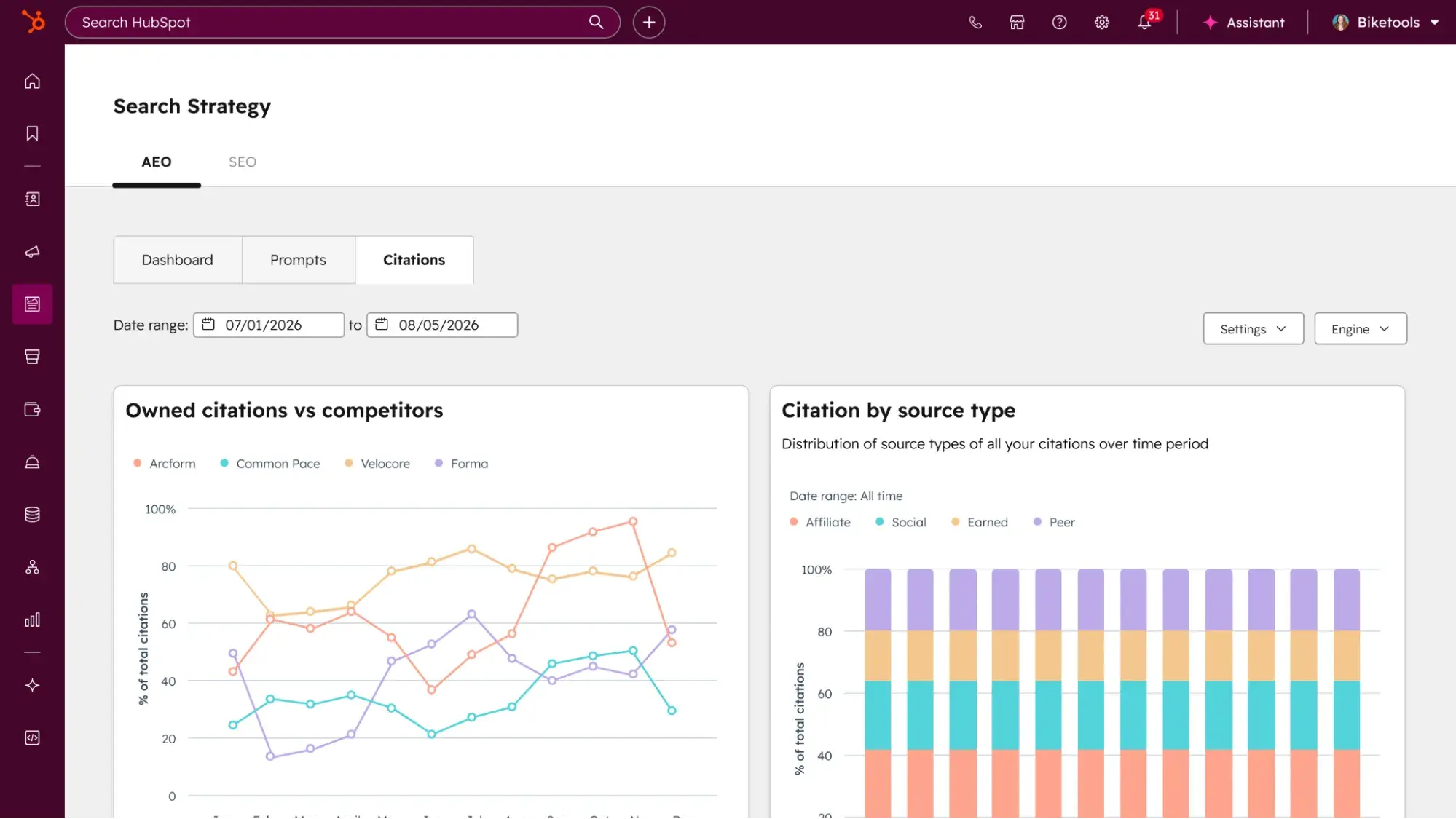
- What is the citation profile? Understanding what kind of content—whitepapers, case studies, or technical documentation—the AI models favor when citing your brand.
Without this mapping, marketers are flying blind. They may be ranking #1 for a keyword on Google while being completely ignored by the AI tools their target audience is actually using to make decisions.
The Content Imperative: Moving Beyond "Top-of-Funnel"
One of the most dangerous traps for modern demand generation teams is continuing to feed AI-influenced buyers with basic "What is…" content.
When a buyer reaches your site via an AI-generated recommendation, they are not a "top-of-funnel" lead in the traditional sense. They have already received a synthesized overview of the category. They have been told that your brand is a viable option. Therefore, they do not need an introductory blog post; they need evidence.
They are looking for:
- Comparative Analysis: How does your solution compare to the other vendors they saw in the AI response?
- Use-Case Specificity: Does your platform support the specific nuances of their industry?
- Evidence and Validation: Where is the proof? Data-backed claims, ROI calculators, and verified user testimonials become the primary currency.
Treating these high-context visitors like generic inbound traffic creates friction. If you force an informed buyer to sit through a basic demo or read an elementary ebook, you are effectively pushing them back to the AI for a "second opinion."

Implications for Demand Generation Teams
The structural implications of this shift are profound. Demand generation is no longer a siloed activity of "getting people to the site." It is becoming an integrated discipline of "influencing the ecosystem."
1. The Death of Last-Click Attribution
Measurement is the greatest hurdle. AI discovery rarely happens in isolation. A buyer might ask an AI for a recommendation, visit the site, leave, engage with a LinkedIn ad, and then return to the site to request a demo.
Sophisticated teams are moving toward Multi-Touch Attribution (MTA) models that specifically account for "AI-assisted discovery." By using tools like HubSpot AEO, which links prompt tracking with CRM data, teams can finally see which AI queries correlate with actual revenue-generating activity.
2. The Rise of the Content Agent
To scale this, the manual creation of content is insufficient. Marketing teams are increasingly relying on AI-powered content agents. These tools don’t just "write" content; they analyze the gaps identified by the AEO tools, synthesize the company’s proprietary data, and produce high-value, citation-ready content that answers specific buyer questions.
3. Aligning with Revenue Operations
The ultimate litmus test for AEO is its impact on the bottom line. Marketing leaders must stop reporting on "visibility scores" and start reporting on "AI-attributed pipeline." When the CEO asks, "How is our AI strategy helping us win?" the answer cannot be "we have more mentions." The answer must be, "We have captured X% of the high-intent traffic coming from the top five AI search prompts, resulting in Y number of MQLs and Z amount of closed-won revenue."

Conclusion: Extending the Funnel Upstream
The rise of AI does not mark the end of the traditional funnel, but it does mark the end of its status as the starting point of the buyer’s journey. The funnel has been extended upstream.
For the modern demand generation team, the mandate is clear: you must be where the buyer is forming their opinion. This requires a proactive stance on Answer Engine Optimization. By mapping the AI landscape, creating content that serves the informed buyer, and rigorously measuring the impact on the sales pipeline, organizations can turn the uncertainty of AI discovery into a predictable engine for growth.
As the lines between search, content, and AI synthesis continue to blur, those who embrace the "AI-first" mindset will find themselves leading the conversation, while those who remain tethered to outdated models will find themselves excluded from the shortlist before they even know the race has begun. The future of demand generation isn’t about fighting the AI; it’s about becoming the answer the AI chooses to give.