In the fast-paced world of business growth, the Sales and Marketing Executive serves as the bridge between a company’s vision and its revenue. Yet, despite the critical nature of this role, many organizations struggle to articulate exactly what they need, resulting in a mismatch between candidate expectations and employer requirements. A well-crafted job description (JD) is not merely a list of bullet points; it is a strategic tool designed to attract the right talent, filter out unqualified applicants, and set the stage for long-term success.
The Strategic Importance of Role Definition
A sales and marketing role is inherently dynamic. Depending on the size, industry, and maturity of an organization, the position can lean heavily toward aggressive lead conversion or pivot toward long-term brand awareness and market research. Without a precise job description, companies often attract "generalists" who lack the specific skill sets required to hit immediate targets.
By clearly defining the role, companies accomplish three vital objectives:
- Candidate Alignment: Potential hires can self-assess their fit, reducing the volume of irrelevant applications.
- Performance Clarity: It establishes a "source of truth" regarding what constitutes success, making performance reviews more objective.
- Efficiency: It streamlines the interviewing process, as both the interviewer and the candidate start the conversation with the same baseline knowledge.
Anatomy of an Effective Job Description: A Step-by-Step Guide
Drafting a professional JD requires a balance between brevity and substance. To ensure your posting resonates with top-tier talent, it must be structured logically.

1. Defining the Role’s Purpose
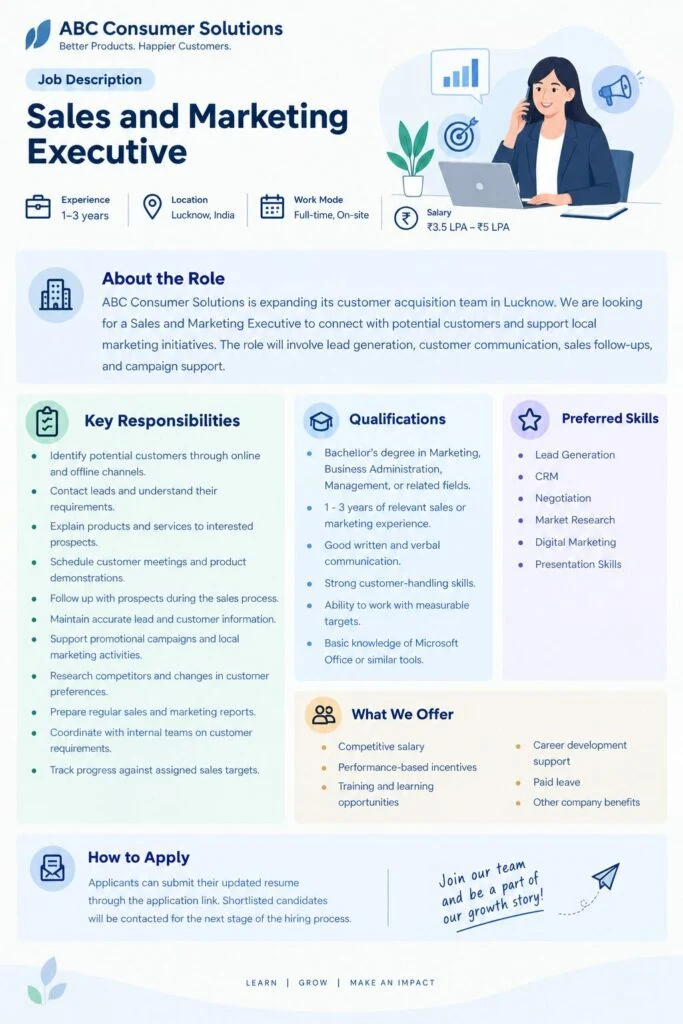
Every JD should begin by answering the "Why?" of the position. Is this role designed to penetrate a new market segment, or is it focused on maintaining existing client relationships? For instance, stating, "We are seeking a Sales and Marketing Executive to spearhead lead generation efforts and optimize our digital campaign funnel," provides immediate context that a generic title cannot.
2. The Power of a Concise Summary
Avoid the trap of writing a vague overview. Instead of saying, "Responsible for all sales activities," provide a narrative summary that explains:
- The Team Structure: Who will the candidate report to?
- The Target Audience: Are they dealing with B2B enterprise clients or B2C retail consumers?
- The Core Mandate: What is the one thing this person must achieve to be considered a success?
3. Outlining Key Responsibilities
Responsibilities should be prioritized by frequency and impact. When drafting this section, focus on the daily "rhythm" of the job.
- Lead Generation: How are they expected to build a pipeline?
- Customer Engagement: What is the preferred medium (phone, email, face-to-face)?
- Market Intelligence: What role does data collection play in their daily workflow?
4. Differentiating Between Required and Preferred Qualifications
One of the most common mistakes in recruitment is creating a "wish list" that discourages qualified candidates. Separate your requirements into two buckets:

- Essential Qualifications: The non-negotiables—such as specific degrees, minimum years of experience, or proficiency in key software like Salesforce or HubSpot.
- Preferred Skills: These are "nice-to-haves" that provide the candidate with a competitive edge, such as fluency in a second language or experience with specific marketing automation tools.
5. Setting Clear KPIs and Expectations
Vague performance metrics are the death of productivity. If the role is sales-heavy, specify the nature of the targets (e.g., "Expected to manage a portfolio of 50 active accounts" or "Generate 20 qualified leads per week"). By grounding the JD in data, you attract result-oriented professionals.
Supporting Data: Salary Benchmarks and Market Trends
Hiring is a financial investment. Employers must align their compensation packages with current market trends to remain competitive. Below is a breakdown of average salary expectations based on experience levels within the Indian market, serving as a guideline for your budget planning.
| Experience Level | Average Salary Range (Per Annum) |
|---|---|
| 3 – 6 Years | ₹4.5 LPA – ₹5.0 LPA |
| 6 – 9 Years | ₹5.9 LPA – ₹6.5 LPA |
| 9 – 12 Years | ₹7.4 LPA – ₹8.2 LPA |
| 12+ Years | ₹20.4 LPA – ₹22.6 LPA |
Note: These figures are indicative and should be adjusted based on industry vertical, geographical location, and the complexity of the sales cycle.
Implications of a Well-Written Job Description
The ripple effects of a high-quality job description extend far beyond the initial hire.

Improved Retention Rates
When a candidate fully understands the responsibilities and performance expectations before they sign an offer letter, the likelihood of "culture shock" or "role dissatisfaction" drops significantly. They enter the role with their eyes open, knowing exactly how they will be measured.
Employer Branding
A professional, transparent, and well-organized JD reflects positively on your company culture. It signals to prospective employees that the organization is structured, goal-oriented, and respects the time of its applicants.
Streamlined Onboarding
The transition from recruitment to onboarding becomes seamless when the JD is used as a foundational document for training. Managers can use the key responsibilities listed in the job description to build a 30-60-90 day plan for new hires.
Practical Tips for Drafting Your JD
To ensure your job description hits the mark, follow these best practices:

- Avoid Corporate Jargon: Use plain, direct language. Candidates should not need a dictionary to understand what the role entails.
- Include a Clear Call to Action (CTA): Don’t leave candidates guessing. Explicitly state, "Interested candidates should submit their resume and a brief cover letter via the following link."
- Highlight the "What’s in it for them": In a competitive talent market, candidates are also evaluating you. Clearly outline benefits, such as performance incentives, training opportunities, remote work options, and career growth pathways.
- Review for Bias: Ensure that the language used is inclusive. Avoid gendered terms or exclusionary requirements that might deter diverse talent from applying.
Conclusion: Setting the Stage for Growth
The recruitment process is the first interaction a potential high-performer has with your company. By dedicating time to craft a comprehensive, transparent, and engaging Sales and Marketing Executive job description, you are not just filling a vacancy; you are building a foundation for sustainable revenue growth.
Remember, the goal of a JD is not to overwhelm the candidate with information but to provide enough clarity that both the employer and the applicant can decide if they are a mutual fit. Once you have identified your ideal candidate, the journey continues with the formalization of the offer and the subsequent appointment letter—a process that should be as professional and transparent as the job description itself.
As you look to scale your sales and marketing operations, treat your job description as a living document. Periodically review your hiring success, gather feedback from new hires on whether the role matched the description, and refine your approach accordingly. In the competitive landscape of modern business, precision in recruitment is the ultimate competitive advantage.