As the calendar turns each December, James Clear, the author behind the global phenomenon Atomic Habits, pauses to conduct his annual ritual: a comprehensive self-audit. Now in its sixth year, this practice serves as more than a simple retrospective; it is a clinical dissection of a year defined by the professional pinnacle of publishing a bestseller and the personal challenges of maintaining discipline amidst chaos.
In this year’s review, Clear offers a candid look at the friction between high-level ambition and the reality of execution. For the entrepreneur, the writer, and the high-performer, these reflections provide a rare, unvarnished look at the "skin in the game" required to bridge the gap between abstract goals and tangible results.
Main Facts: The Defining Year of Atomic Habits
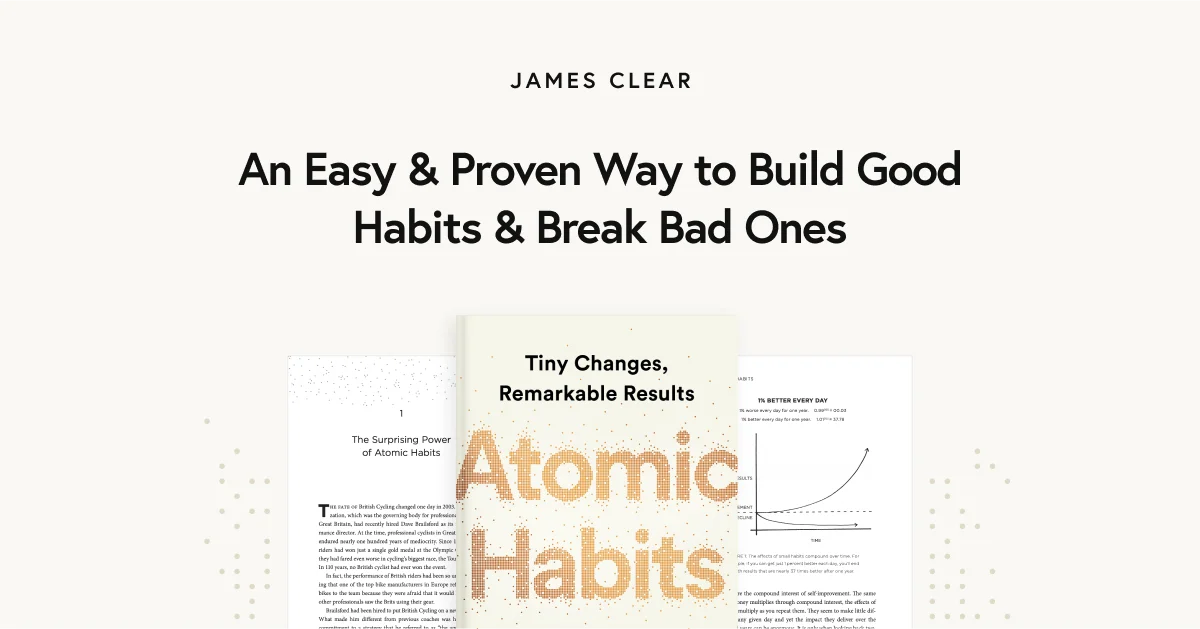
The central narrative of 2018 for Clear was the publication of his long-gestating manuscript, Atomic Habits. After years of development, the book hit shelves on October 16, 2018. The result was not merely a launch, but a rapid ascent to bestseller status—a validation of the iterative, habit-based philosophy he has championed for years.
Beyond the book, the year was characterized by an aggressive expansion of his platform’s reach. While Clear maintains that his primary metric is influence over revenue, the data indicates that his reach expanded significantly. He continued to leverage his platform to support the Against Malaria Foundation (AMF), operationalizing a model where business growth directly fuels philanthropic outcomes.
However, this growth came at a cost. The intense focus required for the book launch led to a noticeable decline in other key performance indicators, specifically in his writing output and physical training intensity, illustrating the classic "opportunity cost" dilemma that faces every growing enterprise.
Chronology of a High-Stakes Year
The trajectory of 2018 can be viewed as a three-act structure:
- Act I: The Final Sprint (January – April): The year began with a frantic push to complete the manuscript. This period was marked by high stress and the final refinement of the core ideas that would eventually populate Atomic Habits.
- Act II: The Transition and Global Outreach (May – September): With the manuscript finalized, the focus shifted toward preparation for the book launch and a series of international speaking engagements. This period required balancing the logistical demands of a global tour with the maintenance of his digital business.
- Act III: The Launch and Reflection (October – December): The final quarter was dominated by the release of the book and the subsequent media tour. This period proved to be the most taxing, as the sheer volume of external commitments threatened to overwhelm the internal habits—such as consistent writing and weightlifting—that formed the foundation of Clear’s brand.
Supporting Data: The Metrics of Performance
Clear’s review relies on quantitative tracking to measure his life. While he achieved his primary objective, the data reveals the "margin of safety" he sacrificed to get there.
1. The Output Gap
Clear’s writing output, a cornerstone of his influence, hit a significant slump. Having already reached a low in 2017 with 10 articles, 2018 saw an even greater decline. This created a downstream effect on website traffic, which peaked in the early months of the year during the editing process and trended downward as new content generation stalled.
2. The Physics of Fitness
Fitness tracking serves as a proxy for Clear’s mental and physical health.
- Volume: He logged 141 workouts in 2018, averaging 11.8 per month.
- Consistency: The data clearly maps his busy periods, with workout frequency dropping to its lowest points during the manuscript finalization (February) and the book launch (October).
- Intensity: Perhaps most telling, for the first time in ten years, Clear did not record a personal record (PR) in any major lift, highlighting that while consistency remained, the capacity for peak performance was hampered by competing demands.
3. Philanthropic Impact
Clear’s commitment to donating 5% of after-tax profits to the Against Malaria Foundation underscores his "optimization for reach" philosophy. By focusing on high-impact, cost-effective charity, he ensures that the success of his professional work correlates directly with global humanitarian outcomes.
Official Perspective: The Philosophy of "Walking the Walk"
Clear addresses the inherent awkwardness of publishing a public review, acknowledging that it risks appearing as either self-aggrandizement or forced vulnerability. However, he argues that the transparency is essential.
"Talking about how many workouts I did or articles I wrote provides proof that I am walking the walk," Clear notes. He emphasizes that he is not a detached observer handing out advice; he is an active practitioner testing these systems in real-time. This "skin in the game" is what differentiates his approach from traditional self-help authors.
Regarding his struggles with deadlines—which he admits he failed to meet entirely throughout the year—Clear offers a philosophical insight: he possesses an "optimistic view of time." He views this as a double-edged sword. It allows him to attempt more than the average person, but it strips away his margin of safety. When a major project like a book launch occurs, there is no buffer left for error, leading to missed targets in secondary areas like exercise and content production.
Implications: Building for 2019 and Beyond
The 2018 Annual Review serves as a blueprint for future growth, offering several key takeaways for those looking to apply these lessons:
1. The Fallacy of the "Perfectly Optimized" Life
Clear’s experience demonstrates that even with robust systems, trade-offs are inevitable. The pursuit of a massive project like a book launch required a tactical retreat in other areas. The key is not to avoid these trade-offs, but to be conscious of them and to recognize when the "trajectory" of one’s habits is trending in the wrong direction.
2. Mastery and the "Margin of Performance"
One of the most profound realizations in the review is the thin line between average and peak performance. A decrease of just one workout per week was the difference between hitting personal records and stagnating. This suggests that the final 10% of effort is often where the most significant results are hidden.
3. The Power of "No"
Clear highlights a critical distinction: "No is a decision. Yes is a responsibility." As his profile grows, he recognizes that the primary threat to his future success is the dilution of his focus. Every "yes" to a new opportunity is a "no" to the deep work required for his next phase of growth. Protecting time, he concludes, is the ultimate competitive advantage.
4. Curiosity as a Foundation
Finally, Clear reiterates that in an unpredictable world, curiosity is the most durable asset. Talent is variable, but a persistent, eager mind can overcome most obstacles. His commitment for 2019 is to rebuild his writing habit, leverage the momentum of his book, and focus on the fundamental habits that provide the highest rate of return.
As the year concludes, James Clear’s review stands as a reminder that success is not a static destination but a continuous process of calibration. By acknowledging what failed as clearly as what succeeded, he maintains the integrity of his process, proving that the most successful systems are not those that never break, but those that are constantly being repaired and refined.