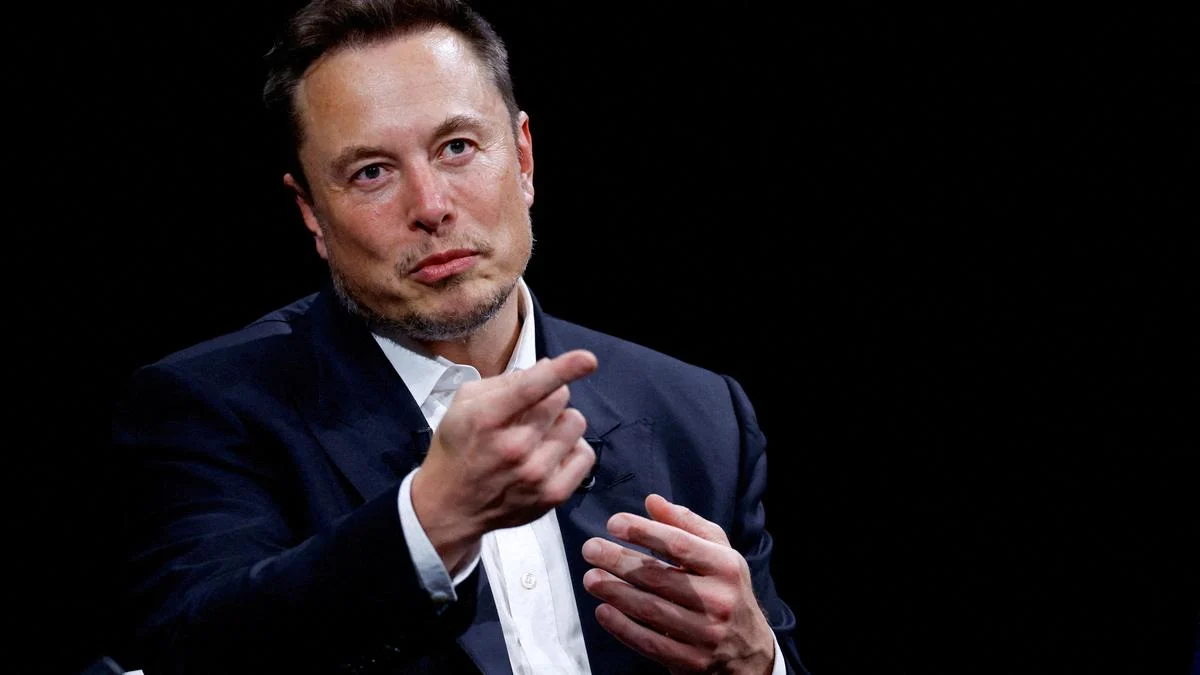
In a move that could redefine the global corporate landscape, Elon Musk has reignited speculation regarding a formal union between his two most prominent ventures: the electric vehicle pioneer Tesla and the aerospace giant SpaceX. While the financial logic of such a merger centers on creating a "hyper-conglomerate" valued at an estimated $3.5 trillion, the path to consolidation is fraught with unprecedented political and regulatory hurdles.
Beyond the traditional antitrust reviews, the proposed merger sits at the volatile intersection of U.S. national security and Chinese industrial policy. By attempting to marry a critical U.S. defense contractor (SpaceX) with an automaker deeply integrated into the Chinese economy (Tesla), Musk is inviting a level of scrutiny that transcends balance sheets, potentially sparking a high-stakes confrontation between Washington and Beijing.
Main Facts: The Architecture of a Corporate Giant
The genesis of the current discourse stems from Musk’s recent confirmation that "committees at both companies" have begun reviewing the feasibility of a merger. Musk himself characterized the tie-up as a "good idea," signaling that the concept has moved from a theoretical "Muskian" whim to a formal board-level evaluation.
The Scale of the Entity
If realized, the merger would create the world’s first $3.5 trillion company, eclipsing the market caps of tech titans like Apple and Microsoft. The entity would dominate multiple frontier sectors:
- Sustainable Transportation: Tesla’s global EV infrastructure and battery technology.
- Aerospace and Defense: SpaceX’s dominance in orbital launches and Pentagon-contracted missions.
- Telecommunications: The Starlink satellite constellation, which currently provides critical internet services in conflict zones like Ukraine.
- Artificial Intelligence and Robotics: The integration of Tesla’s "Optimus" humanoid robot and "Full Self-Driving" (FSD) software with SpaceX’s computational needs.
The Central Conflict: The "China-Defense" Paradox
The primary obstacle is not lack of capital, but a fundamental conflict of interest. SpaceX is increasingly the backbone of U.S. space dominance, holding billions in contracts with NASA and the Department of Defense. Conversely, Tesla is uniquely "China-exposed," with its Shanghai Gigafactory accounting for a massive portion of its global production and profitability. A merger would effectively place U.S. military-grade technology and a major Chinese industrial hub under the same corporate roof, creating a "dual-loyalty" scenario that alarms hawks in both nations.
Chronology: From Independent Pioneers to Convergence
The journey toward this potential merger has been decades in the making, reflecting Musk’s gradual shift from niche entrepreneur to a geopolitical actor.
- 2002–2004: SpaceX and Tesla are founded/funded independently. For years, Musk maintains a "firewall" between the companies, though they occasionally share materials science and software talent.
- 2016: Tesla acquires SolarCity. This serves as a precursor to Musk’s willingness to merge his interests, despite significant shareholder litigation regarding "bailouts" and conflicts of interest.
- 2020–2022: SpaceX’s Starlink becomes a vital tool for the U.S. military and international diplomacy. Simultaneously, Tesla’s Shanghai factory becomes its most efficient production hub, making Musk a frequent guest of the Chinese leadership.
- October 2024: Amidst a shifting political climate in the U.S., Musk revives the merger talk. He confirms that internal committees are analyzing the deal, aiming to synchronize the companies’ AI and engineering efforts.
- The Present: The proposal arrives just weeks before the U.S. midterm elections, immediately turning the business deal into a campaign issue for both Democrats and Republicans.
Supporting Data: Financial Synergies and Strategic Risks
To understand why Musk is pursuing this despite the risks, one must look at the data driving the $3.5 trillion valuation.
Market Valuation and Capital
Tesla’s market capitalization remains highly volatile but rests on its potential as an AI company rather than a mere carmaker. SpaceX, though private, has seen its valuation soar toward $200 billion in secondary market rounds. Analysts suggest that a merged entity would benefit from a "synergy premium," where Tesla’s cash flow could fund SpaceX’s capital-intensive Mars ambitions, while SpaceX’s "invincibility" as a government partner provides a floor for Tesla’s stock price.

The Shanghai Factor
Tesla’s reliance on China is quantified by more than just sales. The Shanghai Gigafactory produces over half of Tesla’s global fleet. For Beijing, this provides significant leverage. If SpaceX (via the merged entity) were to take a stance or provide technology that displeased the Chinese Communist Party (CCP), Tesla’s assets in China—worth tens of billions—could be subject to regulatory "slow-walking," data audits, or outright seizure.
Starlink’s Global Footprint
With over 6,000 satellites in orbit, Starlink has become a geopolitical tool. The data shows that Starlink is now essential for modern warfare and disaster relief. Merging this with Tesla’s fleet of millions of sensor-equipped vehicles creates a data-collection apparatus of unprecedented scale, raising red lines for privacy advocates and national security agencies alike.
Official Responses: A Growing Political Firestorm
The reaction to the merger talk has been swift, characterized by a sharp divide along ideological and national lines.
U.S. Congressional Scrutiny
Democrats have been the most vocal critics. Senator Cory Booker (D-NJ), a member of the Judiciary and Foreign Relations committees, warned that the deal carries "real risks that antitrust enforcers across the world would scrutinize." Booker’s primary concern is the concentration of power: "When one person controls the infrastructure that governments and militaries depend on, his business decisions become national security decisions, too."
Expert Analysis: The "2029 Risk"
Derek Scissors, a senior fellow at the American Enterprise Institute, suggests that while the current Trump administration might be lenient due to Musk’s personal ties to the President, the long-term stability of the deal is in doubt. "The next administration could certainly begin to scrutinize a merged entity," Scissors noted. "This may be the biggest risk—that it could get unwound in 2029."
The View from Brussels and Beijing
Alicia Garcia-Herrero of the Bruegel think tank highlighted the Chinese perspective, noting that a merger makes it "harder for Chinese authorities to treat Tesla as a purely commercial actor." This could result in denied market access or restricted data approvals for Tesla’s FSD software in China.
Meanwhile, in South Korea, antitrust officials have signaled that the merger would trigger an "in-depth review." Lee Hwang, a former Korea Fair Trade Commission official, emphasized that because Korea views both automotive and aerospace as "strategically important industries," they would be wary of a single entity holding such dominant technological advantages.
Implications: A New Era of Corporate Sovereignty
The potential merger of Tesla and SpaceX represents more than just a large-scale business transaction; it is a test case for the limits of corporate power in the 21st century.

1. The Erosion of the "Commercial" Label
Historically, companies like Boeing or Lockheed Martin have operated as defense contractors with clear regulatory boundaries. Musk’s proposal threatens to blur these lines. If a company is simultaneously a consumer brand and a military backbone, how does a government sanction the "commercial" side without damaging its own "defense" side? This creates a "too big to fail" scenario on a global, multi-sector scale.
2. Technological Monopoly and Licensing
Antitrust experts, including Ioannis Kokkoris of Queen Mary University, suggest that regulators might demand "compulsory licensing." If Tesla gains an unfair advantage by using SpaceX’s proprietary satellite or materials technology, regulators in the EU or Asia may force the company to share those innovations with domestic rivals to maintain a level playing field.
3. The National Security "Kill Switch"
The most profound implication concerns the potential for foreign interference. If Beijing can threaten Tesla’s production to influence SpaceX’s satellite deployment in a future conflict (such as over Taiwan), the U.S. government loses a degree of its sovereign decision-making. Analysts argue that Musk may attempt to mitigate this by "ring-fencing" certain divisions, but the effectiveness of such corporate firewalls is often viewed with skepticism by intelligence agencies.
4. The Precedent for "Founder-States"
A $3.5 trillion merger would solidify Musk’s position not just as a CEO, but as a "Founder-State"—an individual with the resources and infrastructure typically reserved for nations. This shift challenges the traditional Westphalian model of international relations, where states hold the monopoly on high-stakes technology and orbital infrastructure.
Conclusion
The proposed merger between Tesla and SpaceX is a move of staggering ambition that faces a gauntlet of resistance. While Musk’s supporters see it as the ultimate fulfillment of a unified vision for humanity’s future—spanning sustainable transport on Earth to multi-planetary life—regulators and politicians see a potential "Black Hole" of power.
As the November midterms approach and the 2024 presidential cycle looms, the "Musk Merger" will likely remain a central flashpoint in the debate over how much influence a single private citizen should hold over the strategic assets of the world’s superpowers. Whether the deal survives the transition of power in Washington or the increasing hostility of Beijing remains the $3.5 trillion question.