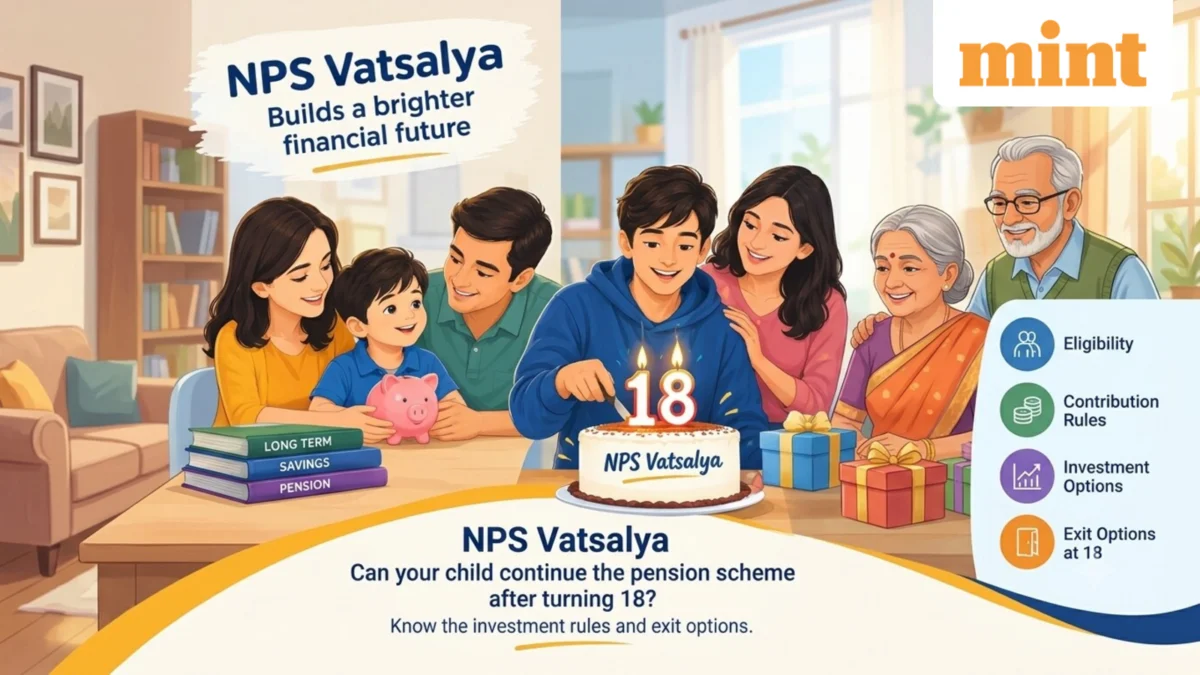
In an era of rising education costs and the increasing need for early financial planning, the Pension Fund Regulatory and Development Authority (PFRDA) has introduced a transformative tool for parents: NPS Vatsalya. Designed as a gateway to long-term wealth creation, this scheme allows parents and guardians to initiate retirement planning for their children from the day they are born.
However, as with any long-term financial commitment, questions often arise regarding the transition of the account once the beneficiary reaches adulthood. What happens to the accumulated corpus when the child turns 18? Can they continue the investment? What are the regulatory hurdles and opportunities? This guide delves deep into the mechanics, eligibility, and the pivotal transition phase of the NPS Vatsalya scheme.
Understanding the NPS Vatsalya Framework
NPS Vatsalya operates under the umbrella of the National Pension System (NPS), India’s flagship retirement savings program. Unlike traditional savings instruments that focus solely on short-term liquidity, NPS Vatsalya is built on the power of compounding. By starting early, parents leverage the "time value of money," allowing even modest annual contributions to grow into a substantial retirement nest egg over several decades.
Core Structure and Eligibility
The scheme is open to all Indian citizens below the age of 18, including Non-Resident Indians (NRIs) and Overseas Citizens of India (OCIs). There is no gender-based discrimination, and the account is opened in the name of the minor, with the parent or legal guardian acting as the operator.
- The PRAN: Upon registration, a Permanent Retirement Account Number (PRAN) is issued. This unique identification remains with the child for life, ensuring a seamless transition into adulthood.
- Contribution Flexibility: The barrier to entry is intentionally low. With an initial contribution of as little as ₹250 and a mandatory minimum annual contribution of ₹250, the scheme is inclusive, catering to families across all income brackets.
- Market-Linked Returns: It is critical to understand that NPS Vatsalya is a market-linked product. The funds are invested in a mix of equity, corporate bonds, and government securities through a pension fund manager chosen by the guardian. Consequently, returns are not guaranteed and are subject to market volatility.
Chronology: The Lifecycle of an NPS Vatsalya Account
The journey of an NPS Vatsalya account is divided into two distinct phases: the Minor Phase and the Transition/Majority Phase.
1. The Minor Phase (Age 0 to 18)
During this period, the parent or guardian exercises full control. They select the investment choice—either "Active Choice" (where the asset allocation is decided by the guardian) or "Auto Choice" (a lifecycle fund approach that automatically adjusts risk based on the child’s age). All financial decisions, such as changing the fund manager or modifying the asset mix, are managed by the guardian.
2. The Transition Phase (Turning 18)
The moment the child turns 18, the account enters a critical regulatory window. The child is no longer a "minor" in the eyes of the PFRDA. The account ceases to be a "Vatsalya" account in the traditional sense and requires a formal "conversion" process.
- KYC Refresh: The now-adult beneficiary must complete a fresh Know Your Customer (KYC) verification. This is a mandatory regulatory requirement to ensure the account is updated with the user’s current identity proof and banking details.
- Nominee Updates: The individual must confirm or update their nominee details. Since the account now belongs to them, they are the primary beneficiary, and they must designate their own legal heirs.
Supporting Data: Why Early Investment Matters
Financial experts often highlight that the greatest advantage of NPS Vatsalya is not the contribution amount, but the duration of investment. If a parent invests ₹10,000 annually from the child’s birth until they turn 18, the power of compounding—assuming a conservative market return—can yield a significant corpus.
By the time the individual enters the workforce at 22 or 23, they are not starting from zero. They have a financial cushion that has been growing for nearly two decades. This "head start" is statistically proven to reduce the financial pressure on the individual during their early career years, allowing them to focus on skill development rather than immediate survival-based saving.

Options Available at 18: The Roadmap to Adulthood
Upon attaining the age of majority, the subscriber is presented with three primary strategic pathways:
Option A: Continue the NPS Vatsalya
The subscriber can choose to maintain the account under the existing framework. This allows the child to continue the habit of disciplined saving established by their parents. By continuing the account, they retain the benefits of the low-cost structure and the long-term investment strategy that the NPS offers.
Option B: Transfer to a Standard NPS Account
The subscriber may choose to move the corpus into a standard NPS account. This is often the preferred choice for those who intend to become full-time contributors to their own retirement. This transition merges the Vatsalya history with a formal retirement account, allowing for potential tax benefits under Section 80CCD(1B) as per the Income Tax Act.
Option C: Exit the Scheme
If the subscriber has immediate financial needs—such as higher education fees or vocational training costs—they may opt to exit the scheme. However, exit rules are strict. Early withdrawal from the NPS is generally discouraged and is subject to specific conditions, such as the total corpus size and the number of years the account has been active. Exiting before the mandatory retirement age of 60 may result in the subscriber having to purchase an annuity with a portion of the corpus.
What Happens if No Action is Taken?
Life is busy, and it is possible for a young adult to miss the transition deadline. The PFRDA has built-in safeguards to prevent the account from becoming dormant. If no option is exercised by the time the subscriber reaches 21, the system initiates a "Default Transition."
The account is automatically migrated to a higher-equity scheme under the Multiple Schemes Framework (MSF). This is designed to maximize growth for the now-adult subscriber, acknowledging that they have a long time horizon before reaching the retirement age of 60. While this is a safety net, it is highly recommended that subscribers take proactive control of their accounts to align the risk profile with their personal financial goals.
Implications for the Future
The introduction of NPS Vatsalya represents a paradigm shift in Indian personal finance. By institutionalizing the concept of "childhood retirement planning," the government is encouraging a culture of long-term wealth management.
Key Takeaways for Parents:
- Discipline: Use the account to teach your child about the importance of regular saving.
- Review: Periodically review the performance of the pension fund manager.
- Communication: Once the child reaches their teenage years, involve them in the management of the account. This serves as a vital financial literacy lesson.
Final Thoughts
NPS Vatsalya is not merely a savings account; it is a long-term financial legacy. Whether the child chooses to continue the investment, migrate it, or utilize the funds for life milestones at 18, the scheme provides the flexibility required to adapt to their future needs. As the regulatory landscape evolves, parents and guardians should remain vigilant, keeping abreast of PFRDA circulars and digital updates to ensure that the child’s financial foundation remains robust and compliant.
Disclaimer: This article is intended for informational purposes only. Financial investments carry risks. Readers are encouraged to consult with a certified financial planner or visit the official PFRDA/NPS Trust website for the latest rules, tax implications, and procedural requirements before making investment decisions.