
In the modern business landscape, success acts as both a catalyst and a trap. When a brand breaks through the noise—whether it is a tech startup, a creator-led media house, or a legacy consumer goods firm—the initial victory is often followed by a siren song of expansion. Investors knock on doors, media outlets offer platforms, and internal business development teams uncover massive “total addressable markets” that beckon like low-hanging fruit.
However, as Sunny Bonnell and Ashleigh Hansberger, co-founders of the branding consultancy Motto, argue in a recent guest analysis, success often obscures a fundamental truth: just because you can do something, doesn’t mean you should. The rapid rise of AI-driven capabilities and the blurred lines of the creator economy have created a dangerous illusion—that audience size is synonymous with unlimited brand permission.
Main Facts: The Anatomy of Expansion
The core thesis facing modern leadership is the distinction between "attention" and "permission." Historically, companies built products to earn an audience. Today, the model is inverted: creators build an audience first and then attempt to retrofit products onto that base.
While this "audience-first" strategy provides a built-in distribution channel and intimate customer knowledge, it harbors a fatal flaw: the assumption that an audience is merely a market waiting to be monetized. When brands treat their followers as a commodity rather than a community, the results are often catastrophic.
The phenomenon is widespread. Tech companies are pivoting into AI-powered experiences that deviate from their core competencies; athletes are launching wellness lines; and media personalities are diversifying into everything from skincare to beverages. In this environment, the "great audience delusion" suggests that because a brand has cultural relevance, it has the license to occupy any category. The reality is that every brand operates within a "permission boundary"—a conceptual territory that consumers credibly allow a company to occupy.
Chronology of a Brand Pivot
To understand the trajectory of brand expansion, one must look at the lifecycle of growth, which typically follows a predictable, if sometimes perilous, path:
- The Breakthrough: A brand solves a specific problem or creates a unique cultural connection, earning "earned" trust.
- The Scaling Phase: With success comes capital and visibility. The company begins to leverage its "heat" to open new revenue streams.
- The Expansion Temptation: Leadership identifies adjacent markets. This is where AI and digital tools accelerate the process, making it cheaper and faster to launch new products, platforms, or services.
- The "False Positive" Trap: The launch occurs. Because of the existing audience, the initial numbers are strong. Fans buy the product, media covers the launch, and the internal team feels validated.
- The Retention Gap: After the initial wave of excitement, the reality sets in. If the product lacks a genuine problem-solution fit, the "borrowed demand" vanishes, and the brand is left with a failed expansion that potentially dilutes its core identity.
Supporting Data: The Case of Unwell Hydration
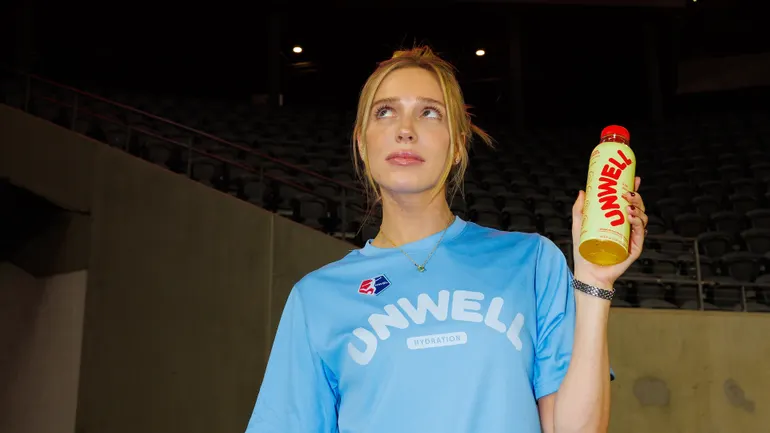
The dangers of ignoring these boundaries are not merely theoretical. Consider the case of Alex Cooper’s Unwell Hydration. Despite the massive cultural influence and reach of Cooper’s media brand, the hydration line was shuttered roughly two years after its launch.
This serves as a cautionary tale for modern entrepreneurs. A massive audience can collapse the distance between obscurity and trial, but it cannot bridge the gap between trial and habit. When the "name" is stripped away, if the product does not stand on its own merits—or if it feels disconnected from the reason the audience followed the creator in the first place—the business will fail.
Data shows that while "awareness" is a powerful asset for scaling, "meaning" is the only asset that provides leverage. Brands that fail to distinguish between the two often find that their growth is superficial, resulting in high churn rates and a fractured brand identity.
Official Responses and Industry Perspectives
Industry experts and branding strategists are increasingly sounding the alarm on "strategic sprawl." The prevailing view among those who manage brand equity is that the rise of AI-assisted development has paradoxically made focus more important than ever.
"When almost anything becomes possible, a clear point of view becomes invaluable," notes the Motto leadership team. The consensus is that leaders are now tasked with a harder job than in the past: they must be just as adept at saying "no" as they are at saying "yes."
Strategic thinkers argue that while a "strategic rationale" can be crafted for any expansion—often using compelling PowerPoint presentations and aggressive growth projections—these projections rarely account for the consumer’s psychological perception of the brand. If the connective tissue between the original brand identity and the new venture is missing, the market will reject it, regardless of the marketing budget.
Implications: The High Cost of Success
The implications for future business growth are significant. We are entering an era where "focus" is becoming the ultimate competitive advantage.
The Power of "No"
Executive leadership is traditionally rewarded for growth, acquisitions, and expansion. However, the next generation of successful leaders will likely be defined by their ability to walk away from profitable but distracting opportunities. Knowing when to reject a category, a collaboration, or a product line is a sign of deep brand stewardship.
Defining the "Permission Boundary"
Brands must perform a rigorous audit of their permission boundaries. This involves asking:
- Why does it make sense for us to do this? The answer cannot be "because we have the distribution" or "because the margins are high."
- What are we actually famous for? Awareness gives you scale; meaning gives you leverage.
- Is this a core expansion or a distraction? Does the new venture compound the existing brand, or does it simply capitalize on its current heat?
The AI Paradox
Artificial Intelligence is a double-edged sword. While it allows for rapid testing and scaling, it also lowers the barrier to entry for "brand noise." As the market becomes flooded with products that are technically feasible but strategically hollow, brands that maintain a singular, clear point of view will stand out.
Conclusion: The Discipline of Meaning
Ultimately, the goal of any brand is to remain relevant without losing its identity. As companies navigate the pressure to monetize their influence, they must remember that every product, collaboration, and platform is a data point in the mind of the consumer. If you add enough subplots, the main narrative is lost.
The greatest brands of the future will be those that realize that success is not a green light to do everything, but a mandate to do the right things with excellence. In a world where attention is fleeting and influence is often confused with authority, the most powerful move a brand can make is to remain focused. True brand power is not found in how many places a logo appears, but in how deeply that brand is anchored in the minds and hearts of its audience. The discipline of knowing the difference is what separates a flash-in-the-pan success from a lasting legacy.