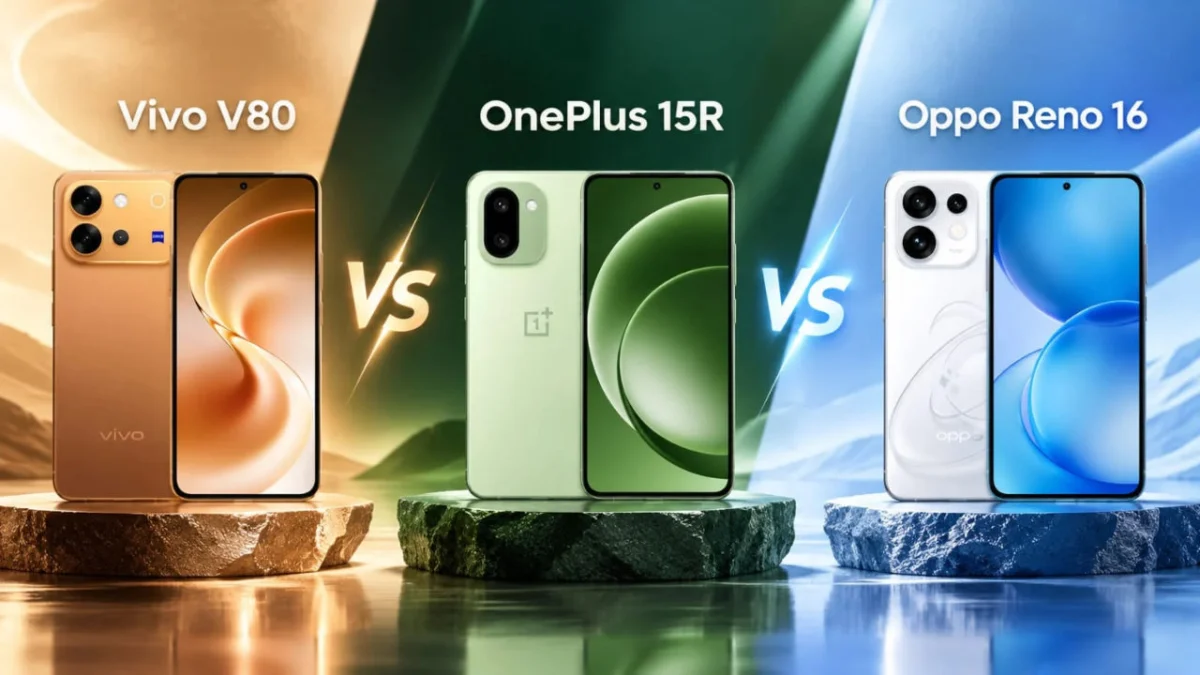
The Indian smartphone landscape has undergone a seismic shift in recent years, transitioning from a market obsessed with budget-friendly "value kings" to one that increasingly embraces the "premium mid-range" segment. This evolution was punctuated earlier this month by Vivo’s high-profile launch event, where the company unveiled its latest contender, the Vivo V80, alongside the innovative X Fold 6 and the S2 FE.
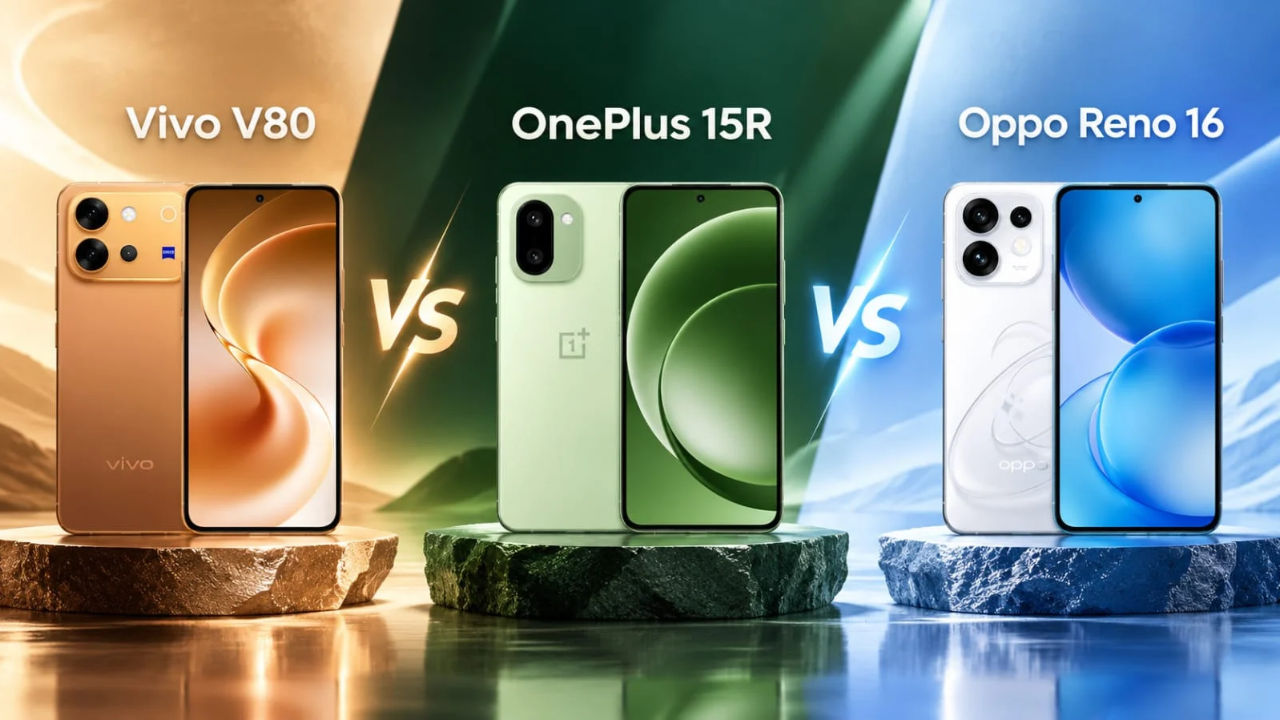
Priced at Rs 62,999, the Vivo V80 does not exist in a vacuum. It enters a fiercely competitive arena, immediately locking horns with the OnePlus 15R and the Oppo Reno 16. As these three titans vie for supremacy in the sub-Rs 70,000 bracket, consumers are left with a complex choice: do they prioritize raw processing power, display brilliance, or photographic versatility? This comprehensive analysis breaks down the specifications, the market context, and the long-term implications of this three-way rivalry.
I. Main Facts: The Core Contenders
The current battle represents a convergence of hardware strategies. While each brand belongs to a distinct lineage, the lines between their offerings are blurring.
- Vivo V80: Positioned as a balanced powerhouse, the V80 focuses on display luminosity and a versatile camera array. Its standout feature is a staggering 5,000 nits of local peak brightness, a figure that leads the industry in this price segment.
- OnePlus 15R: True to its "Never Settle" heritage, the OnePlus 15R is the performance outlier. By opting for the flagship-tier Qualcomm Snapdragon 8 Gen 5 processor, it targets gamers and power users who demand the highest possible frame rates and future-proofing.
- Oppo Reno 16: The Reno series has traditionally been about aesthetics and portrait photography. The Reno 16 continues this trend but elevates the hardware with a consistent 50MP triple-camera setup, ensuring that there is no "weak link" in its imaging pipeline.
II. Chronology: The Road to the Rs 60,000+ Segment
To understand why these phones are priced and specced the way they are, one must look at the chronological evolution of these specific product lines over the last three years.
- The Shift (2022-2023): Previously, the Vivo V-series and Oppo Reno-series were firmly placed in the Rs 30,000–40,000 range. However, as the "Pro" and "Pro+" variants gained popularity, the brands realized that Indian consumers were willing to pay a premium for better sensors and faster charging.
- OnePlus’s Re-entry (Early 2024): OnePlus redefined the "R" series (originally India-exclusive) as a way to offer flagship-grade processors at a slightly lower price point than their numbered flagships. The 15R is the culmination of this "performance-first" philosophy.
- The Silicon-Carbon Revolution (Late 2024): The most recent development in the timeline is the introduction of high-density battery technology. We are now seeing batteries exceeding 7,000 mAh in slim profiles—a feat that was physically impossible just twenty-four months ago. The Vivo V80 and OnePlus 15R are among the first to bring these massive capacities to the Indian mainstream.
- The Launch Cycle (Current Month): Vivo’s multi-product launch earlier this month served as a catalyst, forcing competitors like OnePlus and Oppo to adjust their marketing and pricing strategies for their respective 15R and Reno 16 models to remain relevant in the festive season.
III. Supporting Data: A Deep Dive into Specifications
The following data compares the three devices across four critical pillars: Display, Camera, Performance, and Battery.
1. Display Engineering
| Feature | Vivo V80 | OnePlus 15R | Oppo Reno 16 |
|---|---|---|---|
| Panel Type | 6.59-inch AMOLED | 6.83-inch AMOLED | 6.32-inch AMOLED |
| Refresh Rate | 144Hz | 165Hz | 120Hz |
| Peak Brightness | 5,000 nits | 1,800 nits (HBM) | 1,800 nits |
The Vivo V80 wins on sheer outdoor visibility with its 5,000-nit peak brightness, making it the best choice for users in high-glare environments. Conversely, the OnePlus 15R offers the smoothest experience with a 165Hz refresh rate, catering specifically to the mobile gaming community. The Oppo Reno 16 opts for a more compact 6.32-inch form factor, appealing to those who find modern "phablets" unwieldy.
2. Camera Capabilities
The imaging philosophy differs significantly across the trio:
- Vivo V80: Utilizes a 50MP (OIS) + 50MP (Telephoto) + 8MP (Ultra-wide) setup. The inclusion of a dedicated 50MP telephoto lens makes it a strong contender for portrait and zoom photography.
- OnePlus 15R: Features a more conservative 50MP + 8MP dual rear setup. It is clear that OnePlus sacrificed camera versatility to accommodate the expensive Snapdragon 8 Gen 5 processor.
- Oppo Reno 16: This is the imaging champion on paper. It boasts a "Triple 50" setup—50MP Main, 50MP Telephoto, and 50MP Ultra-wide. This ensures high-resolution output regardless of the focal length used.
3. Processor and Battery Longevity
The internal hardware reveals the most about the target audience:
- OnePlus 15R: Equipped with the Snapdragon 8 Gen 5, it sits a full generation ahead of its rivals. Coupled with a massive 7,400 mAh battery, it is designed for grueling usage cycles.
- Vivo V80 & Oppo Reno 16: Both utilize the Snapdragon 7 Gen 4. While highly efficient and capable of handling 99% of daily tasks, it lacks the raw GPU power of the 8-series. However, Vivo compensates with a 7,200 mAh battery and the fastest charging in this group at 90W.
IV. Official Responses and Market Positioning
While official statements from the brands often highlight "customer-centric innovation," industry analysts provide a more nuanced view of their positioning.
Vivo’s Strategy: A spokesperson for Vivo India noted during the launch that the V80 is designed to "bridge the gap between professional photography and everyday usability." By bundling the V80 with the X Fold 6, Vivo is attempting to position itself as a premium lifestyle brand, moving away from its "budget-selfie" roots.
OnePlus’s Stance: OnePlus continues to lean heavily into its community-driven feedback. Their marketing for the 15R emphasizes "Peak Performance." Internal sources suggest that the 15R is intended to capture the market share left behind by competitors who are moving toward "camera-only" flagships.
Oppo’s Direction: Oppo has remained focused on the "Reno Glow" design language and AI-driven photography. Their response to the V80 launch has been a renewed focus on "all-round sensor quality," justifying the Reno 16’s higher price tag (Rs 65,999) by pointing to the superior ultra-wide and selfie hardware.

V. Implications: What This Means for the Consumer
The arrival of the Vivo V80 and its rivals signals three major trends in the Indian tech ecosystem:
1. The Death of the "Standard" Battery
For years, 4,500 to 5,000 mAh was the industry standard. This comparison shows that 6,500 mAh is the new floor for the premium segment. This shift will likely force app developers to be less concerned with power optimization and more focused on feature-heavy experiences, as "battery anxiety" becomes a thing of the past.
2. The Price-Performance Partition
The comparison clearly bifurcates the market. Consumers must now choose between Processor (OnePlus) or Optics (Oppo/Vivo). It is becoming increasingly difficult for manufacturers to offer the best of both worlds at the Rs 60,000 price point due to the rising costs of raw materials and advanced silicon.
3. Display Wars 2.0
We have moved past the "AMOLED vs. LCD" debate. The new battleground is "Peak Brightness" and "Refresh Rates." Vivo’s move to 5,000 nits sets a high bar that will likely become a marketing requirement for all premium phones launched in 2025 and beyond.
VI. Conclusion: Which One Should You Choose?
The "best" phone among these three depends entirely on the user’s digital lifestyle:
- Choose the Vivo V80 if you want the most futuristic display on the market and a balanced camera system. At Rs 62,999, it offers the best "middle ground" and the fastest charging speed (90W) to top up its massive 7,200 mAh cell.
- Choose the OnePlus 15R if you are a hardcore gamer or a power user. The Snapdragon 8 Gen 5 is a significant upgrade over the 7 Gen 4, and the 165Hz display is unparalleled for fluid UI navigation. At Rs 59,999, it is also the most "affordable" of the three.
- Choose the Oppo Reno 16 if you are a content creator. The triple 50MP camera array provides a level of consistency in video and wide-angle photography that the other two cannot match. While it has the smallest battery and the highest price (Rs 65,999), its compact size and superior optics justify the premium for photography enthusiasts.
As the dust settles on Vivo’s latest launch, one thing is certain: the sub-flagship segment is no longer a place for compromise. Whether it is a 7,400 mAh battery or a 5,000-nit screen, the "mid-range" has officially entered the era of excess.