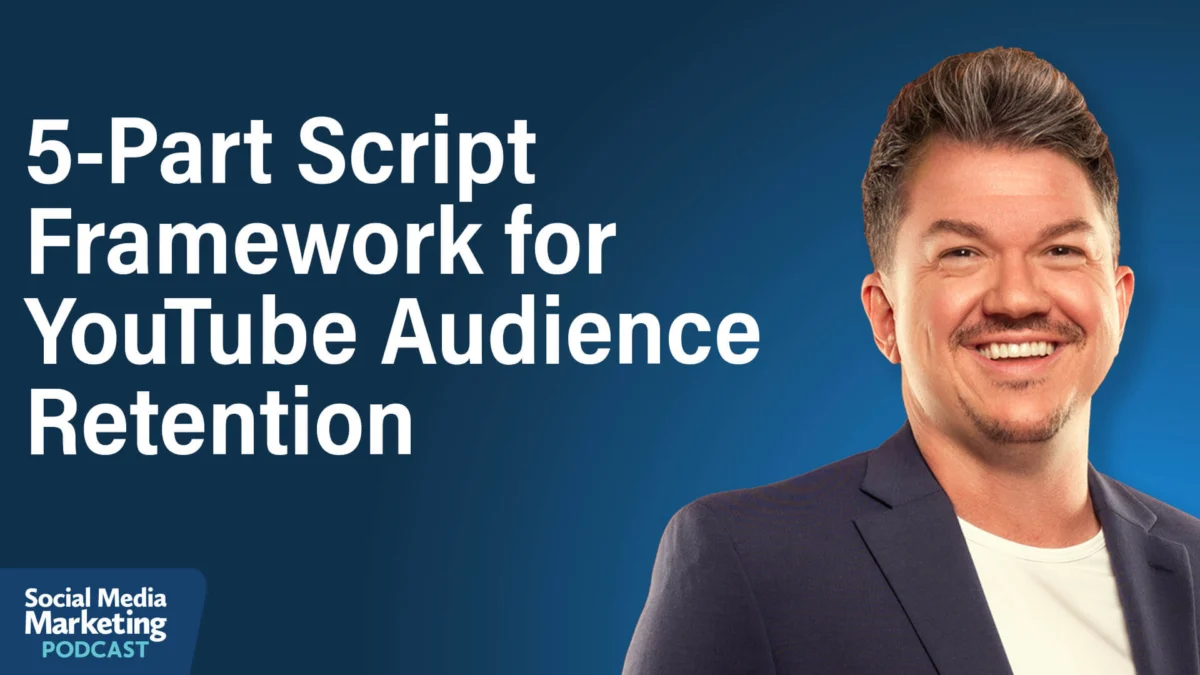
In the digital era, where the average human attention span is reportedly shorter than that of a goldfish, content creators and business owners are locked in a relentless war for the most precious resource on the internet: focused attention. For years, the prevailing wisdom on YouTube has been to chase vanity metrics—subscriber counts and total view numbers. However, veteran strategist Adam Ivy suggests that these metrics are merely ghosts in the machine. According to Ivy, who has successfully leveraged the platform to build multiple seven-figure businesses, the only metric that truly dictates long-term success is retention.
Retention—the percentage of a video that a viewer actually watches—is the heartbeat of the YouTube algorithm. It dictates whether a video is promoted through browse features, suggested sidebars, or search results. To solve the problem of audience drop-off, Ivy, alongside co-creator Michael Stelzner, has introduced the "BINGE" method: a five-part structural framework designed to hook viewers, hold their attention, build trust, and ultimately convert them into loyal customers.
Why Retention Outperforms Views
The fundamental misunderstanding in modern content strategy is the confusion between "distracted" and "focused" attention. Short-form platforms like TikTok or Instagram Reels are akin to a vending machine: they provide quick, sugary dopamine hits that are instantly forgotten. Conversely, YouTube is increasingly being consumed like premium television. Recent data shows that TV viewership on YouTube has surged by over 60% in the last year, signaling that audiences are treating the platform as their primary source of long-form, deep-dive content.
For the business-minded creator, this transition is vital. High retention leads to trust, and trust is the precursor to a sale. Ivy points to the Google "7-11-4" rule: consumers typically require 7 hours of content, 11 touchpoints, and interactions across 4 platforms before they feel comfortable making a significant purchase. A well-structured long-form YouTube video serves as a massive accelerator for this process. By keeping a viewer engaged for 15 to 20 minutes, a creator can compress a sales cycle that might otherwise take months of passive social media exposure.
The Chronology of the BINGE Framework
The BINGE method is not merely a set of tips; it is a rigid architectural framework built on the foundation of the "ARC" model—Attract, Retain, and Convert. If you attract a viewer but fail to retain them, you have gained nothing. If you retain them but fail to convert them into a community member or client, you have wasted a high-value opportunity.
1. The Banger Hook (The "B")
The "Banger Hook" is the most critical element of the video. It occurs in the first eight seconds—a timeframe Ivy refers to as the post-"2016 math" era, where viewers decide within a heartbeat whether to stay or click away. A successful hook does not just introduce a topic; it creates a visceral emotional reaction. It must address the viewer’s pain points with such precision that the viewer feels "seen."
Instead of a generic intro like "Today I’m going to teach you five ways to improve your lighting," an effective Banger Hook speaks to the internal frustration: "You spent six hours you didn’t have filming that video, and it got zero views. You’re blaming the algorithm, but the problem isn’t the algorithm—it’s you. And here is why."
2. Building Intrigue (The "I")
Immediately following the hook, the creator must build intrigue. This is the transition that bridges the gap between the emotional hook and the core content. It provides a reason to stay without spoiling the conclusion. This is often executed using the "Yo-Yo Method," a linguistic pattern of pronoun shifting (You, We, I, We, You). By weaving the creator’s own experience with the viewer’s aspirations, the narrative gains a rhythm that prevents the viewer from feeling lectured.
3. The Nudge Forward (The "N")
The "Nudge Forward" is the antidote to the common "step-by-step" listicle format that plagues modern YouTube. Because AI-powered search engines and LLMs can now provide quick, numbered summaries, viewers often feel they have "gotten the answer" as soon as a creator outlines their points. The Nudge Forward keeps the viewer locked in by providing value while simultaneously signaling that a critical piece of the puzzle is still missing.
By framing each section as "useful but incomplete," the creator creates a loop of tension and resolution. The viewer feels they have learned something, but they recognize that to truly succeed, they must stay for the next section.
4. Generating Engagement (The "G")
Engagement is often misinterpreted as a request for "likes and comments." Ivy argues that engagement must be engineered. Techniques like the "Report Back" (asking viewers to check a specific metric and share the result) or the "Public Proclamation" (asking viewers to commit to a goal in the comments) serve two purposes. First, they signal to the algorithm that the viewer is active, not passive. Second, they provide social proof. As Ivy notes, "Nothing attracts a crowd like a crowd." When a viewer sees hundreds of others making a commitment, the community effect solidifies, which is a powerful psychological driver for trust.
5. Ending in Momentum (The "E")
The final stage, "Ending in Momentum," is where most creators fail. Signaling that a video is ending—with phrases like "In summary" or "Thanks for watching"—acts as a cue for the viewer to click off. Instead, the BINGE method dictates a rapid-fire close that flows directly into a call to watch another video. By utilizing the 20-second end-screen window to push the viewer into a curated next video, the creator increases "session time," a metric YouTube values even more than individual video views.

Supporting Data and Strategic Implications
The efficacy of these techniques is backed by clear performance data. Channels that prioritize average view duration (AVD) over click-through rate (CTR) often see compounding growth. Even for creators who have stopped uploading, high-retention evergreen content continues to generate AdSense revenue and high-ticket leads for years.
The implication for businesses is clear: stop viewing YouTube as a distribution channel for short-form clips and start viewing it as a long-form asset library. By using unlisted videos on "Thank You" pages after a lead magnet download, for example, a business can "retarget" their audience organically, ensuring that their main-channel content begins appearing on the prospect’s homepage without the need for paid ads.
Official Perspective and Implementation
Adam Ivy’s methodology is rooted in the philosophy that viewers are humans, not just data points. The goal of the BINGE method is to treat the audience with respect by providing deep, actionable insights that solve genuine problems.
For the professional creator or entrepreneur, the transition to this model requires a shift in mindset:
- Move away from "How-To" lists and toward "Transformation-Based" storytelling.
- Eliminate the "filler" in the introduction and the conclusion.
- Invest in the "Nudge," ensuring that every transition provides a hook for the next segment.
As the digital landscape becomes increasingly saturated with AI-generated, generic content, the ability to maintain long-form attention becomes a competitive moat. By implementing the BINGE method, creators do not just gain views—they build a repository of trust that serves as a permanent, automated sales force. The future of YouTube marketing is not in going viral; it is in going deep, holding the audience’s hand through a journey of transformation, and ending that journey exactly where the next one begins.