In an era defined by the "hustle culture" of optimization—where every morning routine is curated for maximum productivity and every hobby is expected to yield a side income—there is something radical, even subversive, about simply existing.
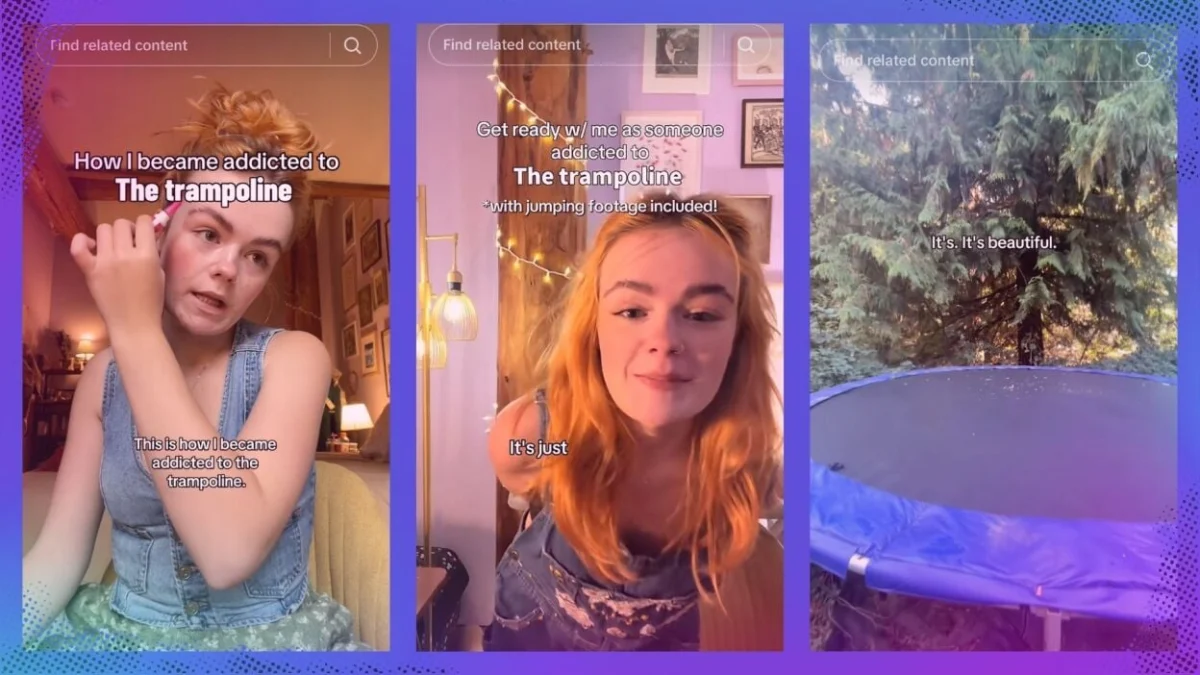
For the past seven years, TikTok creator @whatifimjustagirl has been doing exactly that, albeit with a bit more verticality than the rest of us. While the world sleeps, she spends her late-night hours—typically between midnight and 3 a.m.—jumping on a backyard trampoline. Her videos, which feature her bouncing under the stars to her favorite playlists, have recently gone viral, sparking a digital firestorm of curiosity, armchair psychology, and a deep, collective yearning for the kind of unadulterated joy that only a childhood toy can provide.
The Core Facts: A Ritual Under the Stars
The premise is deceptively simple: every night, for nearly a decade, this creator has stepped out into the dark to reclaim her sense of self through repetitive, rhythmic movement. There is no training regimen involved. She is not preparing for a gymnastics competition, nor is she following an influencers’ "wellness" protocol designed to burn calories or tone muscles.
She is, by her own admission, just a girl who loves her trampoline.
Her attire is utilitarian yet cozy—a rotation of leggings and flannels to combat the night air—and her essential companion is a pair of high-quality headphones. For those few hours in the dead of night, the trampoline serves as a sanctuary. It is a space where the pressures of the digital age, the noise of social media discourse, and the expectations of professional life are left on the grass, replaced by the simple, physics-defying sensation of flight.
A Seven-Year Chronology: From Habit to Viral Phenomenon
To understand the scale of this commitment, one must look at the timeline. Seven years is an eternity in the life of a digital trend. Most "viral" behaviors on TikTok are ephemeral, lasting for a few weeks before the algorithm pivots to the next fad.
The creator’s consistency is the foundation of her current fame. Over nearly 2,500 consecutive nights, she has navigated seasons, weather changes, and the inevitable shifts in her own life. In her recent viral uploads, she recounts how the routine began as a quiet way to decompress and evolved into an essential psychological anchor.
As her videos began to gain traction in late 2026, the internet responded with a predictable mixture of awe and skepticism. Comments flooded in: "Is this a stimming behavior?" "Does she have a sleep disorder?" "How do her neighbors feel about this?" Despite the flood of digital scrutiny, the creator has remained remarkably grounded, refusing to allow the narrative to be hijacked by those looking for a clinical explanation for a non-clinical activity.

Addressing the Discourse: The Role of Neurodiversity and OCD
Perhaps the most significant development in the discourse surrounding her viral routine is the creator’s direct address of the "mental health speculation." In a society that is increasingly literate regarding neurodivergence, users on TikTok were quick to label her behavior as symptomatic of autism or other sensory-processing needs.
In a poignant and candid follow-up video, the creator clarified her stance: she does not have autism, though she does live with Obsessive-Compulsive Disorder (OCD). She acknowledged that her OCD plays a role in the intensity of her attachment to the trampoline—the repetitive nature of the bounce and the predictability of the ritual provide a sense of structure. However, she was firm in her rejection of the idea that her behavior requires a diagnosis or a "why."
"Yes, is my obsession with the trampoline a little extreme? Yes," she noted in her video. "Does my OCD play a factor? Yes, but that’s not why I jump. I don’t think there needs to be a diagnosis for it."
This distinction is crucial. It challenges the modern internet’s tendency to "pathologize" joy. When we see someone engaging in a behavior that brings them immense happiness but falls outside of the "normative" range of adult activity, we often look for a medical reason. By pushing back, the creator is reclaiming the right to have a quirk—a harmless, private passion that exists simply because it feels good.
The Psychology of Repetitive Movement
While the creator emphasizes that her jumping isn’t a "health hack," there is a wealth of scientific literature that supports why such an activity might be so profoundly satisfying.
Repetitive, rhythmic movement—often referred to as "rhythmic entrainment"—has been shown to regulate the nervous system. The act of jumping on a trampoline provides vestibular input (the sense of balance and spatial orientation) and proprioceptive input (the awareness of body position). For many, this is naturally calming. It is the same physiological principle behind why people pace while on the phone, rock back and forth when anxious, or listen to "lo-fi" beats to study.
By moving at 2 a.m., when the world is quiet and the external stimuli of the day have faded, the creator is effectively engaging in a form of active meditation. The "bounce" becomes a metronome for her thoughts, a way to process the day’s events without the need for screens or verbal interaction.
Implications: The Death of Productive Hobbies
The viral success of this story signals a shift in what audiences are looking for in the creator economy. We are seeing a "fatigue of optimization." For years, influencers have sold the idea that every minute of the day must be "productive." If you are exercising, it should be for a PR (Personal Record); if you are reading, it should be for self-improvement; if you are hobby-crafting, you should be selling your goods on Etsy.

This creator represents a return to the intrinsic value of play. There is no monetization strategy evident in her midnight jumps. She is not selling a "trampoline workout program" or a line of specialized nighttime-bouncing leggings. She is simply existing, and in doing so, she has touched a nerve in millions of viewers who are exhausted by the expectation that every moment of their lives must serve a larger, external goal.
The Cultural Landscape: Why We Are Obsessed
Why has this specific content gone viral? The answer likely lies in the contrast between our hyper-connected, high-stress lives and the isolation of her trampoline routine.
- The Counter-Culture of Stillness: In a world of notifications, the image of someone choosing to go outside in the middle of the night to be alone with their thoughts is, ironically, deeply appealing.
- The Nostalgia Factor: Trampolines are associated with the unburdened joy of childhood. By bringing that into adulthood, she is signaling that the "serious" nature of adult life is a construct that can be challenged.
- The "Main Character" Energy: The cinematography of her videos—the dark sky, the rhythmic thud of the mat, the solitude—creates an aesthetic that feels like a scene from a coming-of-age film. It allows the viewer to project their own desires for freedom onto her.
Looking Ahead: The Future of the "Random Hobby"
As we move toward the end of 2026, the story of the "Trampoline Girl" serves as a reminder that the most authentic internet content is often the most accidental. It wasn’t designed to go viral; it was designed to provide comfort to one person.
Whether this creator continues her ritual for another seven years or eventually moves on to a different form of decompression is almost irrelevant. The impact has already been made. She has provided a permission slip for her audience to find their own "trampoline"—that one thing that makes no sense to outsiders, serves no "productive" purpose, and yet makes the world feel a little more bearable.
In the final analysis, perhaps the secret to happiness isn’t a complex algorithm or a morning routine involving cold plunges and journaling. Perhaps it is just finding a way to move your body, in the dark, without worrying about who is watching or what it means.
Maybe the secret is just to bounce.