In the rapidly evolving landscape of B2B social media, LinkedIn has emerged as a battleground between high-velocity AI automation and the necessity of human authenticity. As the platform aggressively fine-tunes its algorithms to filter out "AI slop," marketers find themselves at a critical crossroads: adapt their workflow to maintain credibility, or risk being buried by a system that increasingly favors genuine, human-to-human engagement.
According to industry expert AJ Wilcox, founder of B2Linked, the era of "set-it-and-forget-it" AI content is effectively over. LinkedIn’s recent technical shifts, including the suppression of automated comments and the transition of its own internal tools toward human-assisted editing, signal a clear mandate for creators.
The Reality of LinkedIn’s AI Crackdown
The platform’s war on automation is not merely theoretical. In recent months, LinkedIn has reportedly blocked hundreds of thousands of automated comment attempts and billions of spam-driven posting attempts. Beyond the algorithmic filters, the platform has empowered its user base to report content suspected of being low-effort AI generation.
Crucially, these user reports are currently serving as a training mechanism for LinkedIn’s detection models. While these reports may not result in immediate account penalties today, they are teaching the algorithm to identify the specific stylistic "tells" of generative AI. Once the system is sufficiently trained, creators relying on generic, automated output will likely face significant reach suppression. For the professional marketer, this shift makes the mastery of AI-human collaboration an essential survival skill.
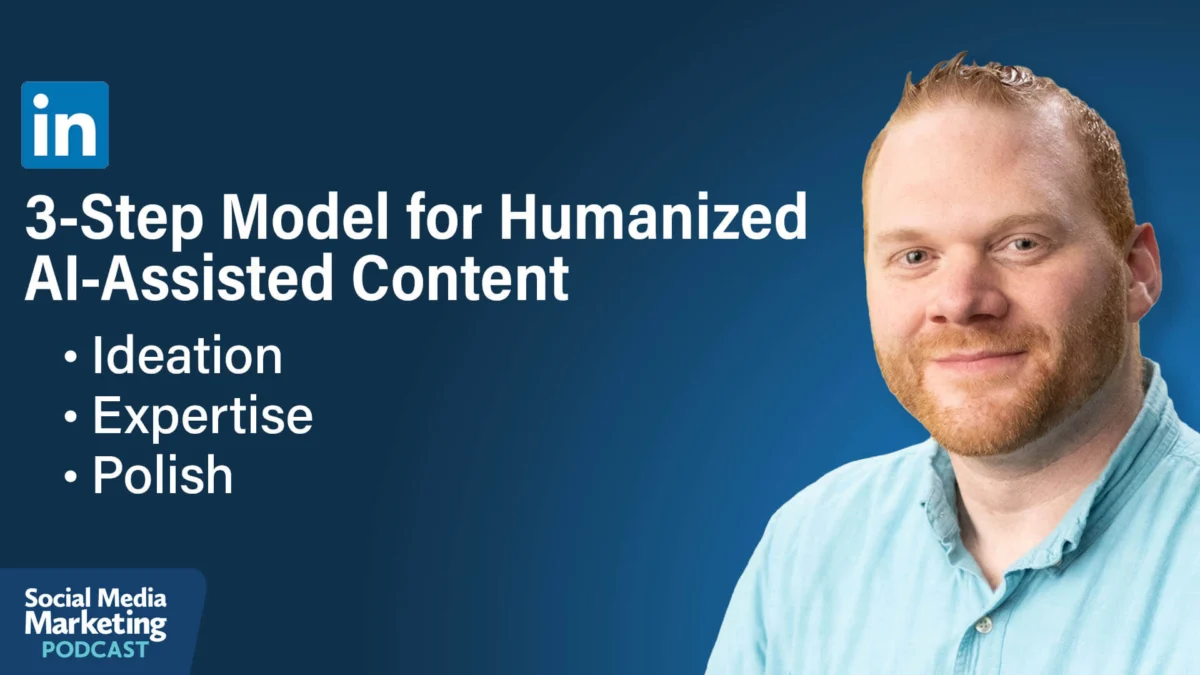
The Ideation-Expertise-Polish Model
To thrive in this new environment, Wilcox advocates for a strategic framework that keeps the human creator at the center of the process. He suggests a "sandwich" approach: using AI for the bookends of content creation while reserving the core for human insight.
1. AI-Driven Ideation
At the start of the workflow, AI is an unparalleled partner. By prompting LLMs (Large Language Models) to generate lists of angles, controversial frameworks, or supporting points, creators can bypass the "blank page" problem. This stage is about volume and structural possibility, not final prose.
2. The Human Expertise Core
The middle layer is non-negotiable. This is where the creator must inject original experience, industry-specific nuance, and personal anecdotes. Because AI models operate on existing datasets, they lack the "in-the-trenches" reality that readers crave. Skipping this step is exactly what causes content to feel like "slop." If a post does not offer unique, human-verified value, the audience—and the algorithm—will ignore it.
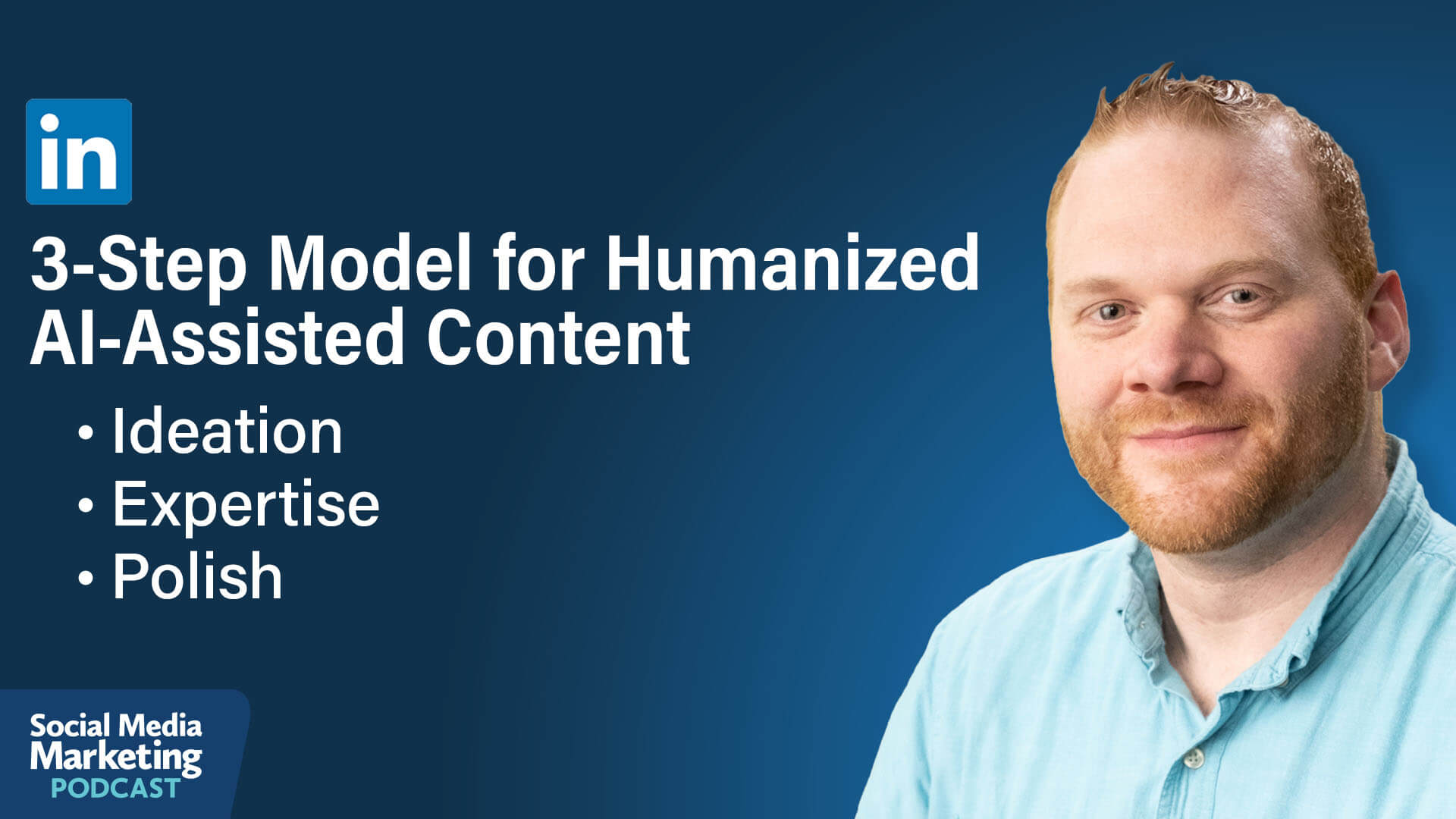
3. The Final Polish
Once the human-driven narrative is established, AI can be reintroduced as a sophisticated editor. It excels at tightening sentence structures, fixing grammatical inconsistencies, and ensuring the formatting is scannable. By restricting AI to the role of an editor rather than a creator, writers can maintain their unique voice while achieving a high level of professional finish.
Identifying the "AI Tells" That Trigger Penalties
As detection technology matures, readers have become increasingly adept at spotting the synthetic hallmarks of AI. Wilcox notes that certain patterns—often harmless in isolation—become red flags when combined:
- Excessive Use of Em-Dashes: AI models disproportionately favor the em-dash, a stylistic choice that has become a hallmark of synthetic writing.
- Formulaic Language: Phrases like "guard your mental faculties" or "this is silently killing you" are standard outputs for AI models attempting to manufacture urgency or authority.
- Inauthentic Emojis: AI-generated comments often deploy emojis in a way that feels disjointed or inconsistent with the author’s established professional persona.
While some have suggested that adding intentional typos can "trick" the system into appearing human, Wilcox warns against this. "AI can just as easily be instructed to insert errors," he notes. Instead, focus on the substance. A post that provides genuine value will rarely be dismissed as "slop," even if it is highly polished.
Strategic Engagement: The New Growth Engine
Perhaps the most significant shift on the platform is the transformation of the comment section into a primary growth channel. With "comment impressions" now visible to creators, engagement has moved from a secondary activity to a pillar of professional branding.
The "Comment Density" Metric
LinkedIn’s algorithm is increasingly prioritizing "comment density"—the depth and substance of a conversation—over mere volume. Shallow, one-sentence acknowledgments like "Great post!" or "Thanks for sharing!" are being deprioritized.
To maximize visibility, creators should aim to provoke discussion. Wilcox suggests using "open-ended hooks" such as, "Am I wrong?" or "What am I missing?" These prompts encourage a diverse range of responses rather than a single, stagnant back-and-forth thread.
The Art of Respectful Disagreement
Rather than seeking controversy for the sake of clicks, professional creators should adopt what Wilcox calls the "Ted Lasso Principle": be curious, not judgmental. When disagreeing with a high-profile post, the most effective strategy follows a three-step path:
- Validate: Open with a genuine compliment regarding the original content.
- Differentiate: State clearly, "I have a slightly different take on this."
- Invite: Close by asking for the author’s thoughts, shifting the focus to a collaborative exchange.
Optimization: Timing, Frequency, and Ad Strategy
The mechanics of publishing on LinkedIn require precision. For creators looking to maximize reach, Wilcox suggests a disciplined cadence:
- The Optimal Schedule: Two posts per week, published on Tuesday and Thursday, is the current gold standard. For those limited to one post, Wednesday is the most powerful day.
- The "Cannibalization" Rule: Never publish a second post until the first has had time to gain traction. Because LinkedIn has extended the "shelf life" of content, posting too frequently will cause your newer content to cannibalize the reach of your previous, still-growing post.
- The Weekend Trap: Avoid Mondays (due to the deluge of work-week content) and Fridays (when professional focus shifts toward the weekend).
LinkedIn Ad Mechanics
For those utilizing paid advertising, the advice is similarly tactical. While LinkedIn suggests running five or more ad variations per campaign to boost click-through rates, Wilcox warns that this is a trap.
Because LinkedIn’s frequency cap limits how often a user sees an ad, running five variations forces the system to treat each as a distinct entity. This leads to higher competition for the same user, driving up costs. His recommendation is to stick to two to four creatives per ad set—a mix of image and text variations that stay under the frequency threshold while still providing sufficient data for testing.
Implications for the Future of Professional Branding
The overarching lesson for the modern marketer is clear: AI is a tool for efficiency, not a surrogate for authority. As LinkedIn continues to refine its ability to surface high-value, human-centric discourse, the creators who win will be those who use technology to augment their expertise rather than replace it.
By leveraging AI for ideation and editing, focusing on deep-substance commenting, and adhering to strict posting cadences, professionals can build a brand that resonates with both the human audience and the machine-learning systems that govern the feed. In a digital world increasingly saturated with automated filler, the most valuable commodity remains the authentic human voice.