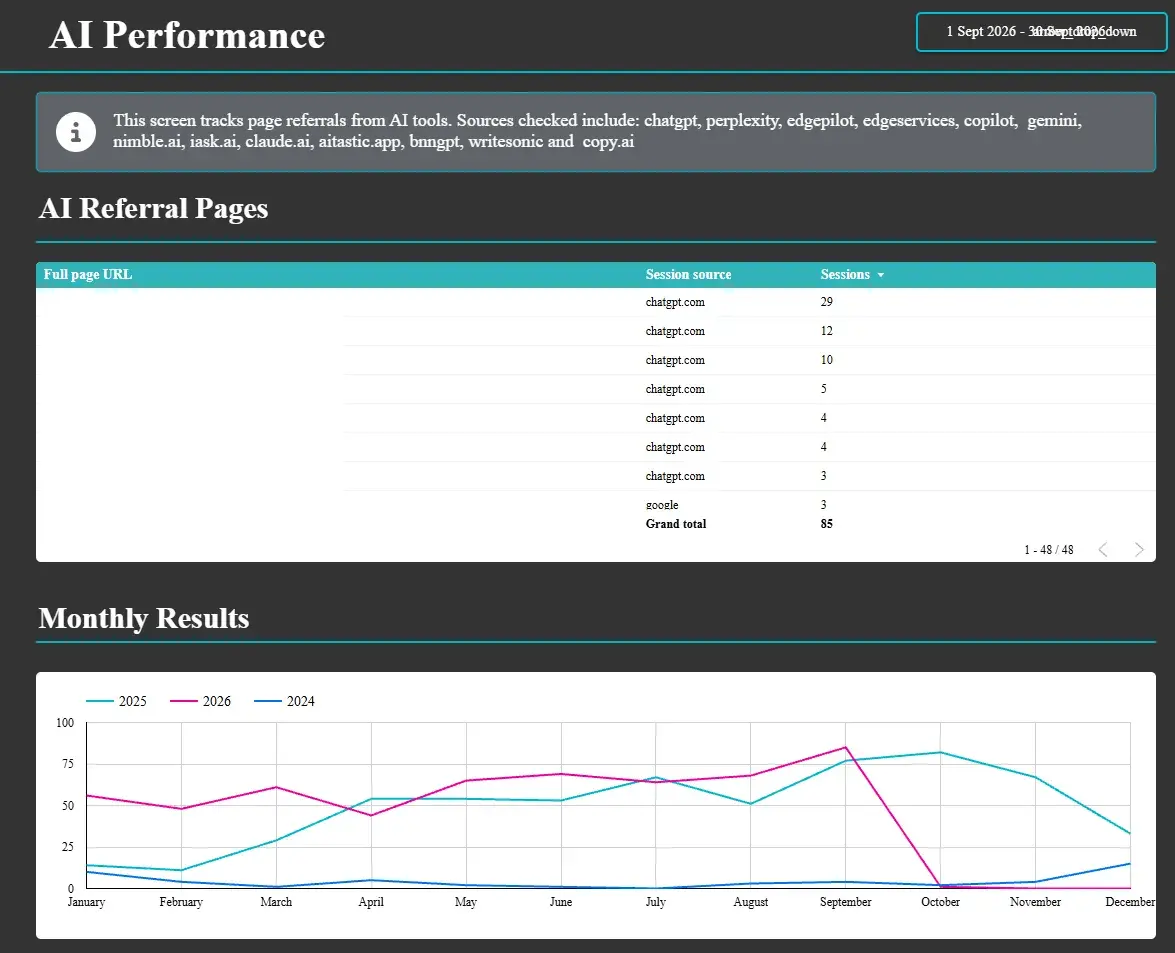
In the rapidly evolving landscape of digital discovery, the traditional search engine results page (SERP) is no longer the sole gatekeeper of brand visibility. As generative AI becomes a primary interface for information retrieval, B2B buyers are increasingly bypassing traditional websites in favor of AI-driven answer engines. According to recent research from Responsive, a staggering 56% of tech buyers now utilize generative AI to build their initial vendor shortlists. This shift marks a fundamental change in the marketing funnel, where the "discovery" phase now happens within the architecture of large language models (LLMs).
For marketing teams, the challenge is clear: if your brand isn’t surfacing in these AI-generated answers, you may be excluded from the consideration set before a potential customer even visits your website. To regain control, marketers are turning to Answer Engine Optimization (AEO), with prompt tracking serving as the mission-critical foundation of this new discipline.

The Strategic Imperative: Why Prompt Tracking Matters
For most teams, the instinct is to track everything. However, this leads to an overwhelming influx of data noise. The most effective approach is to track a representative sample of branded, unbranded, and competitor prompts across specific buyer stages, personas, and priority markets.
Unlike traditional Google searches, AI prompts often mirror a formal business brief. They are complex and nuanced, frequently including details like team size, budget constraints, geographic location, and specific technical requirements. Because these variables reshape the AI’s output, marketers must move beyond simple keyword tracking and embrace a more sophisticated, context-aware methodology.

The Three Pillars of Prompt Categories
To build a resilient tracking set, marketers must categorize their prompts into three strategic buckets:
- Branded Prompts: These protect your reputation and ensure accuracy. Queries like "What is [Brand]?" or "Does [Brand] integrate with [System]?" are about sentiment and brand integrity. Presence is expected here; the goal is to ensure the AI describes your value proposition correctly.
- Unbranded Prompts: These are the engines of discovery. When a user asks for "best project management software for agencies," they are in the research phase. These prompts represent the biggest growth opportunity and should constitute the largest share of your tracking set. They are the purest measure of whether your AEO efforts are reaching new, unaware prospects.
- Competitor Prompts: By tracking "alternatives to [Competitor]" or "Is [Competitor] good for remote teams?", you gain intelligence on where your rivals are winning. This reveals if your brand is appearing as a credible alternative or if the AI is defaulting to your competitors as the industry standard.
Chronology: Building Your Tracking Infrastructure
Transitioning from traditional SEO to AEO requires a structured approach. The following timeline outlines the implementation of a high-impact prompt tracking strategy.

Phase 1: The Baseline Audit (Month 1)
Before diving into tracking, you must understand your current standing. Tools like HubSpot’s AI Search Grader allow teams to perform a one-time diagnostic that scores brand presence across five dimensions: sentiment, quality, brand recognition, share of voice, and market position. Use this to identify your "Growth Areas." If your sentiment is weak, focus on branded prompts; if your presence is invisible, prioritize unbranded category prompts.
Phase 2: CRM Integration and Refinement (Month 2-3)
Most standalone AEO tools fail because they lack connection to real-world business data. Integrate your CRM to inform your prompt selection. Analyze "Closed-Won" deals to identify the industries and use cases that generate the highest revenue. Conversely, mine "Closed-Lost" records to understand which competitors are successfully stealing your deals. Your prompt set should be a reflection of these real-world buyer patterns.

Phase 3: Scaling and Cluster Mapping (Quarterly)
As you collect data, transition from individual prompts to "intent clusters." Because engines use "query fan-out"—breaking one prompt into multiple sub-searches—tracking ten variations of the same question is redundant. Cluster your prompts by underlying intent, allowing one or two representative prompts to stand in for a whole category of inquiries.
Supporting Data: The Science of Decision-Making
Data from 6sense’s 2025 Buyer Experience Report highlights that B2B buyers are now evaluating an average of 5.1 vendors, up from 4.5. Counterintuitively, despite evaluating more options, the buying cycle has actually shortened by over a month. This implies that the decision-making process is becoming more compressed and intense.

For the marketer, this means every "follow-up" question a buyer asks an AI—such as "Does it offer SSO?" or "How does it handle data migration?"—is a critical juncture where your brand can either be validated or dropped.
The Role of Paid Search Data
One of the most underutilized assets in AEO is paid search data. Because Google doesn’t provide conversion data for organic search, SEO teams often operate in the dark. By borrowing conversion insights from paid campaigns, you can identify which keywords and topics are actually driving revenue. If a specific keyword performs well in paid ads, it is a high-value candidate for your AEO prompt set.

Official Guidance: Leveraging Specialized Tools
To manage this complexity, manual tracking is insufficient. Dedicated platforms like HubSpot’s AEO tool provide a centralized dashboard to monitor prompts across ChatGPT, Gemini, and Perplexity.
Key Features of Modern AEO Platforms:
- Automated Daily Monitoring: AI answers are volatile; daily tracking is required to build a statistically significant sample.
- Sentiment and Citation Tracking: Beyond visibility, these tools measure who the AI is citing as an authority, providing a clear map of your competitive landscape.
- Volatility Sensing: Tools like HubSpot’s AI Search Sensor allow teams to distinguish between a brand-specific visibility drop and an industry-wide shift in how AI models are weighting information. This is invaluable for reporting to stakeholders and preventing reactive, unnecessary changes to your content.
Strategic Implications: Translating Findings into Action
The ultimate goal of prompt tracking is not reporting; it is action. When your data shows a consistent gap in visibility for a specific category, it should trigger a content decision.

The "Content Gap" Response
If your brand drops out of the conversation once the buyer adds a constraint (e.g., "for mid-sized enterprises"), your content likely lacks that specific detail. The solution is not to "stuff" keywords, but to update your pillar pages with depth, technical specifications, and case studies that address those specific constraints.
The Hierarchy of Reporting
For leadership, report at the cluster level. While an individual prompt’s performance may fluctuate due to model updates, a cluster’s aggregate visibility, traffic, and conversion trend provide a stable, persuasive narrative of ROI.

Quarterly Maintenance
Your prompt set is a living document. Every quarter, revisit your tracking strategy after your business planning sessions. As you launch new products or enter new markets, your prompt set must evolve. If a brand-focused prompt consistently yields perfect, positive results, it is time to move that "slot" to an unbranded or competitor query where you have more to learn and more to gain.
Conclusion: Tracking Smarter, Not Harder
In the era of AI-driven search, the brands that win will be those that treat answer engines as a new, distinct channel of the marketing mix. By focusing on a lean, high-quality set of 25 to 50 prompts, grounding your selection in CRM data, and prioritizing the research and evaluation phases of the buyer’s journey, you can move from reactive observation to proactive influence.

The shift toward AI-based discovery is irreversible. Brands that fail to optimize for these conversational interfaces risk being silenced by the very machines that their customers are relying on for expertise. Track fewer prompts, but track them smarter—and ensure that when your next prospect asks their AI for a recommendation, your brand is the one the machine trusts.