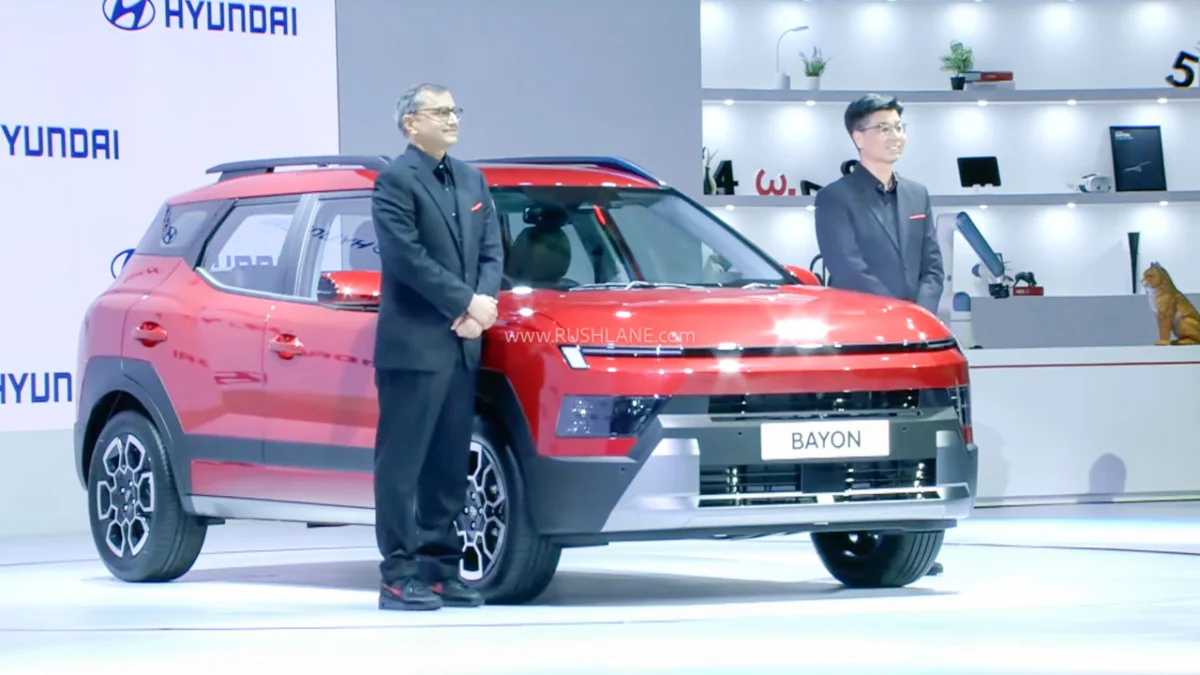
Hyundai Motor India has officially signaled a major shift in its domestic product strategy with the launch of the new Hyundai Bayon. Priced at an aggressive starting point of Rs 9,99,900 (ex-showroom), the Bayon arrives as a strategically positioned SUV, designed to nestle comfortably beneath the segment-leading Creta. By blending a refined naturally aspirated petrol powertrain with industry-leading generative AI technology, Hyundai is clearly aiming to capture the tech-savvy urban consumer who demands both utility and innovation.

The Bayon is more than just a new nameplate for the Indian market; it is a global endeavor. Proudly manufactured in India, the SUV is slated for export to over 50 international markets, underscoring India’s growing role as a pivotal hub in Hyundai’s global manufacturing ecosystem.

Engineering and Dimensions: A Compact Powerhouse
The Hyundai Bayon is built with a focus on maximizing cabin space without sacrificing the nimble handling required for urban commuting. Measuring 4,245 mm in length, 1,810 mm in width, and 1,605 mm in height (inclusive of roof rails), the vehicle provides a robust road presence. The 2,600 mm wheelbase ensures a stable ride quality, while the unladen ground clearance of 205 mm is specifically tailored to handle the diverse and often challenging road conditions found across India.

Beyond its physical footprint, the Bayon offers an impressive 505-litre boot capacity—a figure that positions it among the best in its class for cargo versatility. With the inclusion of 60:40 split rear seats and a practical design layout, the vehicle is aimed at families and professionals alike who require a balance between daily utility and weekend-ready storage.

Powertrain Dynamics: Performance Meets Efficiency
Under the hood, the Bayon is powered by a 1,497cc, four-cylinder MPi petrol engine that delivers 115 PS at 6,300 rpm and 143.8 Nm of peak torque at 4,500 rpm. This power plant is designed to offer a linear and predictable power delivery, catering to both city traffic and highway cruising.

Hyundai is offering consumers two distinct transmission choices: a traditional six-speed manual gearbox for those who prefer tactile engagement, and an advanced Intelligent Variable Transmission (iVT) for those prioritizing convenience. The iVT variant is particularly noteworthy as it features "Dash Boost Mode," a feature engineered to sharpen throttle response during overtaking maneuvers, and "Sporty Drive Tech," which optimizes the powertrain for a more spirited driving experience.

To further enhance the driving experience, the iVT model comes equipped with a drive-mode selector (Eco, Normal, and Sport) accessible via a steering-mounted button, complemented by paddle shifters. For those seeking maximum fuel efficiency, the vehicle also includes "Idle Stop & Go" technology. Looking ahead, Hyundai has already confirmed that a factory-fitted CNG version of the Bayon is scheduled for release in January 2027, further expanding its appeal to eco-conscious and cost-sensitive buyers.

The Digital Frontier: Generative AI and Connectivity
Perhaps the most headline-grabbing aspect of the new Bayon is its integration of state-of-the-art digital infrastructure. Hyundai Motor India has debuted its first in-built generative AI voice assistant, a groundbreaking feature that leverages Perplexity’s search intelligence and SoundHound’s advanced voice-recognition technology.

This AI assistant is capable of processing complex, natural-language queries, allowing passengers to ask for real-time updates on weather, news, sports, travel, and local restaurant recommendations. While the current iteration operates exclusively in English, it represents a significant leap forward in how vehicles interact with their occupants.

The digital experience is centered around the Connected Car Navigation Cockpit (ccNC), which features dual 12.3-inch displays housed in a sophisticated curved panoramic layout. Powered by high-performance NVIDIA technology, the interface is fluid, responsive, and highly intuitive. Connectivity is a core pillar of the Bayon, with support for wireless Android Auto and Apple CarPlay, as well as over 70 distinct Bluelink functions. Additionally, the vehicle supports over-the-air (OTA) software updates across 19 different vehicle controllers, ensuring the SUV remains up-to-date long after it leaves the showroom. A Bose sound system rounds out the premium interior experience.

Safety: A Non-Negotiable Priority
Safety has become the defining battleground for the Indian automotive industry, and Hyundai has responded with a comprehensive suite of features. The Bayon comes standard with over 35 safety technologies, including six airbags, electronic stability control, hill-start assist, a rollover sensor, and a high-precision tyre-pressure monitoring system.

For top-tier variants, Hyundai has introduced its "SmartSense Level 2 Pro" ADAS (Advanced Driver Assistance System), which incorporates 23 active safety features. This includes Highway Driving Assist and navigation-based cruise control, which intelligently adjusts vehicle speed based on map data when driving on designated expressways. A 360-degree surround-view monitor and a blind-spot view monitor are also available, providing the driver with unparalleled situational awareness.

Hyundai has explicitly stated that the Bayon has been engineered to meet five-star safety standards under internal assessment. The vehicle is currently undergoing rigorous testing by Bharat NCAP, with official ratings expected to be announced by December 2026. This focus on safety is a clear response to shifting consumer preferences and stricter regulatory mandates.

Comfort, Convenience, and Cabin Aesthetics
The cabin of the Bayon is designed to be an oasis of comfort. Notable features include ventilated front seats (a must-have in the Indian climate), an eight-way electrically adjustable driver’s seat, and reclining rear seats. Passengers in the back also benefit from dedicated rear AC vents, while the panoramic sunroof adds an element of luxury and openness to the cabin.

Practicality is further enhanced by the inclusion of multiple USB-C ports for fast charging and a wireless phone charging pad. The interior aesthetic features a refined black-and-olive-grey color scheme, which can be further customized with premium leatherette upholstery and sophisticated ambient lighting, allowing owners to set the mood of the cabin to their preference.

Variant Structure and Market Positioning
The Bayon is launching with a tiered variant structure, comprising the HX2, HX3, HX3+, HX5, HX6, HX8, and HX10 trims. The iVT transmission is offered across the mid-to-high tiers (HX5, HX6, HX8, and HX10), providing a wide range of price points for different budgets.

Exterior aesthetics are equally diverse, with ten distinct color options. These include six monotone shades, two dual-tone combinations for a more sporty look, and two sophisticated matte finishes. Exterior design highlights include the striking H-Edge LED DRLs and matching tail lamps, dual LED projector headlamps, and 17-inch diamond-cut alloy wheels that give the SUV a modern, aggressive stance.

Chronology of the Development
The development of the Bayon follows a disciplined, multi-year product roadmap. After identifying a gap in the sub-Creta segment, Hyundai fast-tracked the localization of the platform to ensure a competitive price point in the Indian market. Following extensive testing in varied Indian climatic and road conditions, the project moved into production at the company’s Chennai facility. The official launch in late 2026 marks the culmination of these efforts, with the upcoming CNG variant serving as the next milestone in early 2027.

Official Stance and Future Implications
Hyundai executives have emphasized that the Bayon is intended to redefine the entry-level SUV experience. By democratizing premium features like generative AI, level 2 ADAS, and a massive 505-litre boot, the company is aiming to disrupt the market share of competitors currently holding sway in the compact SUV segment.

The implications for the Indian automotive market are significant. With this launch, Hyundai is signaling that high-end technology—previously reserved for flagship SUVs—is now a standard expectation for the mass market. Furthermore, by utilizing India as a base to export the Bayon to over 50 countries, Hyundai is validating the quality of Indian engineering and manufacturing on a global stage.

As the brand prepares for the Bharat NCAP results, the market will be closely watching whether the Bayon can secure a top-tier safety rating. If successful, it could set a new benchmark for what consumers should expect from an SUV priced near the Rs 10 lakh mark. With a strong focus on connectivity, safety, and performance, the Hyundai Bayon is poised to be a formidable challenger in one of the most competitive automotive markets in the world.