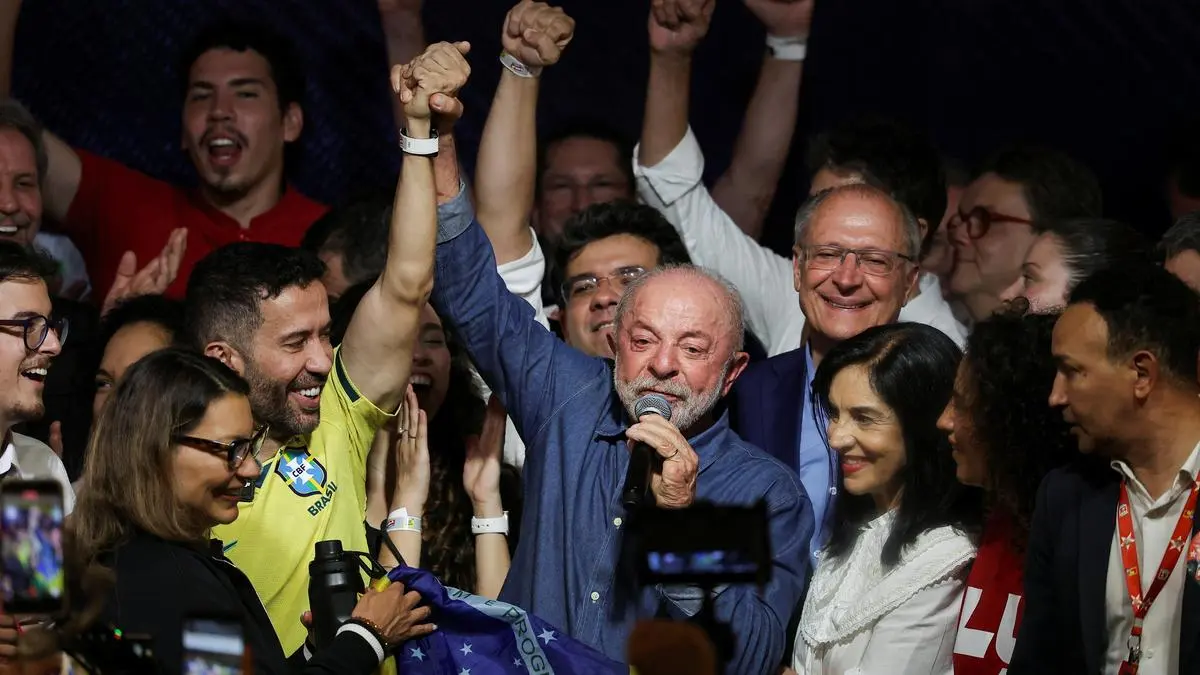
New Delhi: In a high-stakes electoral contest that captured the attention of the international community, Brazilian President Luiz Inácio Lula da Silva has secured a decisive re-election victory. Following a nerve-wracking count that saw 100 percent of the ballots processed, the Brazilian electoral court officially confirmed that Lula commanded a lead of nearly 4.4 million votes, capturing 51.8 percent of the total electorate. This victory marks a significant continuation of his political legacy and signals a period of consolidation for his administration amidst a deeply polarized political climate.
His opponent, Flávio Bolsonaro, trailed behind, reflecting a nation divided by competing visions for the future of Latin America’s largest economy. As the dust settles in Brasília, the geopolitical ripples of this result are already being felt from New Delhi to Washington.
The Chronology of the Vote: A Tense Path to Victory
The election cycle in Brazil was characterized by intense campaigning, high voter turnout, and a palpable sense of urgency regarding the country’s democratic institutions. The campaign period, which lasted several months, saw both camps engaging in fierce debates over economic policy, environmental protection, and the role of Brazil in the global order.
- The Campaign Trail: Throughout the final weeks of the race, polling stations across Brazil reported record-breaking engagement. Both Lula and Bolsonaro traversed the country, appealing to their respective bases—Lula focusing on social welfare and poverty alleviation, and Bolsonaro emphasizing traditional values and market-driven economic reform.
- Election Day: On the day of the poll, observers noted significant logistical efforts to ensure accessibility across Brazil’s vast and geographically diverse territory. Electoral officials remained on high alert, monitoring for disinformation and ensuring the security of the digital voting infrastructure.
- The Tallying Process: As the polls closed, the initial results showed a neck-and-neck race. However, as the rural and urban centers reported their final figures, the trend solidified in favor of the incumbent. By the time the final 100 percent of the vote was counted, the electoral court announced that Lula had successfully crossed the threshold required to maintain his presidency.
- The Announcement: The official confirmation of the results triggered nationwide reactions. In the capital, supporters of the incumbent celebrated in the streets, while international observers praised the integrity of the process, noting the resilience of Brazil’s electoral system.
Global Market Snapshot: A Volatile Financial Landscape
As news of the election results broke, global and regional financial markets reacted with varying degrees of volatility. While the political transition was smooth, investors remained cautious about the implications for Brazil’s fiscal policy.
| Asset Class | Current Price | Daily Change |
|---|---|---|
| SENSEX | 73,125.28 | +1.45 |
| CRUDE OIL | 9,636.00 | -164.00 |
| GOLD | 142,770.00 | +746.00 |
| SILVER | 196,369.00 | +650.00 |
The uptick in gold and silver prices reflects a broader market trend of seeking safe-haven assets amidst global political shifts. Simultaneously, the dip in crude oil prices suggests investor concern over potential supply-side fluctuations and the broader economic stability of commodity-exporting nations like Brazil.
Official Responses: The View from New Delhi
Prime Minister Narendra Modi was among the first world leaders to extend his congratulations to President Lula. The warmth of the message underscores the growing importance of the India-Brazil strategic partnership, particularly within the framework of the Global South.
In a formal post on X, Prime Minister Modi stated: "Heartiest congratulations to my dear friend, President Lula, on his remarkable re-election victory. I look forward to working closely with him to further deepen and expand the multifaceted India-Brazil Strategic Partnership."
The Prime Minister’s office elaborated on this sentiment, emphasizing that the two nations are poised to strengthen cooperation across diverse sectors. This includes collaboration in agriculture, defense, renewable energy, and technology. Furthermore, the statement highlighted that both leaders are committed to advancing the shared priorities of the Global South—a coalition of developing nations that seeks a greater voice in international governance and economic forums.
The message from New Delhi is clear: India views Brazil as a vital partner in building a more inclusive, equitable, and sustainable world. This alignment is expected to manifest in upcoming G20 and BRICS summits, where both nations will likely coordinate their positions on climate change and global debt relief.

The Path Forward: Implications for Policy and Governance
President Lula’s re-election provides him with a renewed mandate, yet he faces significant hurdles. The 4.4 million vote margin, while statistically significant, highlights the depth of the polarization that persists within the Brazilian electorate.
Economic Reform and Social Welfare
Lula’s administration is expected to prioritize social programs designed to lift lower-income families out of poverty—a cornerstone of his previous terms. However, he must balance these expenditures with the demands of the financial markets, which remain wary of inflation and fiscal deficits. Balancing social spending with fiscal responsibility will be the defining challenge of his second term.
Environmental Stewardship
Given the global focus on the Amazon rainforest, the international community will be closely watching the Lula administration’s environmental policies. Expect to see renewed efforts to curb deforestation and a shift toward green energy investments, which could open new avenues for international cooperation and funding from global climate funds.
The Global South Agenda
Lula has long been a proponent of a multi-polar world order. His re-election suggests that Brazil will continue to advocate for reforms within international institutions like the United Nations Security Council and the International Monetary Fund. By working with India, South Africa, and other key players in the Global South, Lula intends to challenge the traditional dominance of the West in global decision-making.
Internal Stability
The electoral contest was heated, and the challenge for the President will be to unify a divided nation. His rhetoric following the victory has been one of reconciliation, calling on all Brazilians to contribute to the nation’s growth. Whether this message of unity can bridge the gap between his supporters and those who voted for Flávio Bolsonaro remains the most critical question for the stability of his government.
Conclusion
The re-election of Luiz Inácio Lula da Silva is a watershed moment for Brazil and the broader international community. By securing 51.8 percent of the vote, he has cemented his place in Brazilian history and reaffirmed his vision for the country’s future.
As he begins this new term, the focus will inevitably shift from the campaign trail to the cabinet room. The eyes of the world are on Brazil, not only for its economic potential but also for its role in navigating the complex challenges of the 21st century—from climate change to global inequality. With the support of strategic partners like India, President Lula faces a monumental, yet historic, opportunity to steer his nation toward a period of renewed prosperity and global influence.
As the markets settle and the dust of the campaign clears, the international community remains ready to engage with a Brazil that is, once again, poised to take center stage in the global narrative.
Published on October 26, 2026. This article was compiled using reports from international news agencies and official statements provided by the Prime Minister’s Office of India.