In the modern landscape of prestige television, where streaming algorithms often dictate the lifecycle of a series, the meteoric rise of the Canadian drama Heated Rivalry stands as an outlier. What began as a “small Canadian show” based on Rachel Reid’s acclaimed Game Changers literary sequence has evolved into an international cultural juggernaut, bridging the gap between niche romance fandom and mainstream critical success.
The series’ reach is best exemplified by its unexpected integration into the political zeitgeist. This past July, when Sam Seder, co-host of the influential political podcast The Majority Report, returned from a brief hiatus, he cryptically attributed his absence to “a small acting job in the upcoming second season of a popular show.” His co-host, Emma Vigeland, immediately bypassed the political discourse of the day to ask, “Oh my god, was it Heated Rivalry?” For ten minutes, the podcast—typically focused on legislative shifts and economic policy—devolved into a passionate, fan-driven analysis of costumes, dialogue, and the series’ landmark intimacy scenes. This interaction serves as a microcosm of the show’s broad, cross-demographic appeal.
The Genesis of a Hit: Adapting the Game Changers
The adaptation of Rachel Reid’s Game Changers novels for the screen was helmed by actor-director Jacob Tierney. While the source material enjoyed a dedicated readership, the television iteration—led by Hudson Williams as the stoic Shane Hollander and Connor Storrie as the mercurial Ilya Rozanov—transcended its literary origins.

The narrative, which tracks the high-stakes, high-pressure world of professional ice hockey alongside a slow-burn romance between two star athletes, has been lauded for its avoidance of traditional queer tropes. Instead of relying on tragedy or external societal villainy to generate drama, Heated Rivalry centers its conflict on the internal pressures of elite sports, the challenges of public perception, and the evolution of trust between two men who are, at once, rivals and soulmates.
Chronology: From Script to Streaming Stardom
The trajectory of Heated Rivalry is a masterclass in building cultural momentum.
- Development Phase: Jacob Tierney and his creative team began with a clear, localized vision. As Tierney notes, the writing process was never aimed at the “blockbuster” market. The intention was to tell a specific story about the intersection of Canadian and Russian hockey cultures.
- The Debut: Upon its launch on HBO Max, the series saw a steady, organic climb. According to Luminate data reported by The New York Times, the show’s weekly viewing figures grew from an initial 30 million streaming minutes to a staggering 324 million by the time the season one finale aired.
- The Accolades: The series garnered both a Peabody Award and a GLAAD Media Award for Outstanding New Television Series, cementing its status as a critical darling.
- The Literary Boom: By December 2025, the synergy between the screen adaptation and the source material was undeniable, with over 650,000 copies of Reid’s Game Changers series sold.
- Current Status: With season two in production, the franchise is preparing to expand its universe, incorporating storylines from Reid’s The Long Game and Role Model.
Supporting Data: By the Numbers
The statistical success of Heated Rivalry defies the “binge-watch” culture that has dominated the last decade. By choosing a weekly release cadence, the showrunners allowed the audience to digest, discuss, and analyze each episode in real-time. This “water-cooler” effect—once the staple of linear television—proved to be the show’s greatest asset.

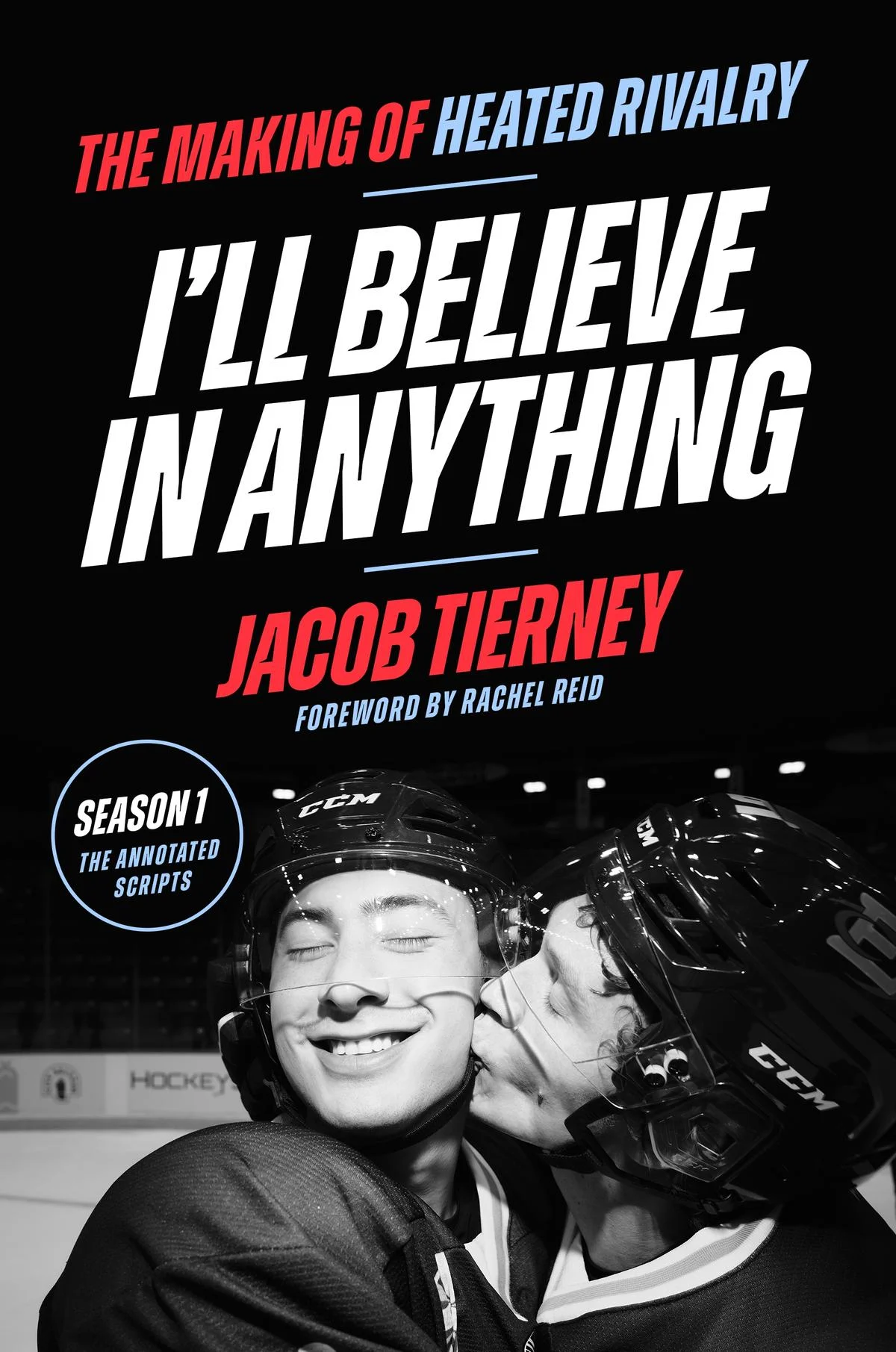
The economic impact is mirrored by the publishing success. With the upcoming release of I’ll Believe in Anything: The Making of Heated Rivalry Season 1 (The Annotated Scripts), scheduled for October 27 in India via Hachette, fans are being offered a rare look at the “engine room” of a hit show. The book includes exclusive behind-the-scenes insights, from the logistical challenges of shooting on-ice hockey sequences to the specific costume choices—such as the now-iconic Canadian Olympic fleece—that helped define the characters’ identities.
The Craft of Intimacy: A New Standard
A defining characteristic of Heated Rivalry is its approach to intimacy. Far from being gratuitous, the sex scenes in the series are essential narrative beats that illustrate the progression of Shane and Ilya’s relationship.
Working with intimacy coordinator Chala Hunter, Tierney and his lead actors developed a lexicon of movement that reflected the characters’ inner lives. As Tierney explains, the goal was to capture "Shane and Ilya when nobody is looking." This required the actors to strip away the performance of their public personas, creating an atmosphere of vulnerability that resonated deeply with audiences.

This approach has been a subject of significant academic and fan discourse. The show has found a particularly ardent following among young women, echoing the tradition of the Japanese “Boys’ Love” (BL) genre. Scholars suggest that such narratives allow viewers to explore desire and emotional intimacy outside the heteronormative frameworks often enforced in conventional romantic dramas. By centering the intimacy on the emotional growth of the protagonists rather than mere spectacle, Heated Rivalry elevated the standard for queer representation on television.
Official Perspectives: The Director’s Vision
Jacob Tierney’s perspective on the show’s success is one of humble surprise. “When we were writing these scripts, we knew we had something unique on our hands, of course. But it was never designed as a ‘blockbuster’,” Tierney says. “We were writing for a little Canadian show, y’know? None of us could have foreseen the scale that this has ended up achieving.”
Tierney also emphasizes the cultural significance of the sport itself. “Ice hockey is an incredibly special part of Canadian culture. It’s the way Americans are really passionate about baseball, or in India, the way people react to cricket. If there’s a nation after Canada that takes ice hockey this seriously, it is Russia. So, for the romantic pairing of Shane and Ilya to work, they had to be a Canadian and a Russian.”

Implications for Future Storytelling
The success of Heated Rivalry has shifted the conversation regarding how romantic dramas are produced and distributed. Its reliance on a weekly rollout allowed it to survive in an era of content saturation, proving that audiences are still hungry for narrative depth and sustained character arcs.
Furthermore, the show has demonstrated that niche subject matter—whether it is the technicalities of professional hockey or specific queer romance dynamics—can achieve universal appeal if the execution is grounded in emotional honesty. The decision to cut a six-minute opening scene down to one minute, as revealed in the annotated scripts, highlights the team’s commitment to immediate character chemistry, a lesson in pacing that future showrunners are likely to study.
Looking Ahead: The Second Season and Beyond
As the production moves toward the premiere of season two, the stakes have shifted. The narrative will expand to cover the complexities of maintaining a private relationship under the glare of public scrutiny, drawing from Rachel Reid’s The Long Game. Additionally, the introduction of new characters—including those portrayed by Milla Jovovich, Paul Gross, and Justice Smith—suggests a broadening of the world, specifically through the lens of Role Model, which will introduce the relationship between hockey player Troy Barrett and his social media manager, Harris Drover.

While fans await the release of the next novel in the series, Unrivaled, currently slated for June 2027, the television series has already secured its place in the pantheon of modern dramas. Heated Rivalry has not only revitalized the sports-romance genre but has also redefined the possibilities of how a “little show” can, through craft, intentionality, and a focus on human connection, capture the heart of a global audience. Whether through the viral clips of its intimate moments or the serious analytical debates on political podcasts, the show has proven that the most compelling stories are often those that find the profound within the specific.