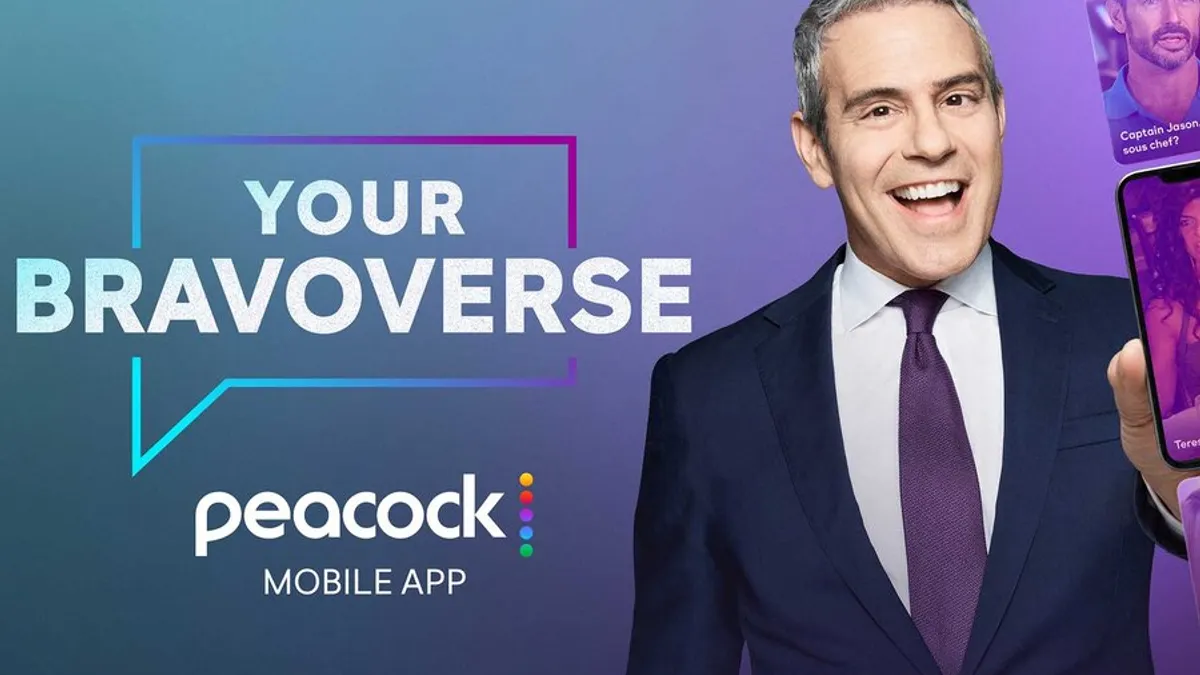
In a bold move that signals the future of personalized entertainment, NBCUniversal’s Peacock has officially launched "Your Bravoverse," an innovative, AI-powered vertical video experience designed to deepen viewer engagement with its most popular reality television franchises. The launch, which positions the streaming platform at the cutting edge of consumer technology, features Wendy’s as the inaugural brand partner, marking a significant evolution in how streaming services integrate advertising into the user journey.
Main Facts: The Intersection of Reality TV and AI
"Your Bravoverse" is not merely a content hub; it is a sophisticated, AI-driven navigation system integrated directly into the Peacock mobile app. Announced originally in March 2026, the platform utilizes generative artificial intelligence to curate personalized viewing experiences for fans of the Bravo network—the powerhouse behind cultural phenomena like Vanderpump Rules and the expansive Real Housewives franchise.
The centerpiece of the experience is an AI-generated avatar of Andy Cohen, the beloved host of Watch What Happens Live. Trained to replicate Cohen’s signature style, cadence, and charisma, the digital host guides users through a bespoke playlist of clips, iconic scenes, and undiscovered content. By leveraging AI to source, curate, and stitch together clips, Peacock claims the feature offers more than 600 billion potential viewing variants, ensuring that no two user experiences are identical. To maintain brand integrity and content quality, a team of NBCUniversal editors oversees the AI’s output, providing a human-in-the-loop layer of verification.
For advertisers, the platform represents a "canvas" for deep integration. Rather than interrupting the viewing experience with static spots, sponsors can be embedded directly into the "Bravoverse" flow. Wendy’s, building on a long-standing partnership with Bravo that includes talent collaborations and physical activations at BravoCon, is the first to leverage this technology. In practice, the Andy Cohen avatar can contextually reference the brand, creating a seamless bridge between entertainment and marketing.
Chronology: From Concept to Reality
The journey to "Your Bravoverse" reflects the fast-paced nature of modern streaming innovation:
- March 2026: NBCUniversal first signals its intent to "super-serve" fans by announcing a suite of AI-driven features for the Peacock mobile app, aiming to move beyond traditional content discovery.
- Summer 2026: Peacock experiments with "microdramas" and enhanced vertical video formats, testing the appetite for short-form, social-style content among its subscriber base.
- Early October 2026: Final testing phases conclude, with editors validating the AI’s ability to handle the massive volume of Bravo’s archival footage while maintaining narrative coherence.
- October 15, 2026: "Your Bravoverse" officially goes live on the Peacock mobile app homepage, with Wendy’s confirmed as the exclusive launch sponsor.
Supporting Data: Why Reality TV and AI Are a Perfect Match
The decision to anchor this AI initiative in the Bravo ecosystem is driven by hard data regarding viewer loyalty. According to internal metrics from NBCUniversal, the average Bravo fan consumes 24 hours of content per month. Furthermore, the network has seen consistent, season-over-season growth across its returning series since 2024.
The strategic pivot toward vertical video is equally data-backed. As the streaming industry grapples with the decline of linear television and the rise of "cord-cutting," platforms are racing to capture the attention of Gen Z and younger Millennials—demographics that have grown accustomed to the scrollable, short-form interfaces of TikTok and Instagram. Research from Toluna suggests that nearly 80% of Gen Z consumers would increase their weekly streaming service usage if those platforms integrated short-form, social-style video features.
The financial incentive is also substantial. With U.S. ad spend on Connected TV (CTV) platforms expected to climb 11% this year, reaching a projected $29.3 billion according to the Interactive Advertising Bureau (IAB), Peacock is positioning itself to capture a larger share of this growing pie. By offering a high-engagement, brand-safe environment, Peacock is attempting to differentiate itself from competitors who rely solely on traditional mid-roll ad formats.
Official Responses and Strategic Vision
NBCUniversal has framed "Your Bravoverse" as a testament to the company’s commitment to "super-serving" its most passionate audiences. The initiative is part of a broader, company-wide strategy to modernize the streaming experience through technology that feels human-centric despite its complex technical backend.
While the technical team at Peacock emphasizes the scale of the AI’s capabilities, they are quick to highlight the necessity of the human editorial team. "AI handles the heavy lifting of sourcing and assembly, but the human touch ensures the ‘Bravo-ness’ of the content remains authentic," an NBCUniversal spokesperson noted.

The partnership with Wendy’s is viewed as a blueprint for the future. "Wendy’s understands the culture of reality TV," a marketing executive familiar with the deal stated. "By moving away from traditional 30-second spots and toward this integrated, AI-narrated experience, we aren’t just showing an ad; we’re participating in the fan’s conversation."
Implications for the Streaming Landscape
The launch of "Your Bravoverse" carries significant implications for the future of digital media:
1. The Death of the "Passive" Streamer
For years, streaming platforms have functioned as digital libraries—large catalogs where users browse and select content. "Your Bravoverse" represents a shift toward the "curated feed," where the platform assumes the role of an active programmer. By using AI to guide the user, Peacock is reducing the "choice paralysis" that often plagues subscribers on platforms with massive libraries.
2. The Evolution of CTV Advertising
As advertisers become increasingly wary of the opaque nature of some CTV inventory, platforms that provide granular, high-engagement data will win. "Your Bravoverse" allows for a new metric of success: not just "impressions," but "contextual relevance." If an AI avatar can mention a brand while discussing a character’s favorite meal, the potential for high-impact, low-friction advertising is massive.
3. Vertical Video as the Standard
Peacock’s move suggests that vertical video is no longer a "social media-only" format. By bringing the vertical scroll to a major streaming app, the company is betting that the behavior learned on platforms like TikTok is now the default mode for digital consumption. If successful, this could spark a wave of UI updates across other major streaming services like Netflix, Disney+, and Hulu.

4. The Competitive Landscape
This launch arrives in a week of intense activity in the streaming space. As Vizio rolls out creator-led channels and other platforms pivot toward "microdramas" and mini-games, the race is on to create an "ecosystem" rather than just a "service." Peacock is clearly betting that by owning the intersection of AI, reality TV, and personalized advertising, it can turn the tide against cord-cutting and keep its subscribers locked into the Peacock app for longer, more meaningful sessions.
5. Ethical Considerations
As with any AI-driven product, the use of a digital avatar of a real person (Andy Cohen) brings questions regarding the future of talent and digital rights. While the implementation here is clearly authorized and curated, it serves as a harbinger for a future where celebrity likenesses may be used across thousands of personalized interactions simultaneously. The industry will be watching closely to see how consumers react to this level of synthetic interaction.
In conclusion, "Your Bravoverse" is more than a flashy new feature; it is a calculated bet on the future of media. By merging the loyal, high-engagement culture of reality television with the efficiency of generative AI and the financial muscle of modern CTV advertising, Peacock is attempting to redefine what it means to be a streaming platform in 2026. Whether this "Bravoverse" becomes the standard for the industry remains to be seen, but the intent is clear: the future of television is personalized, vertical, and AI-powered.