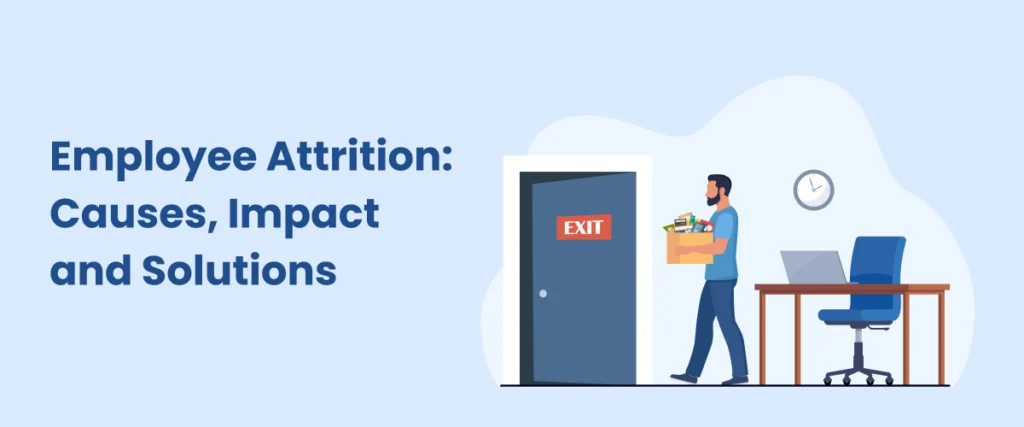
In the modern corporate landscape, the health of an organization is often measured by its growth metrics, revenue margins, and market share. However, there is a quieter, more insidious metric that can undermine even the most robust business models: Employee Attrition. Often conflated with turnover, attrition represents the gradual thinning of an organization’s human capital—a phenomenon that, if left unmonitored, can lead to the slow erosion of institutional knowledge, culture, and operational efficiency.
For HR leaders and business executives, understanding attrition is no longer just a administrative task; it is a strategic imperative. This comprehensive analysis explores the nuances of attrition, the financial and cultural implications of workforce reduction, and actionable strategies for building a more resilient, long-term workforce.
1. Defining the Phenomenon: What is Employee Attrition?
At its core, employee attrition—often referred to as "churn"—describes the reduction in an organization’s workforce strength when employees exit and are not immediately replaced. Unlike turnover, which implies the constant cycle of hiring to fill vacant roles, attrition often signals a strategic shift, a lack of backfilling, or an inability to attract talent to specific roles.
When an employee departs due to resignation, retirement, or termination, the "attrition" occurs the moment the organization decides that the position will either be eliminated, merged into another role, or left vacant to reduce overhead. Tracking these departures is essential for leadership to understand whether their workforce is shrinking by design or by default.
The Critical Distinction: Attrition vs. Turnover
While used interchangeably in casual conversation, HR professionals maintain a strict distinction:
- Turnover: The process where an employee leaves and the company fills the vacancy. It maintains the current headcount.
- Attrition: The process where an employee leaves and the position remains vacant, leading to a net decrease in headcount.
| Factor | Employee Turnover | Employee Attrition |
|---|---|---|
| Replacement | Role is backfilled | Role is left vacant |
| Headcount | Remains stable | Gradually decreases |
| Primary Goal | Operational continuity | Cost-cutting or restructuring |
| Hiring Cost | High (Recruitment/Training) | Minimal (Position removed) |
2. Chronology of a Departure: The Lifecycle of Attrition
The journey toward attrition rarely happens overnight. It typically follows a predictable lifecycle that organizations can identify if they maintain proactive communication channels.
Phase 1: The Disengagement Period
This is the "silent" phase where an employee begins to mentally detach. Causes often include stagnant career growth, misalignment with company values, or a lack of recognition. Productivity may remain stable, but the quality of initiative and innovation often dips.

Phase 2: The Catalyst
A specific event acts as the "tipping point." This could be an external offer, a toxic management encounter, a period of burnout, or a significant change in personal circumstances. At this stage, the employee is usually "one foot out the door."
Phase 3: The Departure
The formal process of resignation or termination. During this phase, the organization must act quickly to manage the knowledge transfer—a step that is frequently botched, leading to "knowledge leakage."
Phase 4: The Evaluation
Post-exit, management must decide: Is this role essential? If the answer is no, the attrition is official. If the answer is yes, the organization shifts into a recruitment cycle, moving from an attrition scenario to a turnover scenario.
3. Supporting Data: Measuring the Impact
To manage attrition, one must first measure it. The calculation of the attrition rate provides a quantifiable baseline for year-over-year comparison.
The Standard Calculation Formula
To determine the attrition rate, organizations use the average headcount over a specific period.
Attrition Rate (%) = (Total Employees Who Left ÷ Average Number of Employees) × 100
Where: Average Employees = (Employees at Start + Employees at End) ÷ 2

Example:
If a firm begins the year with 500 employees and ends with 450, having lost 50 people throughout the year:
- Average Headcount: (500 + 450) / 2 = 475
- Attrition Rate: (50 / 475) × 100 = 10.5%
Data analysts suggest that a "healthy" attrition rate varies by industry. For instance, retail or hospitality may view 20% as standard due to the nature of the work, while a specialized tech firm might consider 10% a cause for alarm.
4. The Hidden Costs of Attrition
The financial impact of attrition extends far beyond the surface-level savings of not paying a salary. Organizations often overlook the "invisible" costs that accumulate in the wake of a departure.
Lost Productivity
When a high-performing employee leaves, there is a "ramp-down" period where productivity falls, followed by a "ramp-up" period for the remaining team members who must absorb the workload. This often leads to overtime pay and increased stress, potentially triggering a "contagion effect" where others begin to look for exits.
Knowledge Leakage
Institutional knowledge—the "how-to" of company processes, client relationships, and historical context—is often tied to the individual. When a person leaves, this intellectual capital is frequently lost unless robust documentation processes are in place.
Morale and Culture
High attrition creates a vacuum. When team members see their colleagues leaving regularly, the "psychological contract" between the employee and the employer is broken. This leads to a decline in engagement, lower creativity, and a shift toward a survivalist culture.
5. Strategic Implications and Official Responses
Organizations that effectively manage attrition do not view it as an inevitability, but as a diagnostic tool.

Identifying Patterns
By segmenting attrition data, leadership can identify "hotspots." If attrition is high among junior employees, the issue is likely in onboarding and training. If it is high among mid-level managers, the issue is likely compensation or lack of career progression.
The "Stay Interview" Strategy
Rather than relying solely on exit interviews—which are often biased by the departing employee’s desire to "burn no bridges"—proactive companies implement "stay interviews." By asking high-performing employees what keeps them at the company, HR can preemptively address frustrations before they lead to resignation.
Flexible Work as a Retention Lever
In the post-pandemic era, flexibility has become the primary currency of retention. Employees are increasingly prioritizing autonomy over minor pay increments. Organizations that offer hybrid work models, flexible hours, and results-based performance reviews see significantly lower voluntary attrition rates.
6. How to Reduce Attrition: A Roadmap for HR
Reducing attrition requires a holistic approach that targets the root causes rather than the symptoms.
- Competitive Compensation Benchmarking: Regularly review salary structures against market standards. If your compensation lags behind, no amount of "company culture" will stem the tide.
- Career Pathing: Employees need to see a future within the organization. Implementing clear promotion paths and professional development opportunities ensures that talent feels their growth is prioritized.
- Leadership Development: The old adage, "people leave managers, not companies," remains true. Investing in soft-skills training for supervisors creates a healthier, more supportive work environment.
- Employee Wellness Programs: Burnout is a major driver of attrition. Implementing realistic workload expectations and genuine mental health support can increase the longevity of the workforce.
- Robust Onboarding: Research indicates that a significant portion of attrition happens within the first 90 days. A structured, welcoming, and informative onboarding process can significantly reduce early-tenure exits.
7. Conclusion: Turning Data into Action
Employee attrition is a mirror reflecting the health of an organization. While a certain level of natural attrition—such as retirement or career changes—is expected, a pattern of persistent exits should serve as an urgent call to action.
By moving beyond simple percentages and digging into the "why" behind the numbers, HR professionals can transform attrition from a source of instability into a driver of strategic evolution. Whether through improved management training, competitive compensation, or a revamped culture, the goal remains the same: to create an environment where the most talented people choose to stay, grow, and thrive.
As the workforce continues to evolve, the companies that prioritize the human element of their operations will be the ones that sustain long-term success in an increasingly competitive global economy.