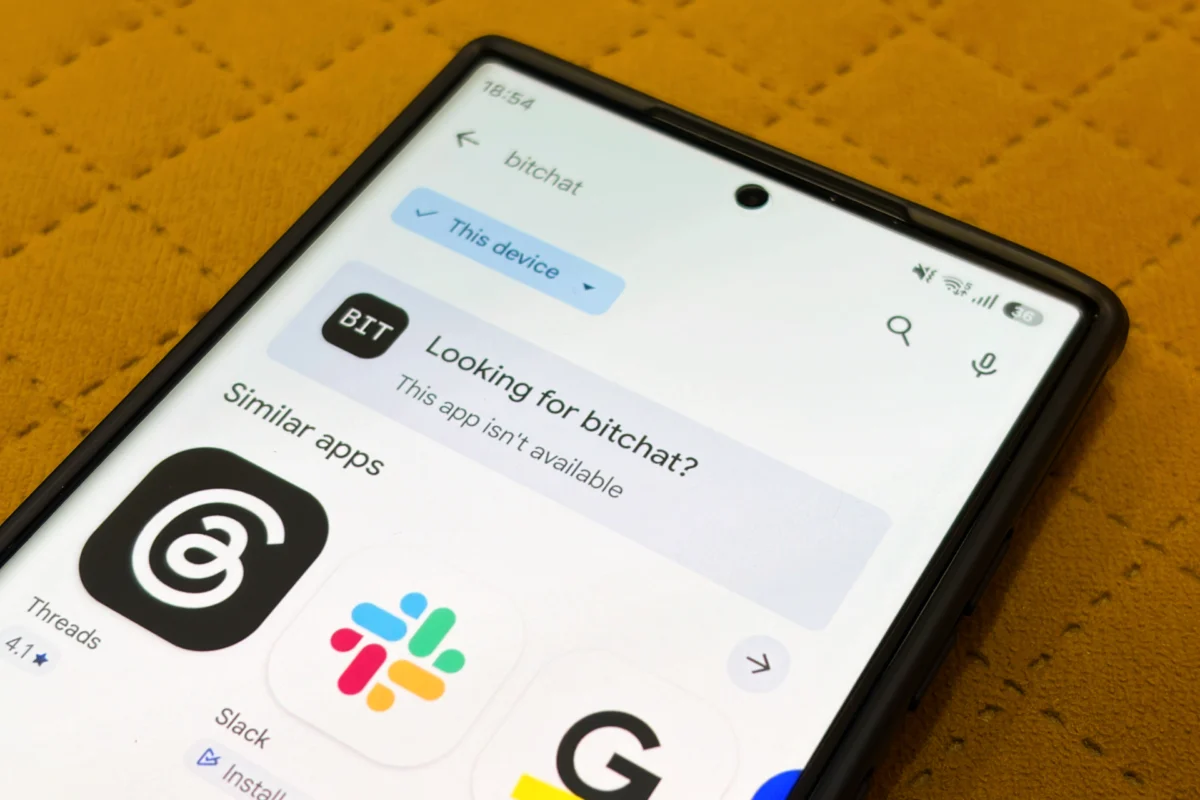
In a significant escalation of India’s ongoing campaign to regulate decentralized communication tools, Jack Dorsey’s messaging application, Bitchat, has been effectively scrubbed from the nation’s digital landscape. Following months of mounting regulatory pressure and targeted legal actions, both Apple and Google have removed the app from their respective storefronts in India. The move marks a critical juncture in the global debate over state-mandated internet control, the right to encrypted communication, and the reach of sovereign authority over open-source software.
The Mechanics of a Digital Siege
Bitchat, which launched in July of last year, represents a paradigm shift in mobile connectivity. By leveraging Bluetooth mesh networking, the application allows devices in close proximity to exchange encrypted messages without requiring cellular infrastructure, Wi-Fi, or centralized servers. Its architecture makes it a potent tool for activists, journalists, and citizens operating in environments where traditional communication channels are fragile or actively monitored.
However, it is precisely this "resilience" that has drawn the ire of New Delhi. As the Indian government continues to navigate a period of high-stakes political demonstrations—most notably the ongoing, youth-led protests against alleged manipulations of national voter rolls—the utility of Bitchat has become a point of friction. Reports indicate that protesters, particularly in the capital, have increasingly turned to decentralized apps like Bitchat and its peer, Briar, to circumvent state-imposed internet shutdowns.
A Chronology of Escalation: From Repositories to Storefronts
The recent removal of the app is not an isolated event but the culmination of a systematic effort by the Indian Ministry of Electronics and Information Technology (MeitY) to neutralize the platform.
- July 2026: The friction began in earnest when Indian authorities issued a directive to GitHub to shutter repositories associated with Bitchat. At the time, the government argued that the app’s decentralized nature hindered law enforcement’s ability to intercept communications or trace individuals. This initial strike utilized laws governing "intermediary liability," setting a legal precedent that software developers could be held responsible for the functional capabilities of their tools.
- Late 2026: As domestic unrest intensified, particularly surrounding the voter roll controversy, internet blackouts became a common tool of state control. In October, authorities suspended internet services around Delhi’s Jantar Mantar for 12 hours, a move that prompted a massive migration of users toward Bitchat.
- The Current Strike: This week, the Indian government invoked Section 69A of the Information Technology Act—the primary legal instrument for state-ordered online blocking—to force Apple to remove the app from its Indian App Store. The order also effectively crippled the app’s distribution through Apple’s TestFlight beta-testing service. Google Play followed suit shortly after, and the app’s official website was rendered inaccessible via major Indian internet service providers (ISPs).
Supporting Data: A Surge in Necessity
The government’s decision to ban Bitchat appears to be directly correlated with its rising adoption during times of civil instability. Market intelligence firm Sensor Tower provided data indicating that between July 17 and July 23, 2026, India accounted for approximately 85% of Bitchat’s global downloads. This represents an astronomical leap from the roughly 1% share the country held in the 30 days prior.
This massive surge in demand highlights the extent to which the Indian public views decentralized, mesh-networking technology as a "digital lifeline" during periods of state-mandated silence. When the internet is severed, the ability to coordinate via Bluetooth mesh networking becomes more than a technical feature; it becomes a primary democratic tool.
Official Responses and Strategic Silence
Despite the magnitude of the ban, the primary actors involved have maintained a policy of strategic silence. Requests for comment from Apple, Google, and the Indian Ministry of Electronics and Information Technology have gone unanswered.
The silence from the tech giants is particularly notable. By complying with the government’s Section 69A request, Apple and Google have reinforced their adherence to local regulations in exchange for market access. However, this compliance places them in direct conflict with their own stated commitments to open communication and user privacy, creating a precarious balancing act between their global corporate policies and the specific legal demands of the Indian state.
The Constitutional Conflict
The Internet Freedom Foundation (IFF), a New Delhi-based digital rights advocacy group, has been the most vocal critic of the government’s latest maneuver. In a statement, the IFF labeled the order "unconstitutional," arguing that Section 69A is intended to restrict the dissemination of unlawful content—not to suppress tools based on their inherent functionality.
"The government is conflating the potential for misuse with the inherent right to secure communication," an IFF spokesperson noted. The organization further emphasized that the government has failed to make the blocking order public, nor have they identified any specific "illegal content" that triggered the use of Section 69A. This lack of transparency has left both legal experts and civil society groups questioning the legitimacy of using national security laws to stifle software that enables peer-to-peer communication.
Global Implications: The Future of "Sovereign Internets"
The case of Bitchat in India is emblematic of a broader, global shift toward the "splinternet." As governments worldwide recognize that the internet is the primary medium for political organization, they are increasingly seeking methods to either control or circumvent it.
1. The Legal Precedent
By targeting a developer like Jack Dorsey and an open-source tool like Bitchat, India is signaling that it intends to treat software developers as intermediaries. If a tool is designed in a way that prevents "law enforcement traceability," the government is asserting its right to declare that tool illegal. This poses an existential threat to the development of end-to-end encrypted (E2EE) and decentralized technologies.
2. The Vulnerability of Decentralized Tech
While Bitchat was designed to survive an internet shutdown, it is not immune to a distribution shutdown. By forcing Apple and Google to remove the app, the government has created a high barrier to entry for the average user. While "sideloading" and VPNs remain options for the technically savvy, the mass-market accessibility of the tool has been effectively severed.
3. The Human Rights Dimension
The timing of the ban, occurring alongside protests over voter roll manipulation, suggests that the restriction is less about technical compliance and more about preventing political mobilization. When a government views the ability of its citizens to communicate offline as a threat to national stability, the definition of "intermediary liability" expands to encompass the very protocols that define modern, private communication.
Conclusion: A New Era of Digital Resistance
The removal of Bitchat from the Indian digital sphere is a watershed moment. It highlights the vulnerability of even the most robust decentralized technologies when they rely on centralized distribution channels like the Apple App Store and Google Play.
As the Indian government continues to refine its ability to curate the digital information landscape, the conflict between state-mandated control and the technological potential for autonomous, private communication is likely to intensify. For now, the citizens of India remain under a digital shadow, with the primary tools for their communication being systematically dismantled by the very infrastructure that once connected them. The Bitchat saga is far from over; it has merely moved from the realm of software development into the complex, opaque, and high-stakes arena of global digital rights.