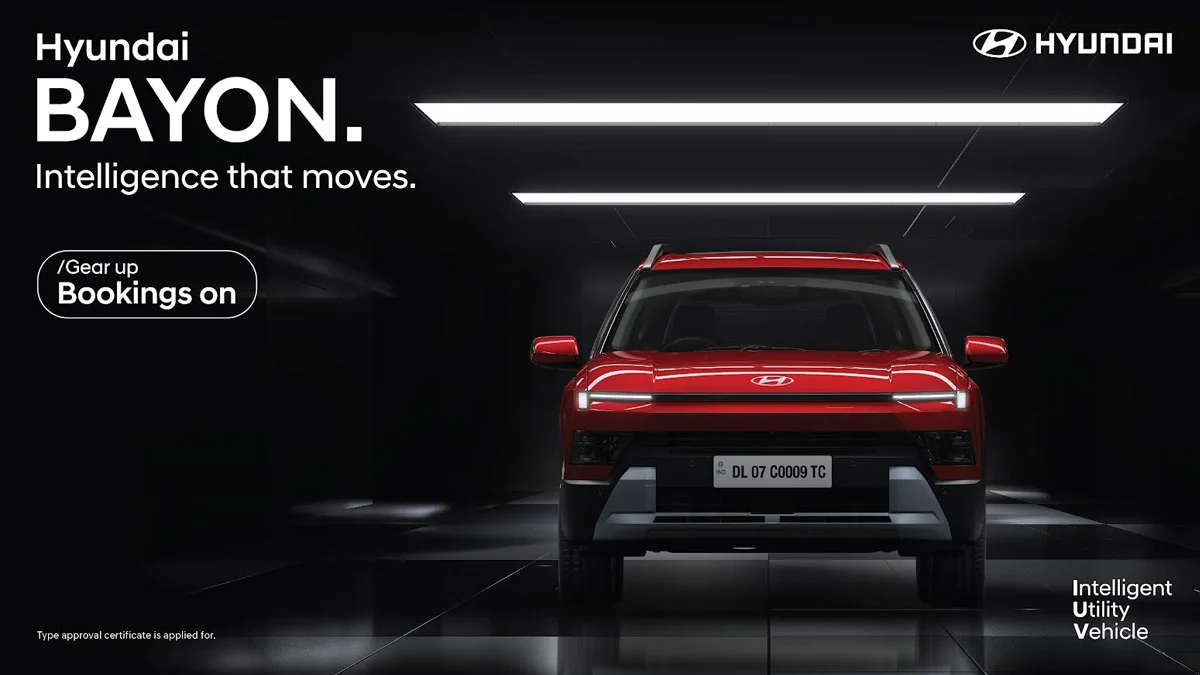
MUMBAI – The passenger seat is no longer just for a co-pilot; it is becoming a hub of cognitive computing. Hyundai Motor India Limited (HMIL) has officially announced the launch of the BAYON, an "Intelligent Utility Vehicle" (IUV) slated to hit Indian roads on October 26, 2026. By integrating generative artificial intelligence, high-performance computing, and a sophisticated digital cockpit, Hyundai is positioning the BAYON not merely as a mode of transport, but as a proactive travel companion designed to bridge the gap between human intent and automotive execution.
As the automotive industry pivots from hardware-centric design to software-defined mobility, the BAYON arrives as a strategic centerpiece in HMIL’s portfolio. With bookings now open at authorized dealerships and via the official Hyundai website for a token amount of ₹11,000, the anticipation surrounding this launch reflects a growing consumer appetite for vehicles that function as extensions of the digital ecosystem.
The Core Philosophy: "Intelligence That Moves"
At the heart of the BAYON’s architecture is the philosophy of "Intelligence That Moves." This is not just a marketing tagline; it represents a fundamental shift in how the vehicle interacts with its occupants. The BAYON is built upon a foundation of NVIDIA-accelerated Connected Car Navigation Cockpit (ccNC) technology, which serves as the nervous system for the vehicle’s expansive digital interface.
The vehicle’s interior is dominated by dual 62.5 cm (12.3-inch + 12.3-inch) curved panoramic displays. This unified digital cockpit consolidates navigation, entertainment, and telematics, providing a seamless visual experience that mimics the intuitive nature of high-end smartphones. By utilizing NVIDIA’s processing power, the cockpit offers split-screen functionality, personalized control panels, and a user interface designed to minimize distraction while maximizing accessibility.
A Chronology of Innovation: The Road to the BAYON
The development of the BAYON represents years of iterative research by Hyundai in the realms of AI and connectivity.
- Initial Research Phase: Hyundai recognized the increasing demand for "Hinglish" and regional language support in the Indian market, leading to the development of the multi-lingual interface.
- Strategic Partnerships: Collaborations with industry leaders such as Perplexity and SoundHound AI were established to provide the heavy lifting for the vehicle’s natural language processing (NLP) capabilities.
- Technological Validation: Throughout 2025, HMIL conducted extensive testing on the ccNC platform, ensuring that the integration of over-the-air (OTA) updates could handle the complexity of 19 different vehicle controllers.
- Market Announcement: The official unveiling of the launch date—October 26, 2026—was confirmed in early Q3 2026, marking the beginning of the pre-booking phase.
- The Festive Window: Deliveries are strategically timed to align with India’s peak festive season, a period historically associated with high automotive sales and a consumer preference for new technology.
AI That Understands: Beyond Predefined Commands
The most transformative feature of the BAYON is its generative AI voice assistant. Unlike traditional in-car voice systems, which rely on rigid, syntax-heavy commands (e.g., "Set temperature to 22 degrees"), the BAYON’s assistant understands context and conversational nuance.
Powered by SoundHound AI and supplemented by the intelligence of Perplexity, the system allows the driver to communicate naturally. A user can ask, "Plan a road trip to Lonavala, find a hotel with a pool, and suggest the best spots for authentic Maharashtrian cuisine along the way." The system processes this multi-layered request, cross-referencing real-time traffic, weather, and location data to provide a curated itinerary.
This utility extends to daily life. Whether a driver needs to check the latest sports scores, identify shopping districts, or receive real-time weather alerts, the AI acts as a concierge. For moments when connectivity is limited, the BAYON retains a robust offline capability, supporting over 500 embedded voice commands across six languages: English, Hindi, Hinglish, Tamil, Bengali, and Telugu. This ensures that essential vehicle controls—such as window adjustments, climate settings, and media playback—remain accessible even in remote areas.
Technical Specifications and Performance
While the BAYON is defined by its digital prowess, it remains a traditional powerhouse in terms of mechanical reliability. Under the bonnet lies a refined 1.5-litre, four-cylinder MPi petrol engine.
- Power Output: 115 PS (84.4 kW)
- Torque: 144 Nm (14.7 kgm)
- Transmission Options: A six-speed manual transmission for purists, and Hyundai’s signature Intelligent Variable Transmission (IVT) for those seeking a smooth, stress-free urban driving experience.
This powertrain configuration is designed to offer a balance between fuel efficiency and responsiveness, ensuring that the vehicle remains agile in India’s dense urban traffic while capable of sustained highway performance.
Supporting Data: Connectivity at Scale
Hyundai Bluelink, the vehicle’s connected-car suite, offers over 70 features that integrate the car into the owner’s digital life. This connectivity architecture is built for the future:
- Remote Operations: Remote engine start/stop, cabin pre-conditioning, and real-time vehicle health status.
- Over-the-Air (OTA) Updates: The vehicle supports updates to 19 distinct controllers. This allows HMIL to remotely patch security vulnerabilities, enhance infotainment features, and even tune performance parameters without the owner needing to visit a service center.
- Linguistic Inclusivity: The interface supports 10 regional and two international languages, ensuring that the technology is accessible to a wider demographic, breaking the "English-only" barrier that often alienates regional users.
- Security and Safety: Advanced telematics provide real-time location tracking, emergency assistance, and geofencing capabilities.
Official Perspective: The Vision of HMIL
Hyundai’s leadership has emphasized that the BAYON is a response to the "digitally native" generation of Indian drivers. An HMIL spokesperson stated, "The BAYON is not just a car; it is a platform. By integrating generative AI, we are creating a vehicle that learns from its user. Our objective is to move from reactive technology to proactive assistance, where the car anticipates the driver’s needs before they are voiced."
The company believes that the combination of the IVT gearbox and the AI cockpit creates a unique selling proposition in the mid-size SUV segment, catering to the driver who demands high-tech convenience without sacrificing the tactile satisfaction of driving a robust petrol-powered vehicle.
Implications for the Indian Automotive Market
The launch of the BAYON carries significant implications for the domestic automotive landscape:
1. The Death of the "Dumb" Dashboard
With the BAYON, Hyundai is setting a new baseline for the industry. Competitors will likely be forced to accelerate their own software development cycles. The expectation of having a "digital assistant" in the car will soon shift from a luxury feature to a standard requirement.
2. Software as a Service (SaaS) Potential
The capability to perform OTA updates on 19 controllers opens the door for subscription-based features. Hyundai could potentially introduce new performance modes, advanced navigation features, or entertainment packages long after the vehicle has been purchased, creating a new revenue stream and increasing the vehicle’s "shelf life."
3. Localization of High-Tech
By investing heavily in regional language support (Tamil, Bengali, Telugu, etc.), Hyundai is proving that high-end AI does not have to be exclusive to English-speaking urban elites. This move is likely to democratize access to advanced automotive technology across the diverse linguistic landscape of India.
4. Safety and Maintenance
The shift toward remote diagnostics and OTA updates reduces the frequency of mechanical service visits for software-related issues. This shift toward a more proactive maintenance schedule not only saves the consumer time but also improves the vehicle’s long-term safety profile by ensuring all security protocols are always up-to-date.
Conclusion: The Road Ahead
As the October 26, 2026, launch date approaches, the BAYON stands as a testament to the convergence of automotive engineering and artificial intelligence. By successfully merging a proven 1.5-litre engine with a cutting-edge, NVIDIA-powered AI cockpit, Hyundai is attempting to capture the hearts of both the performance-oriented driver and the tech-savvy millennial.
The success of the BAYON will ultimately depend on how seamlessly these complex AI systems function in the real-world, often unpredictable conditions of Indian roads. However, if the initial reception and the depth of the integration are any indication, the BAYON is poised to be a milestone in the evolution of the Indian automotive sector. It promises a future where the car is no longer a static machine, but a partner in the journey—constantly updating, constantly learning, and always ready to navigate the complexities of the modern world.