
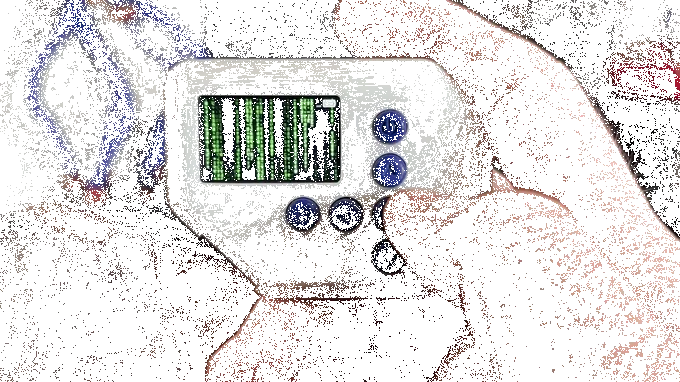
In the rapidly evolving landscape of consumer-grade cybersecurity and hardware hacking, few devices have generated as much immediate buzz as the PolyCast5. Developed by Justin Atkins of RoboticWorx, this open-source multitool is poised to redefine how enthusiasts interact with the wireless spectrum. While it fits comfortably in the palm of a hand, its capabilities—ranging from simple IR cloning to complex AI-assisted packet monitoring—suggest a device that punches well above its weight class.
The Hardware: Built for the Modern Maker
At its core, the PolyCast5 is powered by the ESP32-C5, a robust microcontroller that offers a modern foundation for high-performance wireless tasks. The device distinguishes itself from typical hobbyist boards through its build quality. Users report a surprisingly hefty, premium feel, complemented by a sharp, high-fidelity color screen.
Unlike many bare-bones development kits, the PolyCast5 includes thoughtful hardware ergonomics, such as haptic feedback that provides tactile confirmation during menu navigation. This attention to detail elevates the user experience, transforming what could have been a utilitarian instrument into a refined tool.
Versatility in Connectivity
The device integrates five distinct communication protocols, making it a "Swiss Army knife" for wireless interaction:
- WiFi: For network reconnaissance and protocol testing.
- Bluetooth: Enabling HID (Human Interface Device) attacks and peripheral control.
- LoRa: Providing long-range communication capabilities for specialized automation.
- ESP-NOW: Facilitating low-latency, peer-to-peer device communication.
- Infrared (IR): Allowing for the cloning and emulation of legacy remote control signals.
Beyond these built-in protocols, the inclusion of accessible I2C pins opens the door for DIY expansion. Whether a user wants to add environmental sensors, specialized antennas, or custom hardware controllers, the PolyCast5 provides a modular framework for endless experimentation.
Chronology: From Concept to Crowdfunding
The journey of the PolyCast5 has been defined by a rapid development cycle that reflects the fast-paced nature of the maker community.
- Early 2026: Initial prototypes were circulated within select engineering circles to stress-test the ESP32-C5 integration and optimize antenna performance.
- Mid-2026: RoboticWorx finalized the industrial design, emphasizing the "hefty" build quality that would become a signature of the device.
- June 2026: The official public unveiling occurred, coinciding with the launch of an aggressive crowdfunding campaign on Kickstarter.
- Current Status: As of late June 2026, the project has significantly surpassed its initial funding goals, signaling a strong market appetite for portable, high-capability hacking tools. The campaign is set to conclude on June 24th.
Supporting Data: Testing the Capabilities
During our hands-on evaluation of a preview unit, the device displayed a surprising level of maturity, even with pre-release firmware.
Productivity vs. Utility
Surprisingly, one of the most endearing features is the inclusion of offline "apps," such as a Pomodoro timer. While it might seem like a gimmick on a device designed for penetration testing, the utility of a dedicated, vibrating focus timer that operates entirely independently of a smartphone is a welcome addition. It underscores the device’s identity as a tool for the "focused maker."
The Scripting Engine
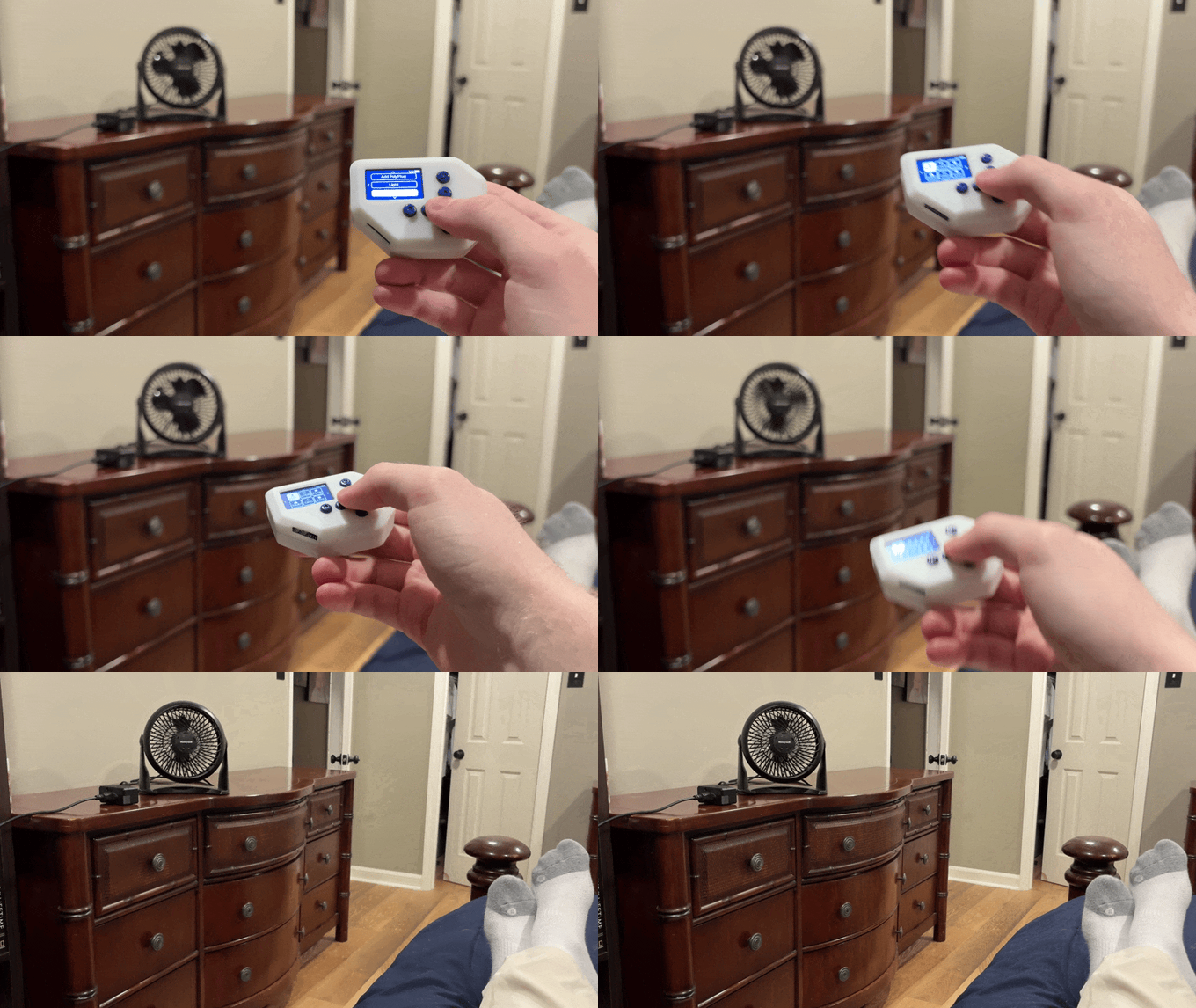
The firmware, while slated for a full public release upon shipping, already supports complex scripting. We tested the "Auto Keyboard" functionality—a classic HID attack vector. By simulating keystrokes via Bluetooth, the device can effectively bypass physical security barriers if left unattended. The process is remarkably straightforward, with scripts easily customized to suit specific testing scenarios.
The AI Frontier
The most forward-looking aspect of the PolyCast5 is its integration of AI. Utilizing a cloud-based API (currently centered on Grok, though designed for modularity), the device offers:
- Voice-Controlled Keyboard: A hands-free way to input commands.
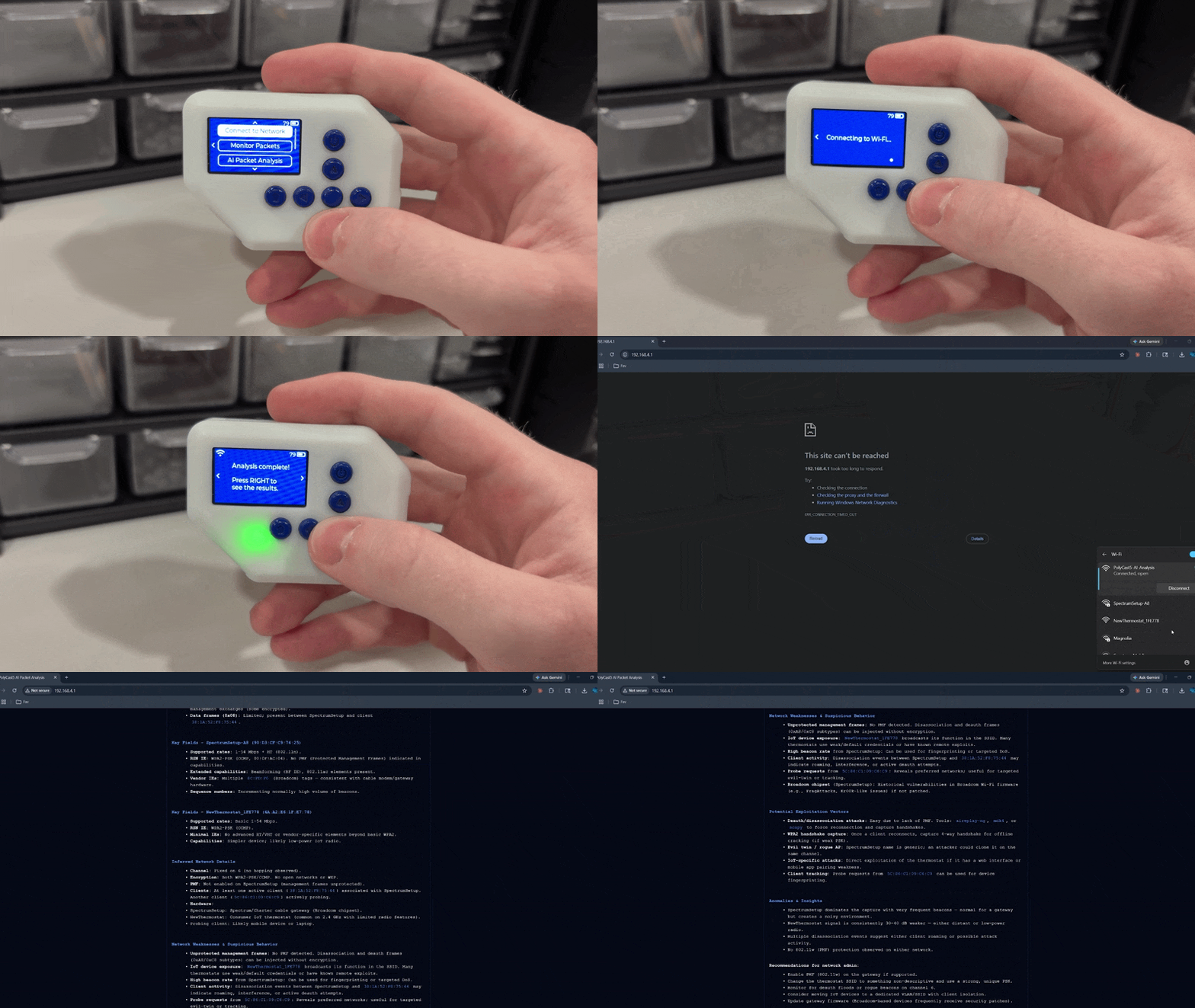
- AI Packet Monitoring: An intelligent layer that parses raw wireless traffic into readable insights.
Setting these features up requires a simple browser-based configuration page, a process that is well-documented and accessible to users with varying levels of technical expertise.
The Ethical Dilemma: The "Creepiness" Factor
The power of the PolyCast5 is, by definition, double-edged. During our testing, the device’s ability to conduct deauth attacks and sniff MAC addresses on nearby networks served as a stark reminder of the vulnerability of modern wireless environments.

While attempting to document the device’s range and signal capture capabilities, we were able to identify neighboring devices—specifically, a Roku unit—with alarming ease. The realization that a device of this size could passively catalog the digital footprints of an entire neighborhood highlights the "creepiness" that often accompanies powerful hardware. The experience served as a sobering lesson: tools built for education and authorized penetration testing possess the inherent capacity for misuse. It is a testament to the power of the ESP32-C5 that such sophisticated reconnaissance can be performed by a pocket-sized gadget.
Implications for Cybersecurity and Education
The rise of devices like the PolyCast5 carries significant implications for the future of digital security.
Democratizing Security Research
For years, professional-grade wireless testing equipment was restricted to enterprise-level budgets and specialized contractors. The PolyCast5, along with its contemporaries, democratizes this research. By placing these tools in the hands of hobbyists, students, and independent security researchers, we are likely to see a surge in public awareness regarding wireless vulnerabilities.
The Challenge of Responsible Disclosure
However, the accessibility of such tools poses a challenge. As these devices enter the mainstream, the barrier to entry for malicious actors drops alongside the barrier for ethical hackers. The community surrounding the PolyCast5, hosted largely on platforms like Discord, will play a critical role in establishing norms around the responsible use of the tool.
Future-Proofing
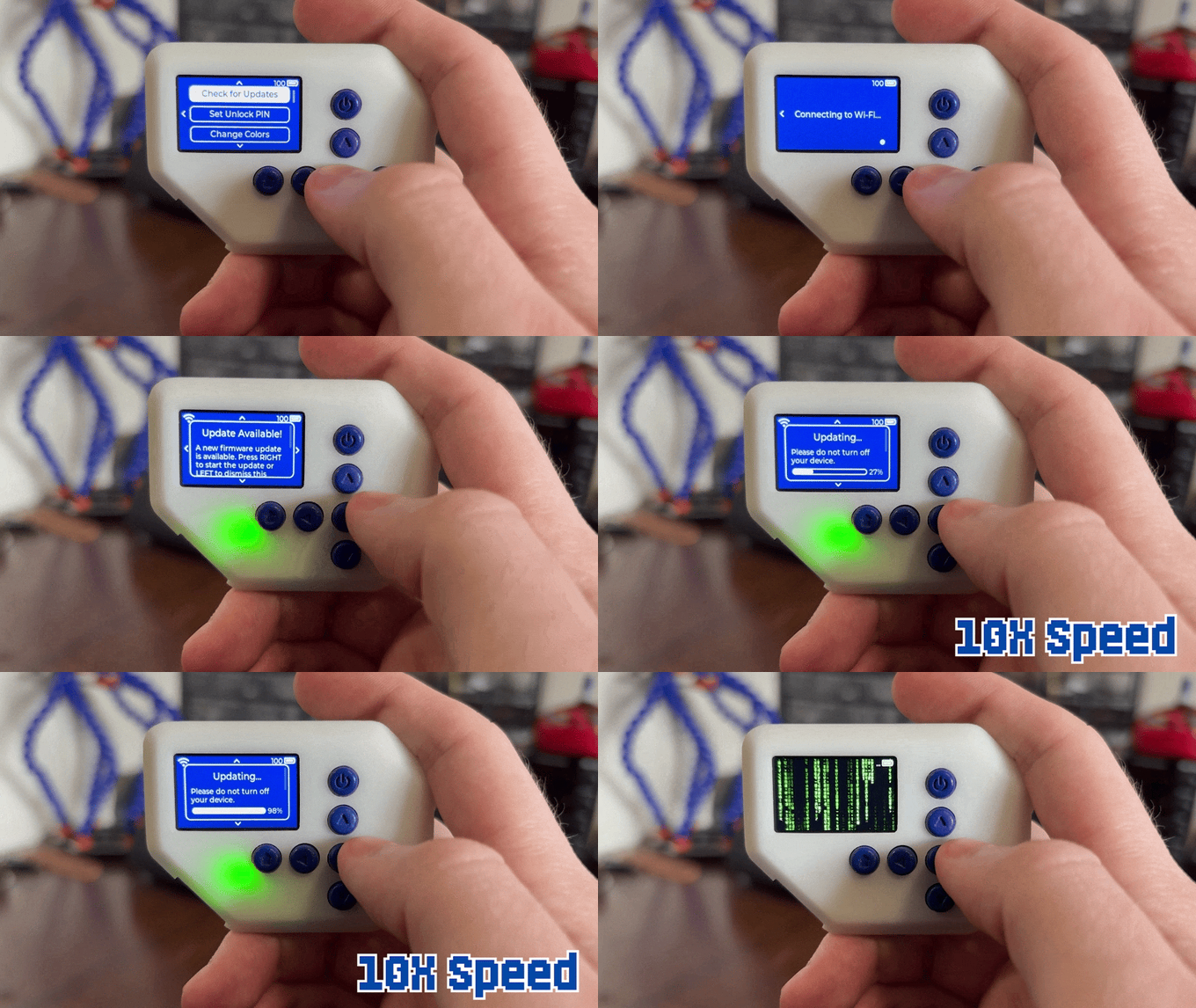
The modularity of the PolyCast5—specifically its open-source nature and the ability to update firmware—suggests that it will remain relevant long after its initial release. As new exploits emerge and wireless protocols evolve, the community-driven development model will likely ensure that the PolyCast5 adapts, rather than becoming e-waste.
Conclusion: A New Standard for Multitools
The PolyCast5 is more than just a collection of radios and a microcontroller; it is a signal of where the maker movement is heading. It blends the raw power of professional hacking tools with the polished, user-friendly interface expected of modern consumer electronics.
For those looking to explore the invisible world of wireless signals, it offers an unparalleled sandbox. Whether you are interested in home automation, security research, or simply want to understand the protocols that govern our interconnected lives, the PolyCast5 provides the keys to the kingdom. However, as the device demonstrates, with those keys comes a responsibility to use the technology ethically. As the project heads toward its shipping phase, the tech community will be watching closely to see how the PolyCast5 evolves, and, perhaps more importantly, how its users choose to deploy its formidable capabilities.
For those interested in supporting the development of the PolyCast5, the Kickstarter campaign remains open until June 24th, offering a window for enthusiasts to secure their own unit before the broader public release.