In the architectural landscape of Vagator, Goa, a new paradigm of residential living has emerged. Named La Zorita, this project represents more than a mere collection of villas; it is a profound exploration of the intersection between Indo-Portuguese heritage and modern minimalist restraint. Led by the design vision of Naina of Amoeba Design, the project seeks to synthesize the frantic energy of contemporary life with the languid, intentional pace of the Goan spirit.
At the heart of La Zorita lies a narrative of dualities: the interplay between public vibrance and private sanctuary, and the dialogue between ornate cultural motifs and the quiet confidence of natural materiality.
The Main Facts: A Study in Contrast
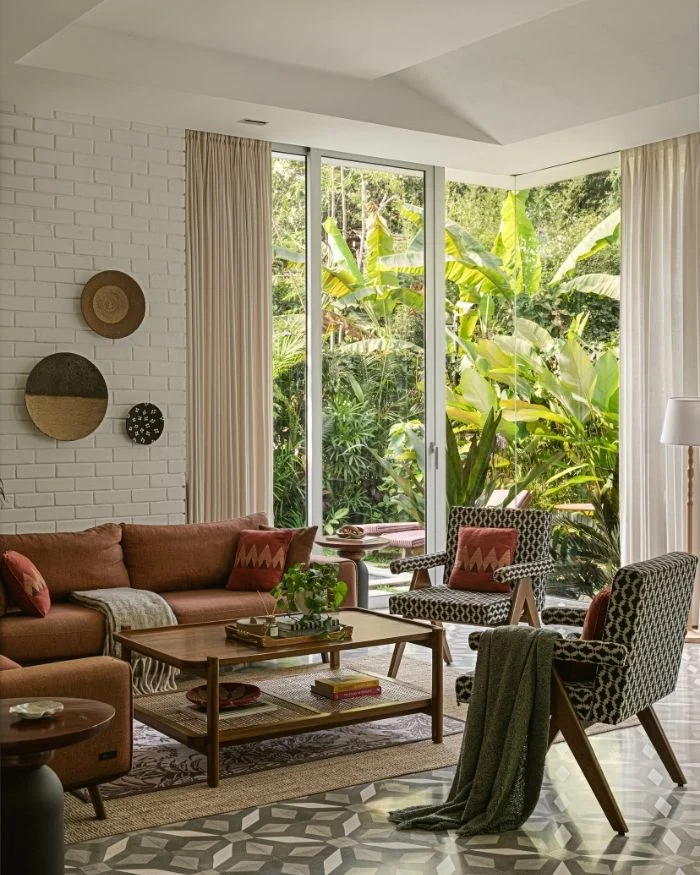
La Zorita stands as a testament to the idea that luxury is not defined by opulence, but by the quality of one’s connection to the environment. The property is characterized by a distinct departure from standard luxury tropes. While the primary living spaces are defined by a monochromatic, neutral palette that defers to the surrounding landscape, the secondary spaces—specifically the bathrooms and powder rooms—serve as intentional ruptures in this aesthetic.
The architectural intent is clear: to create a home that "keeps its counsel." The interiors are composed of raw plaster walls, organic wood, cane, and soft textiles. These elements are not merely decorative; they are foundational to the sensory experience of the home. By eschewing bold, competing colors in the main living areas, the design allows the lush Goan foliage and the expansive sky to become the primary protagonists of the interior experience.
Chronology: The Evolution of a Concept
The development of La Zorita did not occur in a vacuum; it is the culmination of a multi-year effort to redefine the Goan villa experience.
Phase I: Site Analysis and Cultural Context
Before the first stone was laid, the design team at Amoeba Design conducted an extensive survey of Vagator’s topography. The objective was to ensure that the built environment did not merely sit atop the land but felt as if it had emerged from it. This phase involved mapping the wind patterns and canopy heights, which directly informed the placement of the master suite at the uppermost level.
Phase II: The Materiality Experiment
During the design development phase, the team tested various applications of local raw materials. The decision to use hand-finished plaster and indigenous cane was a response to the need for "warmth through craft." Unlike mass-produced finishes, these materials carry a tactile history, ensuring that every surface feels personal and lived-in.
Phase III: The "Mood Shift" Implementation
Mid-way through the interior development, the design team introduced the concept of the "mood shift." Recognizing that a monochromatic house could risk feeling clinical, they introduced color in transitional spaces. The bathrooms, consequently, became the laboratory for this expression, utilizing terracotta washes, intricate black-and-white floor patterns, and green ceramic tiling.
Supporting Data: Materiality and Sensory Impact
To understand the efficacy of La Zorita, one must look at the technical choices that ground the project:
| Feature | Materiality | Purpose |
|---|---|---|
| Living Areas | Raw Plaster, Wood, Cane | Visual stillness, acoustic dampening |
| Bathrooms | Terracotta, Ceramic, Patterned Tile | Playful sensory engagement |
| Master Suite | Open-plan, elevated glass, textiles | Framing the view, promoting serenity |
| Exterior | Natural stone and native foliage | Integration into the Goan ecosystem |
The reliance on "warmth through craft" is supported by the intentional absence of high-gloss or synthetic materials. In the master suite, the ceiling heights and cross-ventilation are calibrated to the degree, ensuring that the room remains cool during the humid Goan afternoons without an over-reliance on mechanical climate control.
Official Perspectives: The Philosophy of Unhurried Life
In discussions surrounding the project, Naina of Amoeba Design has emphasized that La Zorita is not designed for the tourist, but for the resident. "It is not just a place to live in Goa," she states, "but a place to live as Goa intends."
This perspective shifts the architectural focus from the object to the experience. By stripping away the visual noise of modern suburban design, the project forces a deceleration of the inhabitant’s lifestyle. The "private terrace," located near the tree canopy, is the focal point of this ambition. Here, the architecture becomes "fully legible"—the walls fall away, the distinction between indoors and outdoors blurs, and the resident is left with nothing but the sky and the trees.
The collaboration with Vianaar, the developers, provided the structural backbone necessary to execute these high-design ambitions. Together, they have achieved a "nouveau spin" on Indo-Portuguese architecture, moving away from the pastiche of colonial mimicry toward a more authentic, localized modernism.
Implications: The Future of Residential Goa
The success of La Zorita raises critical questions about the future of real estate development in India’s coastal regions. As urban centers become increasingly claustrophobic, the demand for "peace of a life unhurried" is growing.
1. The Death of the "Showcase" Home
La Zorita signals a move away from homes designed as status symbols toward homes designed as sanctuaries. The implication for developers is that there is a significant market for quiet luxury—design that does not reach for attention but commands it through subtle, impeccable quality.
2. The Biophilic Mandate
The project underscores the necessity of biophilic design. In Goa, the landscape is the greatest asset. Architectural projects that compete with the view are now viewed as inferior to those that frame it. Future developments will likely follow this model of "subservient architecture," where the building acts as a gallery space for the surrounding nature.
3. The Return to Artisanal Craft
The use of hand-finished surfaces in La Zorita highlights a growing dissatisfaction with the industrial aesthetic. The implication is that the future of high-end design lies in the hands of the artisan. As automation takes over the production of structural elements, the "human touch" in interior finishes becomes the ultimate marker of exclusivity.
Conclusion: A Blueprint for Serenity
La Zorita serves as a compelling case study in intentional living. By balancing the "expressive and playful" nature of the powder rooms with the "elevated stillness" of the master suite, the design successfully caters to both the human need for stimulation and the human need for rest.
In a world defined by the "always-on" mentality, the project offers a radical alternative. It proves that space, when handled with restraint, becomes the greatest luxury of all. For those seeking to understand the trajectory of contemporary Indian architecture, La Zorita provides a clear map: look for the light, prioritize the view, and never underestimate the quiet power of a hand-finished wall.
As the project continues to gain recognition, it remains a beacon for designers who believe that architecture is not merely about construction, but about the curation of a more peaceful, unhurried existence.
Read more about the synthesis of heritage and modernism in the full report: Vianaar and Amoeba Design give Indo-Portuguese architecture a nouveau spin in Goa