The digital marketing landscape is undergoing its most significant transformation since the inception of the search engine. For years, content strategists have mastered the art of Search Engine Optimization (SEO)—mapping topics, building internal link architectures, and obsessing over domain authority to capture the elusive "blue link" click. However, the rise of generative AI—specifically ChatGPT, Gemini, and Perplexity—has introduced a new paradigm: Answer Engine Optimization (AEO).
As users shift from searching for lists of links to asking conversational engines for direct answers, the question for every brand has become: When a buyer asks an AI about your category, does your brand show up as a source, or are you invisible?
The New Frontier: Moving Beyond Traditional SEO
SEO is not dead, but it is no longer the sole arbiter of digital visibility. While traditional search focuses on ranking, AEO focuses on authority and synthesis. Answer engines function by scouring the web to synthesize information, providing users with a concise summary. To be successful in this environment, a brand must be deemed a credible, authoritative source by the underlying models powering these platforms.
AEO adds a critical layer of measurement to the modern content strategy. It is not about replacing the SEO playbook; it is about refining it to account for how AI perceives brand relevance. Key performance indicators have shifted from mere keyword rankings to prompt coverage, brand visibility, and—most importantly—citation frequency.
A Chronology of the Search Shift
The transition to AEO has happened in rapid, distinct stages over the last 24 months:
- The Proliferation Phase (2022–2023): The public release of ChatGPT and subsequent integration of AI into Google (SGE) and Bing shifted user behavior. Search volume began to leak from traditional index-based search to conversational interfaces.
- The Recognition Phase (Late 2023): Content strategists realized that high-ranking SEO pages were not automatically resulting in AI citations. The "black box" nature of Large Language Models (LLMs) created a sense of urgency to understand why some brands were being cited while others were ignored.
- The Measurement Phase (2024–Present): With the introduction of specialized tools, such as HubSpot’s AEO, marketers moved from guesswork to data-driven auditing. Companies began treating AI visibility as a distinct metric, necessitating new workflows for content updates and architectural overhauls.
Supporting Data: The Impact of AI Optimization
The shift toward AI-centric content is backed by emerging performance data. According to recent internal data from HubSpot, the impact of intentional AEO is substantial. When brands specifically optimized their content for citation potential, they saw a 49% lift in AI visibility.
Furthermore, the data suggests that the "citation gap" is bridgeable. Approximately 92% of industry-specific content pages are capable of being cited by answer engines if they are structured correctly. This indicates that the failure to appear in AI answers is rarely due to a lack of content, but rather a lack of "answer-ready" architecture.
Strategic Auditing: How to Evaluate Your Citation Potential
To compete in the age of AEO, brands must stop guessing what AI wants and start measuring it. The process begins with a baseline audit.
1. Establish a Baseline
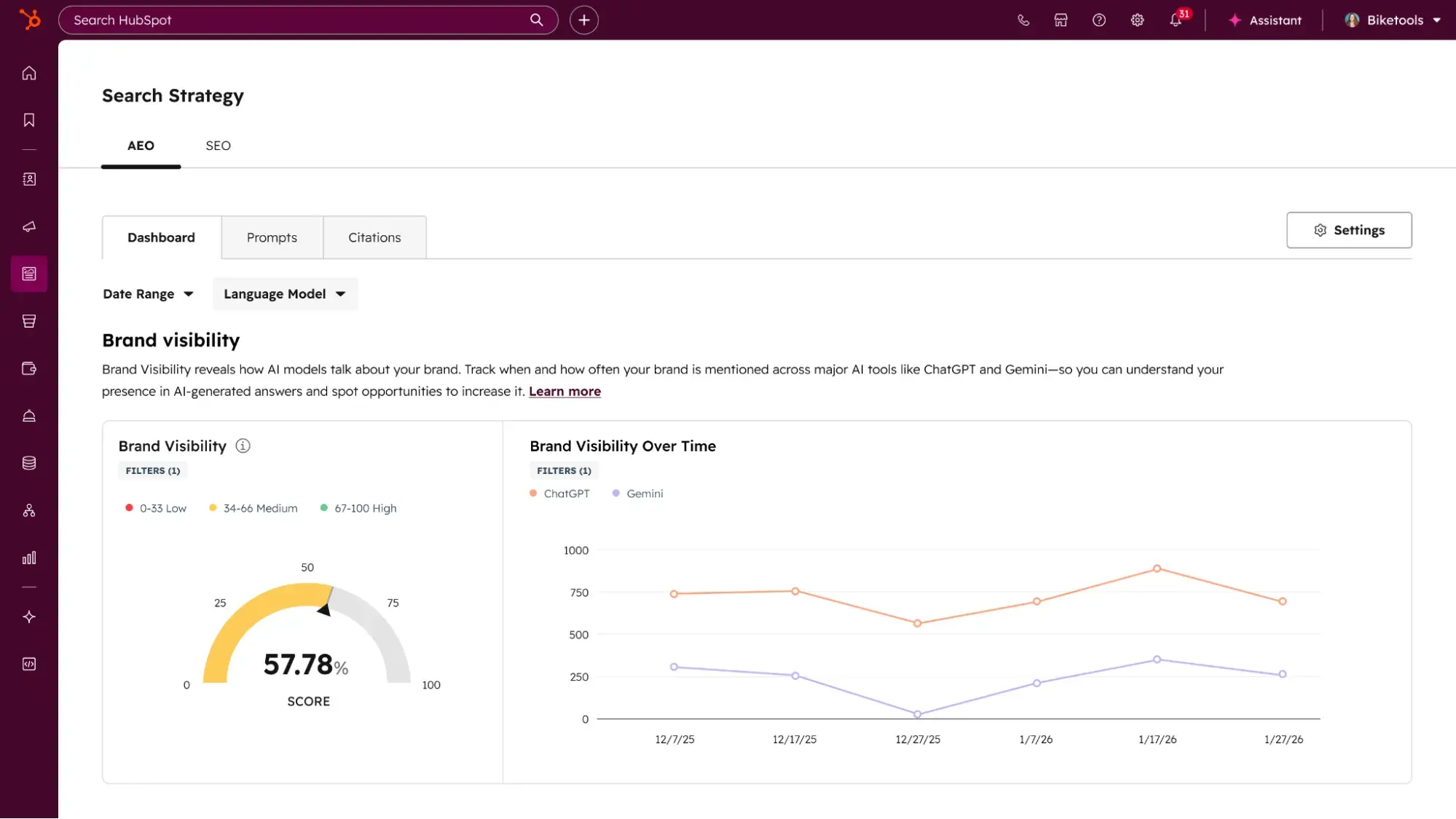
You cannot improve what you do not measure. Using tools like the HubSpot AEO suite, strategists can run tracked prompts across ChatGPT, Gemini, and Perplexity daily. These tools aggregate data into a dashboard that highlights your current brand visibility, citation rate, and competitor performance.
2. Identify the Citation Gap
Citation analysis is the heart of the AEO audit. By comparing your owned domain citation rate against competitors, you can identify where you are losing "market share" in AI responses. If a competitor is consistently cited for a "best-of" query in your category, the audit will reveal the content type (e.g., long-form blog post vs. technical documentation) that is winning that space.

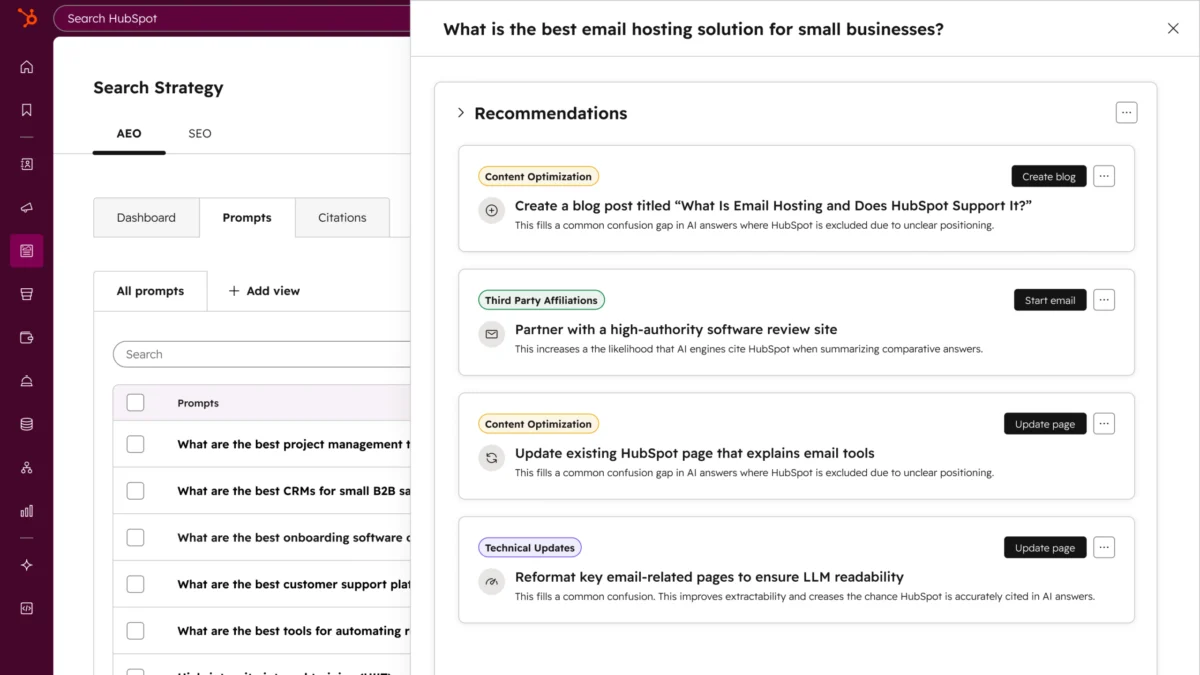
3. Prioritize via Recommendation Engines
A common pitfall is attempting to overhaul an entire content library at once. Modern AEO tools mitigate this by assigning a priority level to specific pages. These recommendations are generated by analyzing citation patterns across your tracked prompts, providing a clear roadmap of which pages to update, which to consolidate, and where new content gaps must be filled.
Building an Architecture for AI Citations
Once the audit identifies the gaps, the strategy shifts toward structural optimization. AI models favor content that is easy to parse, factually dense, and authoritative.
The Pillars of AEO-Ready Content
- Structural Clarity: AI models perform best when content is structured with clear headers, concise definitions, and direct answers to "who, what, when, where, and how" questions.
- Direct Answer Snippets: Your content should ideally contain a "bottom-line-up-front" (BLUF) sentence that answers the core prompt directly, followed by supporting evidence.
- Authority and Consistency: AI models are trained to prioritize sources that show consistent expertise. If your brand publishes contradictory information across different pages, the AI’s confidence score in your content drops.
- Cross-Channel Presence: AI does not just read your blog; it looks at social signals, outreach, and mentions across the web. A holistic brand presence increases the likelihood of being cited as an industry authority.
Targeted Updates vs. Massive Overhauls
Strategists should resist the urge to rewrite every piece of existing content. Instead, focus on the pages connected to high-value prompts where your visibility is currently lagging. By leveraging tools like HubSpot’s Marketing Hub, admins can utilize AI agents to generate draft updates based on identified content gaps, allowing for a streamlined workflow that maintains brand voice while satisfying the structural requirements of LLMs.
Implications for the Future of Marketing
The integration of AEO into the marketing mix has profound implications for how teams are structured and how budgets are allocated.
The Role of the Content Strategist
The role of the content strategist is evolving into an "Information Architect." Success is no longer measured by the volume of content produced, but by the efficiency and quality of the information provided to AI models. This requires a deeper understanding of technical SEO combined with a high-level mastery of information design.
Measuring Long-Term Impact
AEO is a longitudinal game. Because answer engine responses are dynamic and change as models are retrained, performance must be tracked over weeks and months rather than days. The goal is to monitor the brand visibility score over time, noting how specific content updates correlate with shifts in citation frequency.
The "Estimated Impact" Metric
One of the most powerful tools now available to teams is the "Estimated Impact" report. This metric allows leaders to forecast the potential lift in visibility if they act on specific recommendations. This data-driven approach removes the ambiguity from content planning, allowing teams to prioritize projects that will provide the highest ROI in the AI-search ecosystem.
Conclusion: Adapting to the Conversational Web
The emergence of answer engines represents a fundamental change in the relationship between brands and their audiences. While the core tenets of marketing—providing value, establishing authority, and maintaining consistency—remain unchanged, the delivery of that value must now be optimized for the machines that bridge the gap between information and the consumer.
Brands that treat AEO as a temporary trend will likely find themselves increasingly invisible in the AI-generated responses that will define the next decade of search. Conversely, those that audit their existing content, build for clarity, and iterate based on real-time citation data will not only survive this transition but will lead the conversation in their respective categories.
The future of search is conversational, and the brands that thrive will be those that have the most compelling answers.