
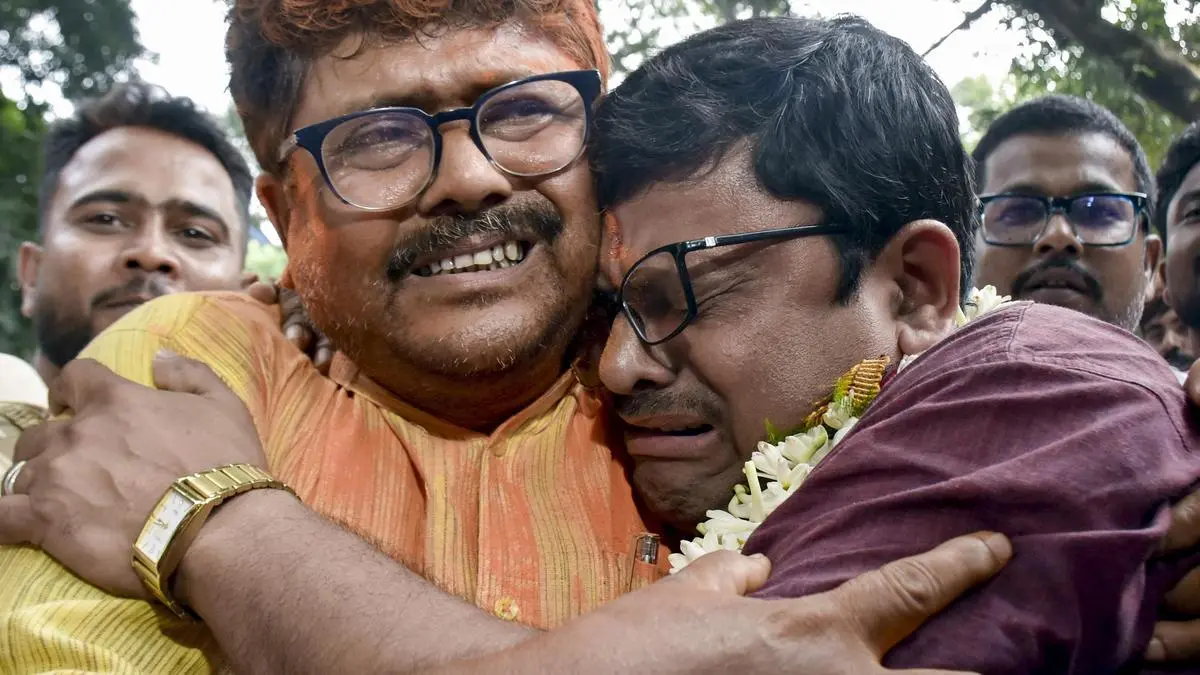
KOLKATA – In a seismic shift that has redrawn the electoral map of West Bengal, the Bharatiya Janata Party (BJP) achieved a decisive and overwhelming victory in the Assembly by-elections held on October 6, 2026. The results, declared on Friday, October 9, saw the ruling party capture both the Nandigram and Rejinagar constituencies by historic margins.
This electoral sweep, occurring just five months after the general Assembly elections that triggered a major transition in state power, serves as a ringing endorsement of the current administration’s policies. By securing these seats, the BJP has not only expanded its legislative footprint—reaching a tally of 209 MLAs—but has also signaled a dramatic transformation in its support base, specifically among minority communities.
The Main Facts: A Mandate of Historic Proportions
The by-elections were characterized by high-stakes campaigning and intense voter mobilization. In both constituencies, the BJP candidates secured victories that far exceeded the margins seen in previous cycles.
In the high-profile constituency of Nandigram, Hansirani Rath, the BJP candidate and mother of the late Chandranath Rath (a personal assistant to Chief Minister Suvendu Adhikari), secured a landslide victory. She polled 1,64,427 votes, defeating her closest rival, Congress nominee Milan Pradhan, by a staggering margin of 1,22,753 votes. The scale of this victory is being viewed as a symbolic and practical consolidation of the Chief Minister’s influence in a region that has long been a flashpoint of West Bengal politics.
Simultaneously, in the minority-dominated Rejinagar seat in Murshidabad district, BJP candidate Shankharavh Sarkar achieved a formidable win. He secured 1,29,914 votes, defeating Golam Nabi Azad of the Aam Janata Unnayan Party (AJUP) by 75,816 votes. The defeat of the opposition in a constituency with a substantial minority population is being heralded by the BJP as evidence of a "development-first" mandate that transcends traditional communal voting patterns.
Chronology of the Electoral Process
The road to these by-elections was marked by feverish political activity and administrative vigilance.
- Pre-Election Phase (September 2026): As campaigning reached its peak, the narrative shifted from regional grievances to broader state governance. The BJP focused heavily on development projects initiated since the change of government five months prior.
- Polling Day (October 6, 2026): Voters turned out in record numbers, reflecting the high stakes of the contest. According to the Election Commission of India (ECI), Nandigram recorded an 80.89% voter turnout, while Rejinagar followed closely with 80.07%. The day was marred by heated accusations from opposition parties, who alleged irregularities, "vote theft," and booth rigging.
- Counting Day (October 9, 2026): Early trends indicated a clean sweep for the BJP. By mid-morning, the margins were clear, and by the afternoon, the scale of the victory had effectively dismantled the opposition’s hopes of stalling the BJP’s momentum.
Supporting Data: Breaking Down the Numbers
The quantitative analysis of the results reveals deep-seated shifts in voter behavior. The collapse of the traditional "vote banks" for the Trinamool Congress (TMC) and the Congress suggests that the electorate is responding to a new political narrative.
Nandigram Results:
- Winner: Hansirani Rath (BJP) – 1,64,427 votes
- Runner-up: Milan Pradhan (Congress) – 41,674 votes
- Third place: Santi Gopal Giri (CPI) – 5,779 votes
- Margin: 1,22,753 votes
Rejinagar Results:
- Winner: Shankharavh Sarkar (BJP) – 1,29,914 votes
- Runner-up: Golam Nabi Azad (AJUP) – 54,098 votes
- Third place: Abdullahil Kafi (Congress) – 6,168 votes
- Margin: 75,816 votes
The data highlights a significant dilution of the influence of the All India Trinamool Congress (TMC) and Left parties in these regions, with their candidates failing to secure even a quarter of the votes garnered by the BJP in Nandigram.
Official Responses and Political Rhetoric
The post-result discourse has been as polarized as the campaign itself, with the government celebrating a new era of inclusivity while the opposition cries foul.
The Chief Minister’s Perspective
Chief Minister Suvendu Adhikari expressed profound satisfaction with the outcome, highlighting the shift in minority sentiment. Addressing the media, he stated, "Bengali-speaking Muslims are gravitating toward the BJP. In Rejinagar, we captured nearly 60% of the Muslim vote, and in Nandigram, that figure reached 80%."

Adhikari emphasized that the rhetoric of fear—long used to alienate the Muslim community from the BJP—had lost its potency. "Once, the CPI(M) and Mamata Banerjee convinced Muslims that the BJP would drive them away. After we came to power, the community experienced a different reality: development, stability, and progress. They have now made an informed choice."
Opposition Allegations
The opposition has vehemently rejected the results, characterizing them as a failure of the democratic process. State Congress president Subhankar Sarkar alleged that the victory was engineered through "muscle power" and clandestine cooperation between the state police and the Election Commission.
Kunal Ghosh, an MLA from the Mamata-led faction of the Trinamool Congress, went a step further, labeling the election as "looted." These allegations, however, have been categorically denied by the BJP, which maintains that the results represent a transparent, legitimate, and overwhelming expression of the public will.
Implications: The New Political Landscape of West Bengal
The by-election results hold significant implications for the future of West Bengal’s political stability and the national trajectory of the BJP.
1. Strengthening the State Government
With the addition of two more seats, the BJP’s strength in the Assembly now stands at 209. This provides the government with a comfortable majority, allowing for the implementation of long-term policy reforms without the constant threat of legislative deadlock. It grants the administration the mandate to pursue its developmental agenda with greater speed and focus.
2. A Paradigm Shift in Minority Politics
Perhaps the most critical implication is the erosion of the "minority vote bank" theory. If the BJP’s claim regarding the shift in Muslim voting patterns holds true in subsequent elections, it could lead to a permanent realignment in West Bengal politics. This would effectively strip opposition parties of their most reliable electoral asset, forcing them to reinvent their strategies and outreach programs.
3. The Future of the Opposition
For the Mamata Banerjee-led TMC and the Congress, these results serve as a wake-up call. The failure to mobilize voters in historically significant seats like Nandigram suggests a disconnect with the grassroots. The opposition is now faced with a dual challenge: addressing the internal fragmentation that led to the proliferation of breakaway factions and crafting a narrative that can counter the BJP’s success in delivering tangible governance.
4. Setting the Tone for Future Elections
The high voter turnout in the face of alleged rigging indicates that the public remains deeply engaged in the political process. The by-election results will likely set the tone for upcoming local body elections, as the BJP now enters these contests with a "momentum of invincibility."
Conclusion
The results of the October 2026 by-elections are more than just numbers on a spreadsheet; they represent a significant departure from the political traditions that have defined West Bengal for decades. By securing a mandate that spans both majority and minority demographics, the BJP has successfully positioned itself as a pan-Bengal political force.
As the state moves forward, the focus will now shift to whether the government can sustain this momentum by delivering on its promises of development, and whether the opposition can regroup to provide a viable, coherent alternative. For now, however, the political center of gravity in West Bengal has decisively shifted in favor of the BJP.