In the highly competitive landscape of the Indian automotive sector, TVS Motor Company has once again demonstrated its resilience and market agility. The Hosur-based manufacturer reported a robust performance for September 2026, characterized by significant double-digit growth across both domestic and international fronts. As the industry grapples with shifting consumer preferences and the rapid electrification of two-wheelers, TVS’s latest sales figures provide a compelling narrative of a brand successfully balancing its legacy internal combustion engine (ICE) portfolio with cutting-edge electric mobility.
The Big Picture: A Month of Surging Volumes
The headline numbers for September 2026 underscore a period of massive expansion for the company. TVS recorded domestic two-wheeler sales of 4,82,073 units, a substantial 16.65% increase compared to the 4,13,279 units sold in September 2025. This translates to an incremental gain of nearly 69,000 units within a single year—a testament to the company’s supply chain efficiency and strong market demand.
Simultaneously, the export division showcased even more aggressive momentum. International shipments grew by 29.74%, rising from 1,20,776 units in September 2025 to 1,56,691 units in September 2026. By successfully navigating global economic headwinds, TVS has fortified its position as a major player in the global two-wheeler market, particularly across African and Latin American territories where its commuter-focused models continue to find favor.
Chronology and Market Dynamics: A Sequential Analysis
When analyzing the performance on a month-on-month (MoM) basis, the data reveals a healthy recovery following the typically leaner months of the monsoon season. Domestic sales in September 2026 were up by 11.13% compared to August 2026, amounting to an additional 48,277 units.
This sequential growth was spearheaded by the venerable TVS XL, which saw a surge of 20.86%, contributing a massive 9,581 additional units to the monthly tally. The month-on-month data also highlights a resurgence in the commuter segment; the TVS Sport and Radeon, often considered the backbone of rural and semi-urban mobility, recorded impressive MoM growth figures of 62.71% and 51.74%, respectively. This pattern suggests that as the festive season approached, the market appetite for affordable, high-utility two-wheelers saw a sharp uptick.

Domestic Performance: The Jupiter-iQube Synergy
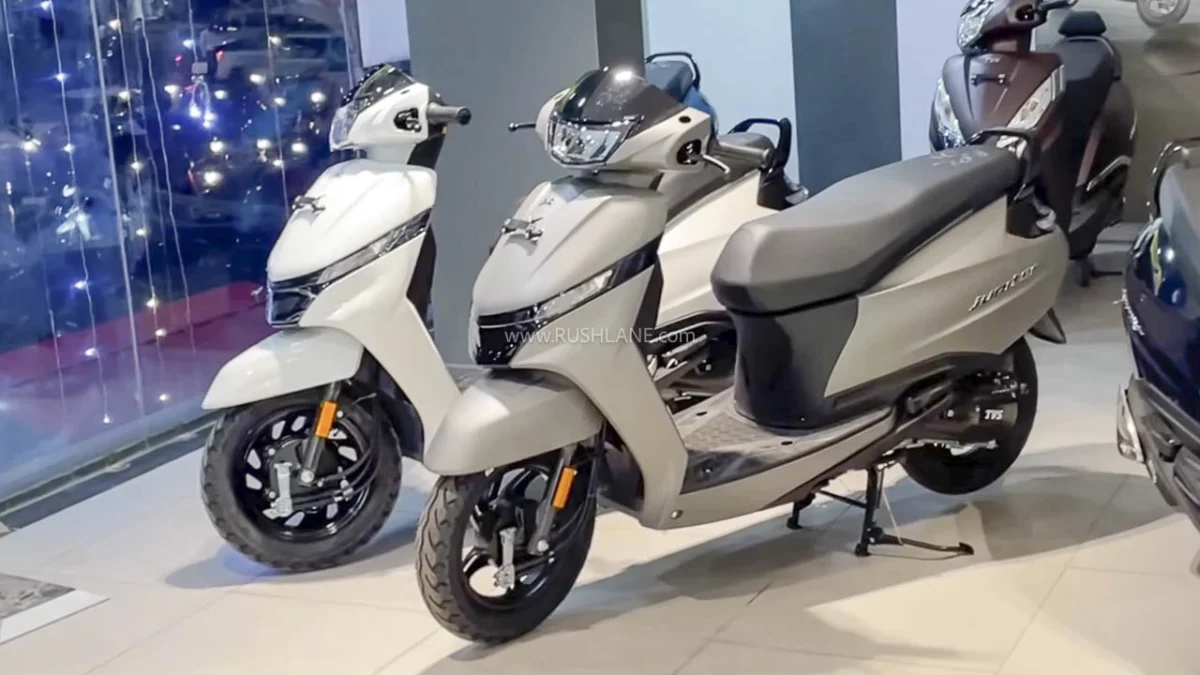
At the heart of TVS’s domestic success remains the Jupiter scooter. With 1,54,725 units sold in September, the Jupiter solidified its status as the brand’s highest-selling domestic product, accounting for 32.10% of the company’s total domestic volume. An 8.87% year-on-year growth for a model that already dominates its segment is a rare feat, indicating that the latest iterations of the Jupiter continue to resonate deeply with Indian families.
However, the most significant story within the domestic portfolio is the meteoric rise of the iQube electric scooter. Recording a 47.05% jump to reach 45,320 units, the iQube has emerged as the most critical growth driver for the company’s future. The addition of 14,500 units compared to the previous year signals a paradigm shift in consumer sentiment, proving that electric adoption is moving beyond early-adopter niches into the mainstream commuter segment.
Conversely, some segments faced pressure. The TVS Raider, usually a darling of the youth segment, saw a 13.34% decline in domestic sales. Industry analysts attribute this to the cyclical nature of demand in the premium commuter segment and potential inventory corrections. Similarly, the Star City, which once occupied a prominent spot in the domestic ledger, recorded no sales in the domestic market, reflecting a strategic shift in focus toward more profitable or higher-demand categories.
Export Dominance: The Star City and Apache Factor
While the domestic market focuses on utility and electrification, the international strategy relies heavily on the strength of the Star City franchise. The Star City 125, in particular, has become an export juggernaut, shipping 79,912 units and accounting for a staggering 51% of total overseas volume. When combined with the standard Star City, these two models command over 70% of the export pie, proving that the brand’s durability and low maintenance costs are the primary drivers of its international brand equity.
The Apache series also saw a massive boost in global appeal, with exports rising 37.56% to 16,822 units. Even more impressive was the Raider, which saw its export volume nearly double, growing by 91.99% to 10,064 units. This indicates that TVS is successfully transitioning from being a local powerhouse to a truly global brand, with its performance-oriented models gaining traction in international markets that demand both style and substance.

Implications for the Future: Electrification and Premiumization
The September 2026 data paints a clear picture of where TVS is heading. The company is actively pursuing a "two-pronged" strategy:
- Electrification at Scale: The rapid growth of the iQube is not an isolated incident but part of a broader, aggressive push toward electric mobility. By scaling its EV manufacturing capacity, TVS is insulating itself from the volatility of fuel prices and aligning with global sustainability trends.
- Portfolio Diversification: The success of the Ronin and the sustained performance of the Apache 310 series—even in smaller volumes—demonstrates the brand’s pivot toward the "premium lifestyle" segment. By offering a diverse range of products, from the utilitarian XL to the premium Ronin, TVS is effectively mitigating risks across different economic demographics.
Challenges and Strategic Outlook
Despite the strong performance, the road ahead is not without obstacles. The decline in the Raider’s domestic sales and the volatility in the Apache RTX/310 category (which saw a 44.83% MoM drop) suggest that the premium segment is highly sensitive to consumer sentiment and competitive pricing.
Moreover, the heavy reliance on a single model (the Jupiter) for domestic dominance and another (the Star City 125) for export leadership presents a "concentration risk." While these models are currently performing well, market trends can shift rapidly. TVS’s ability to sustain this growth will depend on its continued investment in Research and Development (R&D) to refresh its current lineup and its capacity to manage the global supply chain, particularly for semiconductor components required for its advanced digital dashboards and EV powertrains.
Official Perspective and Market Sentiment
While specific statements from the company leadership are awaited in the full quarterly report, the data speaks for itself. Market analysts have reacted positively to the figures, noting that TVS has consistently outperformed its peers in terms of growth percentages throughout 2026.
Investors and stakeholders are likely to view the shift toward higher-margin products like the Apache 310 and the increasing penetration of the iQube as positive indicators for future profitability. The company’s ability to grow both its ICE commuter segment and its EV portfolio simultaneously is being hailed as a "best-in-class" operational strategy.

Conclusion
TVS Motor Company’s September 2026 performance is a masterclass in balanced growth. By leveraging its strong brand loyalty in the domestic market while aggressively capturing market share abroad, TVS has positioned itself as a formidable force in the global automotive industry. As the company moves into the final quarter of the fiscal year, all eyes will be on whether it can maintain this momentum, continue the scaling of its EV infrastructure, and successfully navigate the ever-evolving demands of the global commuter.
For the Indian consumer, the message is clear: TVS is no longer just a manufacturer of reliable commuters. It is a company in transition—one that is successfully blending the traditional values of durability and trust with the modern imperatives of performance, design, and sustainable mobility. As the market continues to evolve, TVS’s ability to remain both a household name and a high-tech innovator will be the key determinant of its success in the years to come.