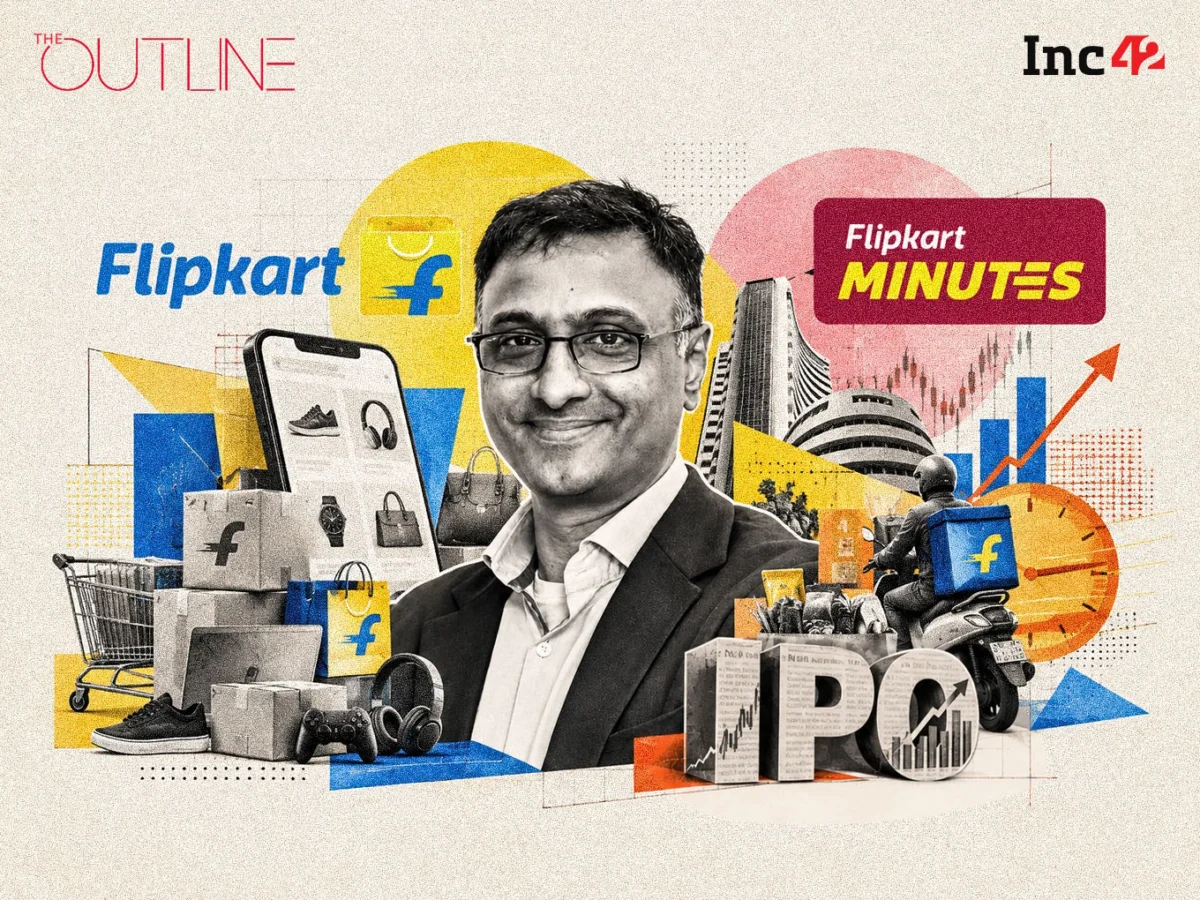
Flipkart, India’s e-commerce bellwether, finds itself at a critical crossroads. Once the undisputed poster child of India’s startup ecosystem, the Walmart-owned giant is currently navigating a complex "triple-threat" scenario: mounting pressure from its parent company to achieve EBITDA breakeven, a growing internal revolt over Employee Stock Option (ESOP) liquidity, and the strategic challenge of scaling high-burn businesses like quick commerce and food delivery.
As the company readies itself for a potential domestic listing following its high-profile reverse flip from Singapore to India, the "summer of discontent" continues to manifest in a significant exodus of senior leadership. With 14 senior-level departures in the past year alone, the narrative around the company has shifted from hyper-growth to a disciplined, often painful, march toward financial maturity.
The Senior Leadership Exodus: A Pattern of Discontent
The most visible sign of internal turbulence is the attrition rate within the company’s upper echelons. The recent departure of three Vice Presidents—Kanchan Mishra (Smartphones), Amit Sachan (Product and Tech), and Kamal Chopra (Corporate)—brings the total senior-level churn to 14 in just over a year.
What makes these exits particularly noteworthy is the tenure of the departing executives. Mishra, for instance, had been a pillar of the organization for over a decade, while Sachan and Chopra held four and five-year tenures, respectively. These are not "job hoppers" looking for a quick exit; they are seasoned leaders who navigated the company through the volatile post-pandemic restructuring.
While Flipkart maintains that with roughly 30 VPs and over a dozen SVPs, the company remains structurally stable, the sheer volume of departures suggests a deeper malaise. Sources familiar with the matter indicate that for many, the decision to leave is twofold: a lack of clarity regarding the long-delayed IPO and an increasing inability to unlock the value of their vested ESOPs.
The ESOP Liquidity Dispute: A Widening Chasm
The frustration surrounding stock options has transcended internal water-cooler conversations, escalating into formal appeals to the Walmart board. A coalition of former senior executives—including ex-Myntra CEO Mukesh Bansal, former Chief Business Officer Ankit Nagori, and former CFO Sanjay Baweja—has formally reached out to Walmart’s leadership, seeking a "fair opportunity" to cash out their vested options.
For many early and mid-tenure employees, the IPO was promised as the ultimate liquidity event—the moment their years of sweat equity would translate into life-changing wealth. With the IPO timeline being repeatedly pushed back, that promise has turned into an indefinite waiting game.
Industry veterans, however, caution against rushing a public offering simply to satisfy liquidity demands. One unicorn founder, speaking on condition of anonymity, noted: "If the company has already facilitated a $50 million ESOP buyback last year, they have shown intent. The management must balance employee welfare with the long-term health of the company. Listing in a hurry to meet liquidity demands, only to see the stock price crash due to poor market valuation, would be a disservice to everyone involved."
The Walmart Mandate: Profit Over Hype
The primary driver behind the delayed IPO is a clear directive from Bentonville. Following a visit to Bengaluru by Walmart CEO John Furner, the message to Flipkart’s leadership was unambiguous: achieve EBITDA breakeven by the end of FY27 before contemplating a public debut.
This mandate represents a fundamental shift in strategy. For years, Flipkart operated under a "growth-at-all-costs" philosophy typical of the tech-unicorn era. Today, it is being forced to model itself as a disciplined, omnichannel retail giant. The valuation goal—initially set at $50 billion—has become a moving target.

"The current market environment makes a $50 billion valuation extremely difficult," says Rahul Sharma, Head of Research at Equity99. "Flipkart can no longer position itself as a growth-obsessed startup. It needs to tell a story of maturity. If they present a concrete roadmap to profitability, they might justify a $35 billion valuation, but any attempt to go public with a ‘growth-only’ narrative will likely result in a valuation haircut to the $25–$30 billion range, bringing it in line with global retail-tech multiples."
The Quick Commerce Gamble: Flipkart Minutes
Adding complexity to the profitability drive is the aggressive expansion of "Flipkart Minutes." To counter the rise of Blinkit, Zepto, and Swiggy Instamart, Flipkart has rapidly deployed over 1,000 micro-fulfillment centers across 130 cities.
While essential for market share, this is a capital-intensive play. Each dark store requires upfront investment in inventory, real estate, and logistics, with a significant "gestation period" before it turns profitable. Furthermore, the upcoming launch of "eat-in by Minutes"—a food delivery service—introduces yet another layer of operational cost. Competing in the food delivery sector requires massive spending on customer acquisition and courier fleets, precisely at a time when the broader group is under strict orders to cut losses.
Financial Snapshot: Navigating the Red
The financial reality of the Flipkart Group is a study in contrasts. While the consolidated revenue for FY26 hit ₹1.45 Lakh Cr, representing an 18.2% year-on-year growth, the bottom-line improvement remains modest. The consolidated net loss narrowed by only 2.1% to ₹8,468 Cr.
The marketplace arm, Flipkart Internet, saw a revenue decline of 19.3% to ₹16,295 Cr, partly attributed to the complexities of the reverse flip to India. While the group reports an improvement in adjusted EBITDA—a gain of approximately ₹1,500 Cr—this progress is often obscured by higher finance costs and deferred tax adjustments.
Implications: A New Era for Indian E-commerce
The landscape for Indian e-commerce is changing. The public listings of Meesho and AceVector (Snapdeal) have provided investors with new benchmarks. However, the performance of these stocks—often trading below their issue prices—serves as a cautionary tale for Flipkart.
The company is now in a "wait-and-see" mode. For the employees, the wait is a source of anxiety; for Walmart, it is a calculated risk. If Flipkart can successfully integrate its quick commerce and food delivery arms into a profitable, cohesive ecosystem, it may well justify its high valuation. But if the pressure to grow these segments continues to erode the bottom line, the path to a successful IPO will become increasingly treacherous.
Ultimately, Flipkart’s challenge is no longer just about building a bigger store; it is about proving that it can be a sustainable, profitable institution. As the company moves toward the end of the fiscal year, all eyes will be on its ability to satisfy its internal stakeholders while proving its financial discipline to the public markets. The "summer of discontent" may eventually pass, but the structural changes occurring within the company today will define its trajectory for the next decade.
For the senior executives currently walking out the door, the bet on Flipkart’s future has already been cashed out. For those who remain, the next 18 months will be the most defining period in the company’s history.