By Strategic Desk
October 25, 2026
The tranquil landscape of Arunachal Pradesh, often celebrated for its pristine natural beauty and strategic significance, has been plunged into a state of heightened security following a surge of violent protests in Pasighat. In a decisive move to restore order, the Union Ministry of Home Affairs (MHA) has dispatched two specialized companies of the Rapid Action Force (RAF)—the elite anti-riot wing of the Central Reserve Police Force (CRPF)—to the East Siang district.
The deployment follows a night of intense civil unrest triggered by widespread opposition to the proposed 11,200-MW Siang Upper Multipurpose Project. As the state grapples with the fallout of the destruction of public property and attacks on political residences, the arrival of these reinforcements signals the Centre’s intent to prevent further escalation in the border state.
The Genesis of the Unrest: The Siang Upper Multipurpose Project
At the heart of the current crisis lies the Siang Upper Multipurpose Project, an ambitious hydro-electric endeavor intended to bolster India’s power infrastructure. While the government maintains that the project is vital for regional energy security and economic development, local communities and activist groups in the Siang belt view it as an existential threat.
Concerns regarding the project range from the large-scale displacement of indigenous populations to the potential for irreversible ecological degradation in one of the world’s most biodiverse regions. The Siang River, which sustains thousands of lives, is central to the identity of the Adi community and other local tribes. For many residents, the mega-dam project represents a fundamental disregard for their traditional land rights and the fragility of the Himalayan ecosystem.
Chronology of Events: From Bandh to Chaos
The agitation, which had been simmering for weeks, reached a flashpoint on Friday, October 23, 2026.
- The Bandh (October 23): A 12-hour bandh was called by various local organizations across the Siang, Upper Siang, and East Siang districts to register their protest against the project. Throughout the day, the protests remained largely peaceful, characterized by symbolic demonstrations and sit-ins.
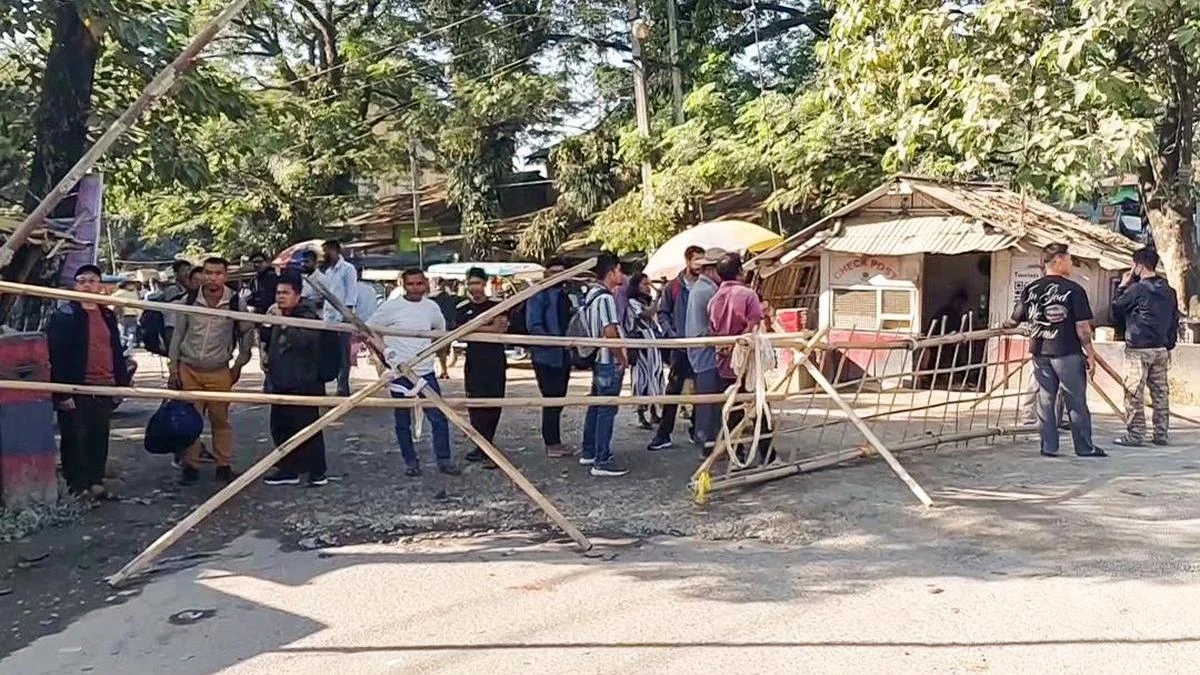
- The Turn of Events (Friday Night): As the bandh officially concluded, the situation took a violent turn in Pasighat. What began as a protest transitioned into a series of coordinated attacks. According to reports from the Arunachal Pradesh Police, a mob targeted critical infrastructure, including the office of the National Hydroelectric Power Corporation (NHPC).
- Targeted Violence: The escalation saw the burning of a local police station and the vandalism of the residences of three high-profile political figures, including the state president of the Bharatiya Janata Party (BJP). The chaos continued unabated until the early hours of Saturday, October 24, with reports of arson and destruction lasting until 3:30 a.m.
- Immediate Response (October 24-25): Recognizing the gravity of the situation, the MHA issued emergency orders on Saturday. Two RAF companies, comprising approximately 250 highly trained personnel, were mobilized from their base in Navi Mumbai. Airlifted by an Indian Air Force (IAF) transport aircraft, the units arrived in the region on Sunday to bolster the existing CRPF battalions already stationed in the state.
Official Responses: Navigating Democracy and Order
Chief Minister Pema Khandu has faced the difficult task of balancing the democratic right to dissent with the imperative of maintaining law and order. In a statement released by the Chief Minister’s Office (CMO), Khandu condemned the violence while acknowledging the protesters’ underlying concerns.
"The right to peaceful protest is an essential, non-negotiable part of our democracy," the Chief Minister stated. "However, it is equally vital that demonstrations remain within the bounds of the law. The destruction of public property and the targeting of individuals are unacceptable and do not serve the interests of the people of Arunachal Pradesh."
Khandu expressed deep regret over the events in Pasighat, labeling the incidents as an aberration in the state’s otherwise peaceful protest culture. He has issued a stern appeal to all sections of society to refrain from further violence and to engage in constructive dialogue with the administration. Meanwhile, security officials have noted that despite the injuries sustained by several police and central force personnel during the skirmishes, the CRPF’s presence has been instrumental in preventing a total breakdown of order.

The Role of the Rapid Action Force (RAF)
The deployment of the RAF is a significant tactical shift. Unlike standard CRPF battalions, which are generally tasked with counter-insurgency and general law enforcement, the RAF is a specialized unit trained specifically for riot control, crowd management, and the neutralization of civil disturbances.
The RAF operates with a "human rights-based" approach, utilizing specialized non-lethal equipment and crowd-dispersion techniques. Their blue-uniformed presence is intended to provide a psychological deterrent to agitators while providing the state administration with the agility required to respond to flash mobs and localized hotspots of violence. The arrival of 250 personnel adds to the existing permanent deployment of 2-3 CRPF battalions already integrated into the state’s security apparatus, ensuring that the government maintains a robust footprint in the volatile Siang corridor.
Broader Implications: Energy, Environment, and Security
The unrest in Pasighat serves as a microcosm of the broader challenges facing India’s Northeast. The region is currently the site of intense competition between developmental ambitions and environmental conservation.
1. Strategic Sensitivity
Arunachal Pradesh is a border state with significant strategic value. Any prolonged period of internal instability is viewed with concern by New Delhi, particularly given the proximity of international borders. The Centre’s swift response—airlifting specialized forces across the country—underscores the importance of maintaining internal stability in border regions to prevent external actors from exploiting internal grievances.
2. The Infrastructure Dilemma
The 11,200-MW project is part of a larger national vision to harness the hydropower potential of the Brahmaputra basin. However, the resistance encountered in Pasighat highlights a communication gap between the central planning authorities and the local grassroots. Experts argue that unless environmental impact assessments (EIAs) are made more transparent and local stakeholders are given a greater seat at the decision-making table, such mega-projects will continue to face stiff, and potentially violent, resistance.
3. The Future of the Siang Belt
The immediate future of the Siang districts remains precarious. While the deployment of the RAF will likely suppress the visible signs of protest, the underlying resentment regarding the hydro-electric project remains unresolved. If the state government fails to initiate a transparent mediation process, the risk of a resurgence in violence remains high once the current security clampdown is eased.
Conclusion
As the RAF settles into its deployment, the focus in Arunachal Pradesh must shift from security to reconciliation. The events of October 23-24 have left a scar on the social fabric of the East Siang district, with public confidence in both the state administration and the project proponents currently at a nadir.
The coming weeks will be a litmus test for the Pema Khandu administration. They must demonstrate that they can protect the developmental interests of the state without steamrolling the concerns of its indigenous people. For now, the heavy presence of the RAF stands as a reminder that while the government is committed to its infrastructure agenda, it is equally determined to ensure that the rule of law prevails in the face of civil unrest.
The people of Arunachal Pradesh now wait to see whether this heavy-handed security presence will be followed by a genuine attempt to address the grievances that led to the flames in Pasighat, or if the region is destined for a cycle of persistent protest and reactive policing.