October 15, 2026
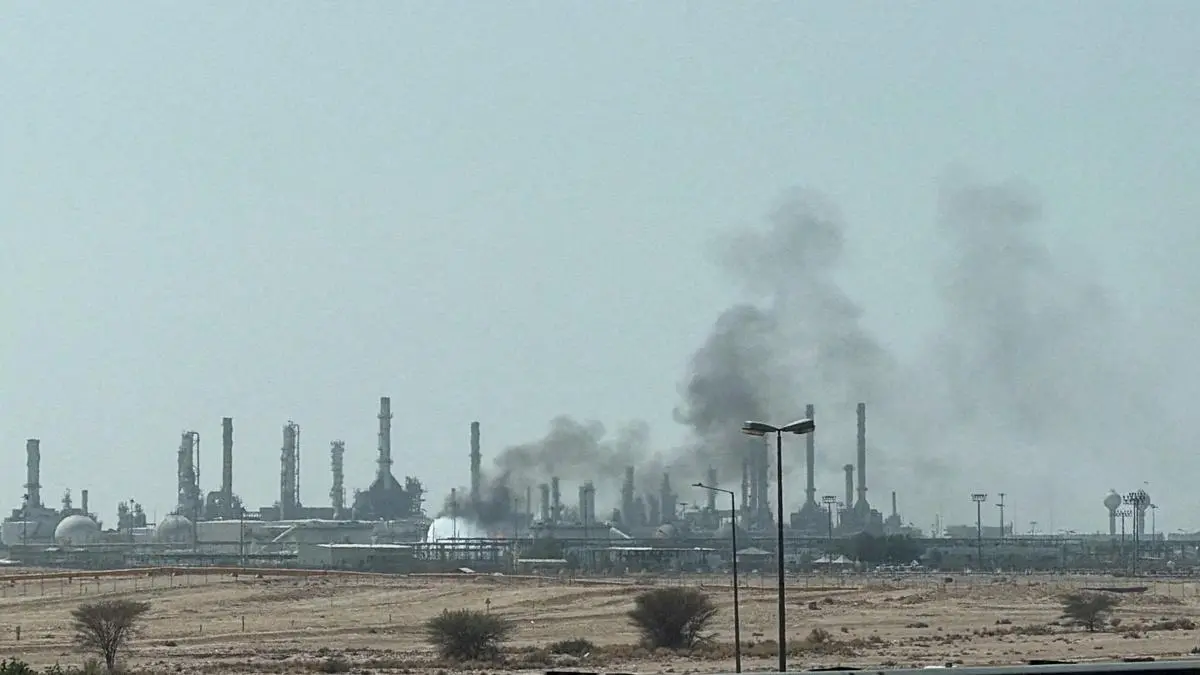
The regional security architecture of the Middle East is undergoing a violent recalibration. In the past week, Houthi militants—the insurgent force that controls northwestern Yemen—launched a series of brazen aerial assaults against the heart of Saudi Arabia. The strikes hit the Riyadh international airport and the headquarters of Saudi Aramco, the world’s largest oil company. These attacks have done more than cause physical damage; they have shattered the carefully constructed illusion of Saudi Arabia as a safe, stable hub for international investment, threatening to undermine the Kingdom’s multi-billion-dollar "Vision 2030" initiative.
The Anatomy of a Vulnerability
For years, the narrative surrounding Saudi Arabia’s defense centered on its massive military spending and its status as a premier U.S. ally. However, the recent strikes have exposed a structural vulnerability that experts describe as a "perfect storm." This crisis is the culmination of years of regional instability, the proliferation of indigenous weapons technology, and a shift in the global strategic landscape that has left the Kingdom’s air defense systems strained and overextended.
The threat posed by the Houthis is no longer that of a ragtag militia relying on smuggled hardware. Instead, they have evolved into a sophisticated, quasi-state actor capable of long-range precision strikes. This transformation, defense analysts argue, is the result of a deliberate, decade-long strategy orchestrated by Tehran to institutionalize the Houthis’ military capabilities, rendering them largely independent of direct supply chains.
A Chronology of Escalation: From Proxies to Producers
The evolution of the Houthi arsenal can be traced through several distinct phases:
- 2014–2018 (The Era of Direct Support): Following the outbreak of the Yemeni civil war, the Islamic Revolutionary Guard Corps (IRGC) and Lebanese Hezbollah began providing the Houthis with smuggled missile systems and technical training. During this period, the group functioned as a traditional proxy, reliant on Iranian logistical pipelines.
- 2019–2022 (The Shift to Self-Sufficiency): Recognizing that maritime interdiction by U.S.-allied forces could sever their supply lines, Iranian handlers pivoted. They began training Yemeni engineers to assemble dual-use components, allowing the Houthis to construct drones and ballistic missiles locally.
- 2023–2025 (Operational Maturation): The conflict in Gaza served as a crucible for the Houthis. By targeting Red Sea shipping and firing rockets into Israel, the group gained critical real-world experience in bypassing sophisticated radar and interception networks.
- 2026 (The Current Crisis): With the regional theater engulfed in the fallout of the U.S.-Iran war, the Houthis have leveraged their indigenous supply chains to launch sustained, high-tempo attacks on Saudi economic targets, effectively utilizing AI-enhanced software to refine their guided rocket programs.
The Iranian "Fish" Doctrine
The success of the Houthi campaign is often summarized by a quote from Hamid Nikou, a former political advisor to the IRGC: "Iran has basically taught the Houthis how to fish." This strategy emphasizes technical autonomy. By teaching Houthi technicians how to repurpose commercial parts—often sourced from China and other global markets—the IRGC has ensured that even if direct Iranian shipments are intercepted, the Houthi "military-industrial learning process" continues unabated.
"Tehran has not simply supplied the Houthis with weapons," notes Andreas Krieg, a senior security studies lecturer at King’s College London. "It has helped create an indigenous military-industrial learning process that becomes progressively harder to dismantle. They have institutionalized these capabilities, moving away from a reliance on finished goods toward a model of domestic assembly and refinement."
AI and the Technological Frontier
Perhaps the most alarming development in the Houthi arsenal is the integration of advanced software. Recent reports have confirmed that Houthi cells have utilized generative AI—specifically tools like Anthropic’s Claude—to assist in the development of sophisticated guidance software for rockets and, reportedly, a variant of a hypersonic glide vehicle.
This democratization of advanced military technology means that the Houthis are no longer limited by their lack of traditional aerospace infrastructure. By using AI to optimize flight paths and targeting algorithms, they have forced Saudi Arabia to contend with a threat that is not only mobile and hidden but increasingly "smart."
Supporting Data: The Cost of Defense
The Saudi-led coalition, currently struggling to maintain a defensive perimeter, has reported the destruction of 127 Houthi weapons storage facilities and launch platforms over the last several months. Despite these claims, the sheer geography of the Arabian Peninsula works against the Kingdom.
"Saudi Arabia, in terms of the sophistication of the military and the development of an integrated air defense network, is not really at the level of either Israel or Ukraine," says Farzan Sabet of the Geneva Graduate Institute. "Defending a country of Saudi Arabia’s size is an exponentially harder task than defending a concentrated base or a smaller territory. They are currently facing a resource scarcity of interceptors, exacerbated by the global demand for air defense munitions in the wake of the wider U.S.-Iran conflict."
The depletion of interceptor stocks, caused by the need to protect U.S. assets and regional allies simultaneously, has left the Kingdom’s industrial heartlands exposed. The math is brutal: every inexpensive Houthi drone costs a fraction of the high-end interceptor required to destroy it, creating an unsustainable economic and logistical burden for the Saudi military.
Official Responses and the Diplomatic Fallout
The Saudi government, through the coalition spokesperson Turki al-Maliki, has officially accused "regional actors" of providing the advanced technology necessary for these attacks. While Tehran continues to officially deny violating UN arms embargos, the diplomatic consensus is shifting.
In Washington, the response has been one of deepening concern. The U.S. is currently balancing its own military commitments in the broader U.S.-Iran theater with the need to reassure Riyadh. However, internal debate is brewing regarding the effectiveness of the current defensive strategy. There is increasing pressure on the Biden administration—or its successor—to provide more robust, possibly offensive, counter-drone capabilities to the Saudis, though such moves risk further escalating the regional war.
Implications: The Economic Mirage
The primary victim of these attacks is not just the physical infrastructure at Aramco, but the Saudi brand itself. Crown Prince Mohammed bin Salman’s vision for the Kingdom rests on attracting global capital, tourism, and talent. That vision requires a perception of safety.
International investors are now being forced to recalibrate their risk assessments. If the world’s largest oil company is vulnerable to recurring strikes, the perceived "country risk" for any business operating in the region rises dramatically. The nightmare scenario for Riyadh is a sustained period of "attrition warfare," where the cost of doing business—due to insurance premiums, security costs, and the threat of disruption—becomes too high for foreign entities to ignore.
As the conflict stretches into the final quarter of 2026, the Houthis have demonstrated that they are no longer merely a domestic Yemeni nuisance. They are a regional disruptor capable of influencing the global energy market and the strategic calculus of the world’s superpowers. For Saudi Arabia, the challenge ahead is existential: they must find a way to close the skies over their oil fields, or risk seeing their economic future evaporate in the smoke of the next Houthi drone strike.