The Indian automotive sector, a cornerstone of the nation’s manufacturing prowess, continues to navigate a complex global trade environment. During the first half of the 2027 fiscal year (April–September 2026), India’s car exports demonstrated resilience, albeit with modest growth. Total shipments reached 4,51,479 units, marking a marginal 1.25% increase compared to the 4,45,884 units exported during the corresponding period in FY2026. While the domestic market continues to surge—growing by over 27%—the export sector reflects a more tempered global demand, underscored by shifting manufacturer priorities and regional economic headwinds.
The Dominance of Maruti Suzuki
The narrative of Indian automotive exports in H1 FY2027 is unequivocally centered on Maruti Suzuki. As the country’s largest passenger vehicle manufacturer, Maruti Suzuki has effectively widened the gap between itself and its competitors, accounting for more than half of India’s total export volume.
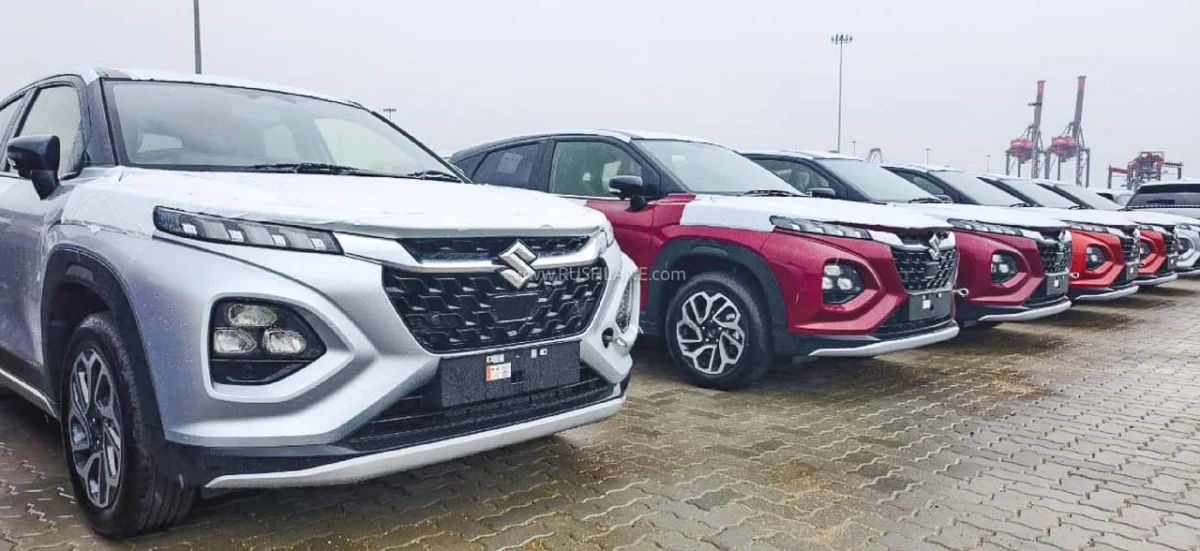
During this six-month window, Maruti Suzuki shipped 2,30,576 units abroad, a significant jump from the 2,05,763 units recorded in H1 FY2026. This represents a robust 12.06% growth rate. Consequently, the company’s share of India’s total export pie climbed from 46.15% to 51.07%. This achievement is particularly noteworthy because it occurred during a period where several other major players reported declines in their international shipments. Maruti’s ability to scale production and leverage its expansive global supply chain has allowed it to act as the primary engine keeping India’s export figures in positive territory.
A Comparative Analysis of Manufacturer Performance
While Maruti Suzuki thrived, the performance of other major manufacturers was mixed, reflecting the volatility of international markets. Hyundai, long the second-largest exporter from India, saw its numbers contract. The company shipped 92,008 units, a 7.57% decline from the 99,540 units reported a year prior, leading to a dip in its market share to 20.38%.

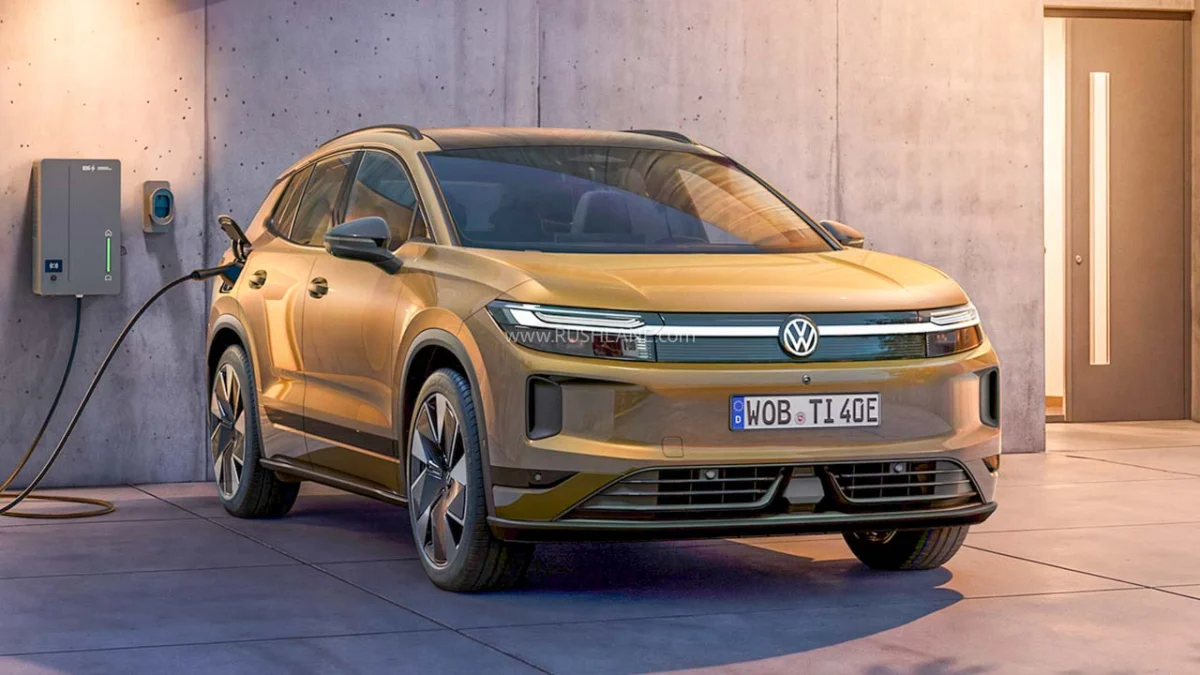
The trend of negative growth was consistent among other top-tier players. Nissan, which has historically utilized its Chennai facility as a strategic global hub, recorded 30,014 units—a sharp 20.19% decline. Volkswagen, likewise, faced a challenging half-year, with exports falling by 27.88% to 20,201 units. Toyota rounded out the top five with 16,679 units, a decline of 11.66%.
Conversely, smaller players or those with specific niche models saw impressive percentage gains. Renault, for example, registered a 69.52% increase in exports, totaling 11,526 units. Tata Motors, despite its domestic focus, saw its export volume rise by 42.62% to 7,543 units, and Skoda witnessed an 85.59% surge, albeit on a smaller volume base of 1,481 units.
The Model-Level Breakdown: The Fronx and Jimny Supremacy
At the individual model level, the Maruti Suzuki Fronx has cemented its status as the most exported car from India. With 46,147 units shipped in H1 FY2027, the crossover continues to find favor in international markets. Hot on its heels is the Maruti Suzuki Jimny, which has seen a meteoric rise in popularity. Recording 45,183 units—a staggering 47.66% increase year-on-year—the Jimny is rapidly closing the gap with the Fronx. Combined, these two models account for over 20% of all Indian car exports, underscoring the success of Maruti’s strategy to position India as a premium manufacturing base for compact, rugged, and stylish SUVs.
The Hyundai Grand i10 Nios remains a stalwart in the export charts, securing the third position with 29,332 units, while the Maruti Dzire continues to demonstrate the enduring global appeal of Indian-made sedans, with exports growing by 35.36% to 25,502 units.

Chronology and Market Dynamics
The first half of the fiscal year saw a distinct bifurcation between domestic and international demand. Between April and June 2026, the industry faced supply chain bottlenecks that impacted export logistics, particularly for companies relying on specialized components. However, by the second quarter (July–September 2026), the focus shifted toward aggressive clearing of order books for models like the Jimny and the newly introduced electric variants.
The rise of the Maruti e-Vitara is a critical data point. With 21,841 units exported—a 261.49% surge—the model highlights the growing appetite for Indian-manufactured electric vehicles in markets that are prioritizing decarbonization. This trajectory suggests that as India’s EV ecosystem matures, the export profile of the nation will likely shift from internal combustion engines to more sustainable mobility solutions.
Supporting Data: The Top 50 Export Leaders
The concentration of export volume is heavily skewed toward the top 50 models, which collectively contributed 4,49,787 units, or 99.63% of the total export pie. This concentration indicates that for most manufacturers, export success is tied to a "hero product" strategy rather than a broad-spectrum export of their entire domestic lineup.
| Rank | Model | H1 FY27 | H1 FY26 | Diff |
|---|---|---|---|---|
| 1 | Fronx | 46,147 | 45,348 | 799 |
| 2 | Jimny | 45,183 | 30,599 | 14,584 |
| 3 | Grand i10 NIOS | 29,332 | 26,623 | 2,709 |
| 4 | Dzire | 25,502 | 18,840 | 6,662 |
| 5 | Verna | 23,696 | 32,671 | -8,975 |
| 6 | eVitara | 21,841 | 6,042 | 15,799 |
| 7 | Magnite | 21,782 | 24,226 | -2,444 |
| 8 | Swift | 20,173 | 29,739 | -9,566 |
| 9 | Aura | 19,651 | 22,117 | -2,466 |
| 10 | Virtus | 16,680 | 20,280 | -3,600 |
Official Perspectives and Industry Implications
Industry analysts point out that while the 1.25% growth may seem modest, it is significant given the current global economic climate characterized by inflationary pressures and geopolitical instability in several key export destinations for Indian OEMs, such as parts of Africa, Latin America, and Southeast Asia.

"The shift we are seeing is not just about volume; it is about the transition toward higher-value exports," says an industry analyst. "Maruti Suzuki’s dominance is evidence that global brands are comfortable using India as a primary manufacturing hub for their global portfolios. The decline in other manufacturers’ figures is largely a reflection of their specific global product lifecycle management, rather than a failure of the ‘Make in India’ initiative."
Furthermore, the disparity between domestic growth (27.16%) and export growth (1.25%) highlights a strategic pivot. Manufacturers are currently prioritizing the high-growth, high-margin domestic Indian market. As the Indian economy expands and the middle class grows, companies are finding it more lucrative to focus on the domestic consumer than to fight for thin margins in volatile international markets.
Looking Ahead: The Future of Indian Exports
The implications of these figures for the remainder of FY2027 are clear. India is moving toward a consolidation phase in its export strategy. The reliance on a few key models—Fronx, Jimny, and the burgeoning e-Vitara—suggests that success in the future will depend on agility in transitioning to new energy vehicles.
The government’s Production Linked Incentive (PLI) schemes and ongoing free trade agreement (FTA) negotiations are expected to play a crucial role in the second half of the fiscal year. If these policy levers can reduce the cost of logistics and improve market access, the 1.25% growth rate could be a floor rather than a ceiling.

However, challenges remain. The global automotive industry is facing a massive transition toward electrification and software-defined vehicles. Indian OEMs that successfully integrate these technologies into their export-bound products will likely lead the next wave of growth. As it stands, the H1 FY2027 data serves as a testament to the endurance of Indian manufacturing, even when global winds are blowing against the sails of the automotive sector.
In conclusion, while the export numbers reflect a period of stabilization, the underlying data points toward a profound transformation. Maruti Suzuki’s leap in market share and the success of specific SUV and EV models prove that Indian manufacturing remains a vital cog in the global automotive machine. The challenge for the industry in the coming months will be to balance this domestic boom with the necessity of maintaining a global footprint in an increasingly competitive and rapidly evolving world market.