In a strategic shift that signals a new chapter for the company’s AI division, Meta’s Superintelligence Lab unveiled its latest breakthrough on Monday: "Muse Wonder" and "Muse Wonder Full." Representing Meta’s inaugural foray into the highly competitive "frontier model" category, these new systems are designed not merely to compete with industry benchmarks, but to redefine how artificial intelligence integrates into the long-term, daily lives of users.
This launch marks a pivotal moment in Meta’s ongoing effort to pivot from social media dominance toward becoming an AI-first infrastructure company. By introducing models that emphasize "active memory"—a sophisticated architecture for long-term recall—Meta is signaling that the next phase of the AI arms race will be fought not just in raw compute power, but in the intimacy and continuity of the digital assistant.
The Technical Foundation: From Lightweight Spark to Frontier Wonder
For the past year, Meta’s AI narrative has been dominated by "Muse Spark," a lightweight, low-latency model designed for rapid, transactional interactions. While Spark succeeded in providing a snappy user experience, it lacked the depth required for complex, multi-stage reasoning or intensive coding tasks.
The new "Wonder" duo changes that dynamic entirely. Developed within the specialized Superintelligence Lab, these models are significantly larger and represent a radical scaling up of Meta’s neural architecture. According to the company’s official model card, Muse Wonder and Muse Wonder Full exhibit performance metrics that place them in direct competition with the current industry heavyweights: Fable 5.1 and GPT-6 Astra.
The release is the first major output from Meta since the restructuring of its AI division in August of last year, a transformation spearheaded by Scale AI founder Alexandr Wang. Under Wang’s direction, the company moved away from the piecemeal release of smaller, research-focused models, opting instead for a more disciplined, resource-intensive approach. These models were trained at the massive "Prometheus" data center in central Ohio, a facility that only came online earlier this year and represents one of the world’s most capable AI training clusters.
A Chronology of Meta’s AI Evolution
To understand the magnitude of Monday’s announcement, one must look at the rapid-fire evolution of Meta’s internal research roadmap over the last 18 months:
- August 2025: A watershed moment occurs as Meta undergoes a structural reorganization of its AI efforts, bringing in external expertise to streamline the path from research to deployment.
- Late 2025: Meta begins full-scale training operations at the Prometheus facility in Ohio, shifting its focus toward high-parameter frontier models.
- Early 2026: The release of "Muse Spark" provides a public-facing, low-latency testbed for Meta’s agentic infrastructure.
- September 2026: Significant upgrades are introduced to the Muse agent platform, laying the groundwork for the memory-heavy capabilities required by the upcoming frontier models.
- October 2026: The official launch of the Muse Wonder series marks the transition from lightweight experimental models to full-scale, competitive frontier systems.
Supporting Data: The Case for ‘Active Memory’
Perhaps the most significant innovation introduced with Muse Wonder is "active memory." In an era where most LLMs treat every prompt as a blank slate, Meta is betting that the future of utility lies in persistence.
To quantify this, Meta has championed the "MemoryBench" benchmark. Unlike standard tests that measure rote knowledge or coding syntax, MemoryBench evaluates a model’s ability to build a coherent, evolving framework of user preferences, past interactions, and complex context over weeks and months. Meta’s internal testing suggests that Muse Wonder currently outperforms Fable, Opus, and Astra in this specific domain.
The technical implications are profound. By moving beyond short-context windows, the Muse Wonder models are designed to become "digital companions" that truly understand the trajectory of a project or a user’s life, rather than just the immediate request. This capability is integrated directly into the broader Muse agent ecosystem, which is now powered by the underlying Wonder architecture.
Official Responses and Strategic Positioning
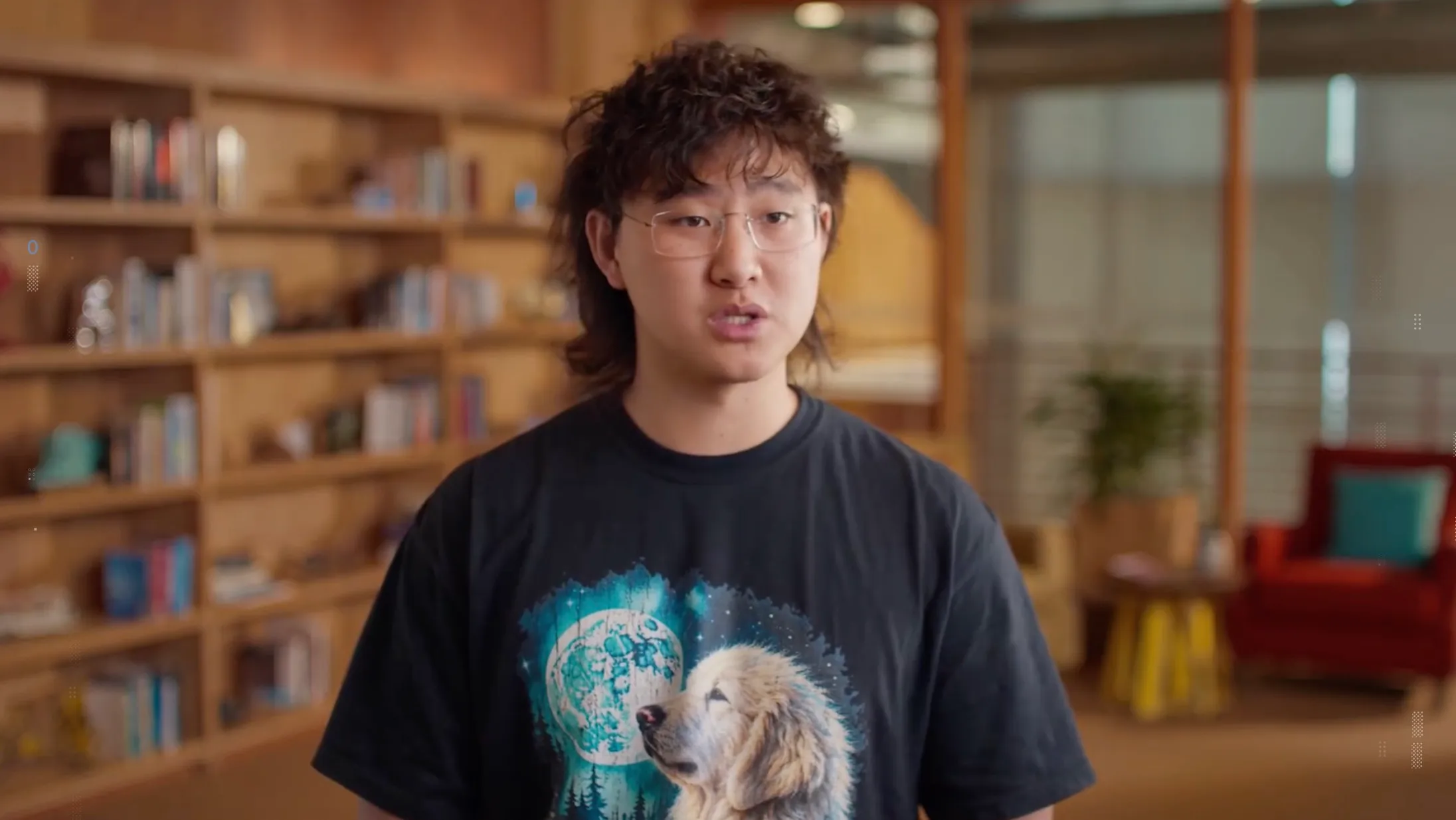
The launch has been accompanied by a concerted effort by Meta’s leadership to frame these models as a leap toward "personal superintelligence." In a promotional video released alongside the research blog, research scientist Kavya Kopparapu emphasized the human-centric design philosophy behind the technology.
"We put a tremendous amount of effort into making sure your model can remember what’s important to you over days, weeks, months, and beyond," Kopparapu said. "It is not enough for an AI to be smart; it must be consistently aware of the user’s intent, even when that intent is expressed across disjointed conversations over long periods."
Meta has also been transparent about the economic reality of such models. Accessing Muse Wonder through the Meta Model API carries a price tag of $4 per million input tokens and $20 per million output tokens. This places the model in a pricing tier comparable to high-end enterprise offerings like GPT-6 Sol and Opus 5.5.
However, Meta is keeping its most powerful iteration—Muse Wonder Full—under lock and key. It will be restricted exclusively to Muse Code subscribers and will not be accessible via the standard API. This "walled garden" approach suggests that Meta intends to leverage these frontier models to drive direct platform subscriptions rather than simply commoditizing them as an API provider.
Implications: The New Frontier of Personal AI
The release of the Muse Wonder models carries significant implications for the broader tech ecosystem.
1. The Death of the "Blank Slate" Assistant
The shift toward active memory signals a move away from the "chatbot" paradigm. Users are increasingly expecting their AI tools to remember their coding styles, their favorite project management methodologies, and their long-term personal goals. By prioritizing memory, Meta is forcing competitors to reconsider their own architectures, which have historically focused on token generation speed rather than state maintenance.
2. Infrastructure as a Competitive Moat
The fact that these models were born in the Prometheus data center underscores the growing importance of physical infrastructure. The ability to train at scale in domestic facilities like those in Ohio is becoming a distinct competitive advantage for firms that can afford the massive capital expenditure. Meta’s successful deployment of Prometheus suggests that the "compute wall" is being breached, allowing for models that are both more intelligent and more specialized.
3. A Strategic Shift for Developers
By restricting "Muse Wonder Full" to Muse Code subscribers, Meta is clearly targeting the professional developer demographic. This move suggests that the company is less interested in mass-market API commoditization and more focused on creating a deep, integrated workflow for power users. If Muse Wonder becomes the default environment for complex coding and long-term project synthesis, Meta will have successfully secured a sticky, high-value user base.
4. Market Consolidation
With Muse Wonder and Muse Wonder Full, the field of frontier-model providers has effectively narrowed. OpenAI, Anthropic, and now Meta are engaged in a race where the cost of entry is rising rapidly. Smaller players may find it increasingly difficult to keep pace, as the benchmarks for success—specifically in long-term memory and reasoning—continue to climb.
Conclusion
As the dust settles on the launch of the Muse Wonder series, the trajectory for Meta is clear. The company is no longer content to experiment on the periphery of the AI industry. With its new frontier models, it is making a calculated move into the center of the professional and personal digital experience.
Whether the market will embrace a subscription-based, memory-heavy model remains to be seen. However, by solving the problem of long-term recall, Meta has identified one of the most significant pain points in current AI technology. If the performance claims hold up under independent verification, Muse Wonder may well be the first step in a transition toward a future where our AI tools don’t just answer questions—they actively grow alongside us.