
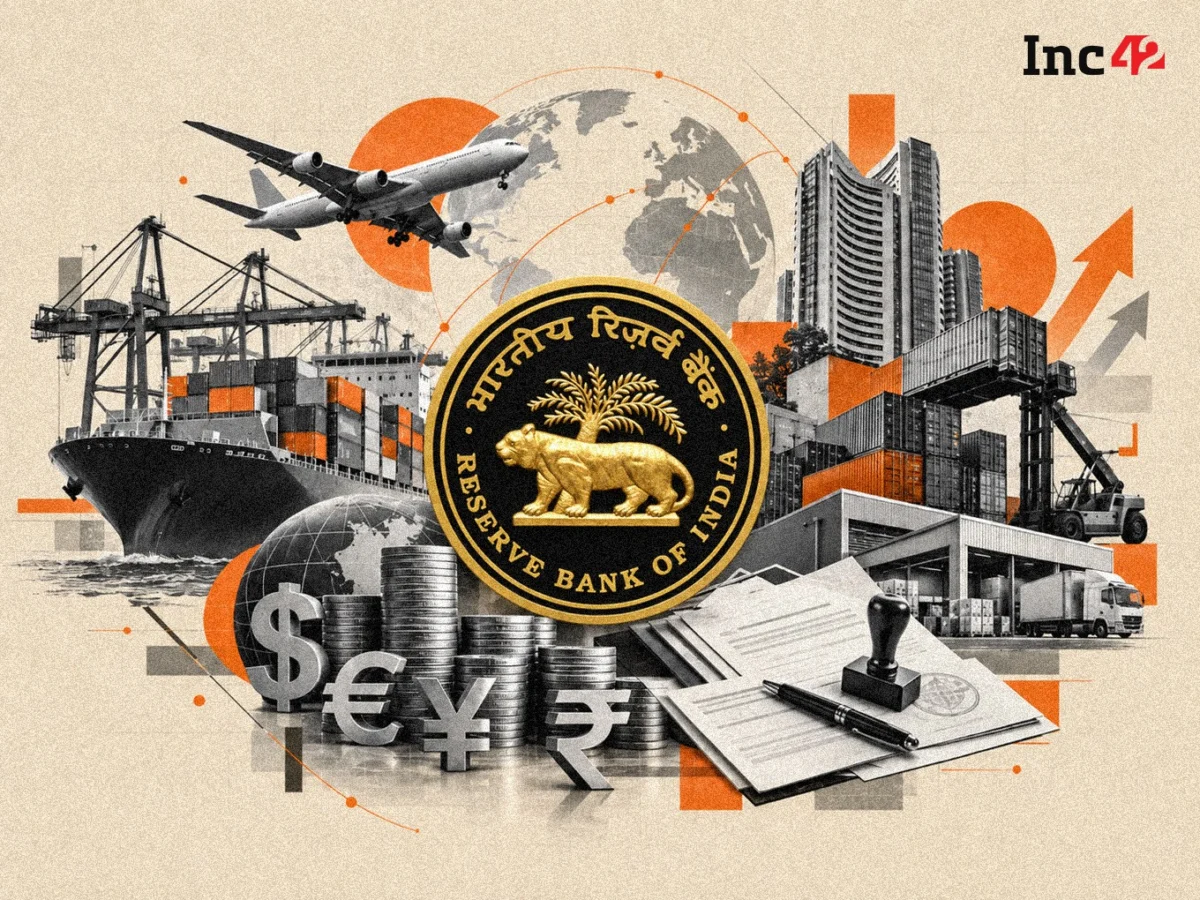
In a significant move to soothe the anxieties of India’s burgeoning digital workforce, the Reserve Bank of India (RBI) has issued a series of clarifications regarding the recently implemented Foreign Exchange Management (Export and Import of Goods and Services) Regulations, 2026. Since the regulations took effect on October 1, confusion had rippled through the freelance, creator, and startup communities, centered on the fear that the new, unified trade framework would impose burdensome reporting requirements on individual service providers.
RBI Governor Sanjay Malhotra stepped in to provide much-needed reassurance, confirming that individuals engaging in personal foreign exchange transactions are exempt from the reporting mandates under the new framework. This clarification serves as a vital pivot, ensuring that the operational friction intended for large-scale commercial trade does not stifle the day-to-day activities of individuals, tutors, or small-scale digital entrepreneurs.
The Core Clarification: Separating Personal from Commercial
The heart of the confusion stemmed from the broad nature of the new "Export Declaration Form" (EDF) requirements. Many feared that every overseas transaction—ranging from paying for a foreign software subscription to receiving a small payment for a tutoring session—would now require formal bureaucratic filing.
Governor Malhotra was explicit in his address: transactions of a personal nature remain outside the scope of the new reporting mandate. Whether it is a subscription for a foreign news outlet, an app, or a professional journal, these remain unaffected. More importantly, the RBI has extended this exemption to cover individuals receiving payments for overseas tutoring and minor software assignments.
By categorizing these as personal rather than strictly "commercial" exports, the RBI has effectively carved out a safe harbor for the growing "gig economy." The central bank has signaled its intent to release a comprehensive set of Frequently Asked Questions (FAQs) in the coming weeks, which will provide granular detail on how these exemptions apply to various business arrangements, from YouTube creators to independent consultants.
Chronology of the Regulatory Shift
The path to the current framework began with the government’s push to modernize trade data collection.
- Pre-October 2026: Software exporters relied on the SOFTEX form, while goods exporters followed a separate declaration process. Many service exporters operated under a more fragmented reporting structure, though the underlying requirement to realize and repatriate earnings remained.
- October 1, 2026: The new Foreign Exchange Management (Export and Import of Goods and Services) Regulations officially took effect. The objective was to bring goods and services under a unified umbrella, creating a consolidated Export Declaration Form (EDF) for all services, including software.
- Early October 2026: As the regulations hit the ground, industry feedback highlighted significant apprehension among freelancers and SMEs regarding the volume of paperwork.
- October 7, 2026: RBI Governor Sanjay Malhotra and Deputy Governor Rohit Jain addressed these concerns, clarifying the scope of the rules and promising forthcoming FAQs to ensure smooth implementation.
The New Reporting Architecture: What Changes for Businesses?
While individuals may have gained an exemption, the landscape for established SaaS startups and larger service exporters is undergoing a structural evolution. Under the new regulations, the process of documenting service exports has been consolidated.
Previously, the regulatory burden for service exports was relatively light compared to merchandise trade. The new framework seeks to harmonize this. For established SaaS companies, the change is largely procedural. According to Naganand Doraswamy, founder and managing partner at Ideaspring Capital, the transition from filing SOFTEX forms to the new EDF system is expected to be a matter of administrative adjustment rather than a fundamental change in the nature of their compliance.
"From a founder’s perspective, there’s not a whole lot of change," Doraswamy noted. "What was being filed in SOFTEX, they’ll go by and file it in EDF, and the banks will have to match it." While he anticipates some initial "transitional disruption," he maintains that once the banking systems and the internal processes of startups align, the system will likely operate with greater efficiency.
Implications: The ₹10 Lakh Threshold and Self-Declaration
A critical component of the new framework is the ₹10 Lakh threshold for self-declaration. This provision is designed to act as a pressure valve for smaller export transactions.
It is vital to understand that this threshold applies per bill, not to the cumulative annual export earnings of a service provider. This distinction is crucial; an entity could potentially have total annual earnings in the crores, yet still utilize the simplified self-declaration route for individual bills that fall below the ₹10 Lakh mark.
For these bills, banks are authorized to close export-monitoring entries based on the exporter’s self-declaration that the payment has been realized. This process can be handled quarterly, allowing for the "bulk closure" of eligible entries. This mechanism significantly reduces the administrative load on both the exporter and the authorized dealer, provided the documentation trail remains robust.
Reconciliation Challenges in the Digital Age
Despite the relief provided by the RBI, experts caution that the "fine print" of reconciliation remains a challenge. CA Abhinarayan Mishra, a specialist in cross-border tax and FEMA, points out that the modern digital economy often involves platform intermediaries—such as PayPal, Stripe, or various creator platforms—that deduct fees before the funds ever reach the service provider’s bank account.
If a freelancer invoices $1,000 but receives $900 due to platform commissions, the "realized" amount does not match the invoice amount. Under the new framework, this discrepancy requires reconciliation. For larger firms, this is standard accounting practice, but for smaller creators or influencers, it introduces a layer of complexity.
The regulations do allow authorized dealers to approve "reduced realization" on satisfactory grounds for bills up to ₹10 Lakh. However, this still requires the exporter to be diligent in maintaining records. As the RBI moves toward more comprehensive data collection, the ability to document these deductions will be essential to avoid red flags in the export monitoring system.
The Nine-Month Repatriation Deadline
The debate over the nine-month deadline for the realization and repatriation of export proceeds remains a point of focus. While this is not a new requirement—having been restored in June after a temporary extension to 15 months—it is now firmly embedded in the new regulatory framework.
For service exporters, this deadline is often the most significant operational hurdle. Disputed payments, technical delays in invoice settlement, or simply the long cycles inherent in some software-as-a-service contracts can make the nine-month window tight.
The RBI has provided a safety valve: authorized dealers may grant extensions on "satisfactory grounds." Furthermore, in the event that proceeds remain unrealized beyond the deadline, the regulation does not automatically trigger an export ban. Instead, it mandates that future exports be backed by full advance payment or an irrevocable letter of credit. This creates a balanced approach: protecting the country’s foreign exchange reserves while acknowledging that legitimate commercial disputes happen.
Why the RBI is Expanding Services Reporting
At its core, the move to a unified framework is driven by the RBI’s need for better macroeconomic data. As services—particularly software, AI, and digital creative services—become an increasingly large slice of India’s export pie, the central bank requires more precise tracking to formulate effective monetary policy.
Governor Malhotra emphasized that the objective is to improve the quality of services trade data, bringing it closer to the granular detail currently available for merchandise trade. While this may increase the compliance workload for some, experts like CA Mishra argue that it will ultimately benefit the sector. Better data leads to better policy, and a clearer understanding of the "creator economy" and emerging service sectors could, in the long run, lead to more tailored support for these industries.
Conclusion: A Balancing Act
The RBI’s recent intervention demonstrates a responsive regulatory approach. By distinguishing between individual, personal-nature transactions and large-scale commercial exports, the central bank has prevented a potential wave of administrative panic.
For the majority of India’s digital service exporters—from the freelance developer to the established SaaS startup—the new framework is a transition from fragmented, older processes to a more unified, albeit more rigorous, system. The success of this framework will depend largely on how smoothly authorized dealer banks manage the reconciliation process and how clearly the upcoming FAQs resolve the lingering questions of the creator economy. As the system settles, the integration of services into the broader trade reporting framework will likely become a standard, automated feature of India’s evolving digital economy.