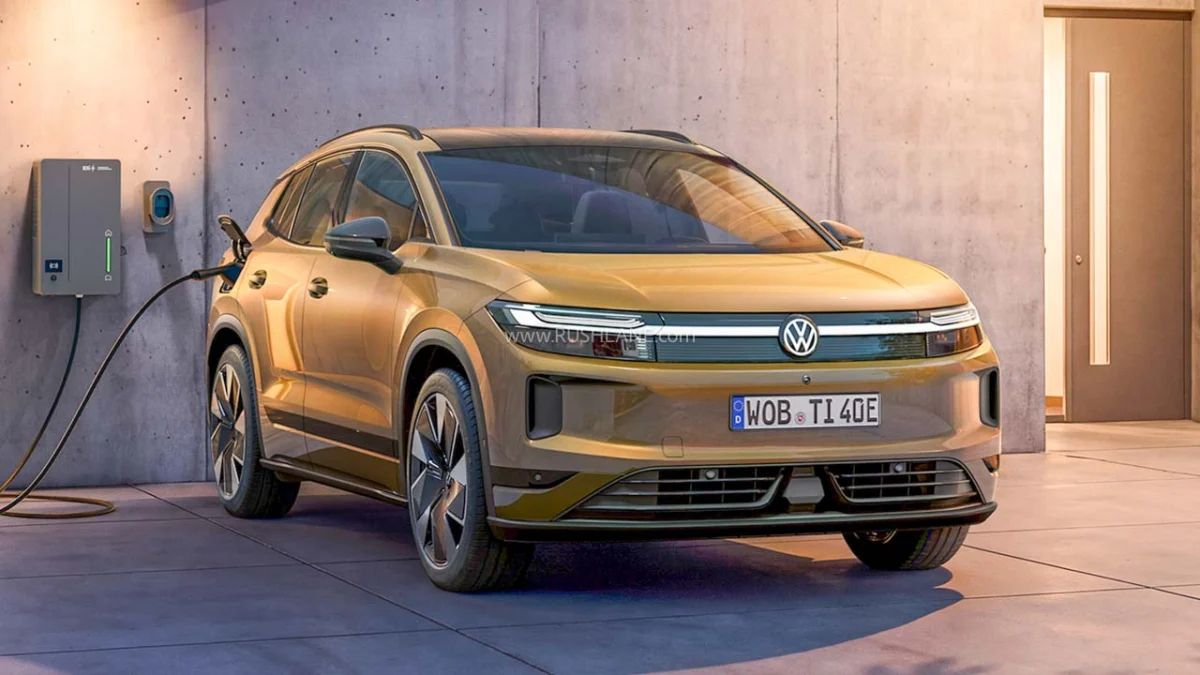
Volkswagen has officially pulled the covers off its most ambitious electric vehicle to date: the all-new ID. Tiguan. Representing a pivotal shift in the German automaker’s electrification strategy, the ID. Tiguan is not merely an addition to the portfolio; it is a strategic successor designed to phase out the aging ID.4 and ID.5 models, consolidating Volkswagen’s mid-size SUV dominance into a single, powerhouse offering.
With European pre-sales commencing on October 13, 2026, and a starting price point of EUR 42,695 (approximately Rs 46.30 lakh), the ID. Tiguan signals a clear message to competitors: the transition to full electric mobility is no longer a peripheral experiment—it is the core of the brand’s identity.
Main Facts: A New Benchmark for the SUV Segment
The ID. Tiguan arrives at a critical juncture for Volkswagen. Built upon the sophisticated MEB+ platform, the vehicle manages to bridge the gap between futuristic electric utility and the traditional, rugged SUV aesthetic that loyal Tiguan customers have come to expect.
Key Specifications at a Glance:
- Platform: MEB+ architecture, offering improved thermal management and charging efficiency.
- Battery Options: 58 kWh and 77 kWh capacities.
- Performance: RWD and AWD (4MOTION) configurations with outputs ranging from 140 kW (190 hp) to 220 kW (299 hp).
- Range: Up to 600 kilometers on a single charge.
- Practicality: 534-litre main boot, supplemented by a 32-litre front trunk (frunk).
- Towing: Robust capacity of up to 2,000 kg (2 tons).
The decision to retain the "Tiguan" nomenclature is a calculated move to leverage the immense brand equity of the world’s best-selling Volkswagen SUV. While the current internal combustion engine (ICE) versions—petrol, diesel, and hybrid—will remain in production to cater to diverse market needs, the ID. Tiguan represents the definitive path forward for the manufacturer.
Chronology: From Concept to Global Launch
The development of the ID. Tiguan has been a multi-year project marked by Volkswagen’s commitment to refining the electric experience.

- Early 2025: Rumors regarding the consolidation of the ID.4 and ID.5 lines began to circulate as Volkswagen signaled a desire to simplify its naming conventions and focus on high-volume nameplates.
- Mid-2026: Teaser campaigns provided glimpses of the "Pure Positive" design language, confirming that the new EV would move away from the "soft" crossover aesthetic in favor of a more muscular, traditional SUV profile.
- October 2026: The official global reveal takes place, setting the stage for European market entry.
- Early 2027: Official sales begin in Europe, marking the first time customers can take delivery of the new electric flagship.
- Late 2027: Planned rollout to international markets, including potential entries into North American and Asian territories, subject to regional regulatory approvals.
Supporting Data: Design, Technology, and Engineering
Volkswagen’s "Pure Positive" design language is evident in every contour of the ID. Tiguan. Unlike its predecessors, which leaned heavily into aerodynamic curves that sometimes compromised interior space, the new model embraces a more vertical, commanding stance.
Exterior Aesthetics
The exterior is defined by sharp, purposeful lines. The front end features a completely closed-off grille, which is standard for the ID. series, but it is flanked by sophisticated, slim LED matrix lighting that gives the SUV a modern, piercing gaze. The rear design is perhaps the most striking, featuring a full-width connected tail lamp assembly and an illuminated Volkswagen badge, signaling a move toward high-end, light-based luxury.
The Digital Cockpit
Inside, the cabin is a masterclass in ergonomics and high-tech integration. Volkswagen has listened to feedback regarding its previous infotainment systems, opting for a user-centric, triple-screen layout.
- 15-inch Central Infotainment Screen: The hub of the vehicle, housing the latest generation of VW’s software, which promises faster response times and more intuitive menu structures.
- 12-inch Passenger Display: A first for the Tiguan, this allows front-seat passengers to control navigation, media, and climate independently.
- 10-inch Digital Instrument Cluster: Positioned directly in front of the driver, providing essential telemetry without clutter.
Perhaps most significantly for purists, the ID. Tiguan retains a healthy selection of physical buttons on the steering wheel and console, acknowledging that while touchscreens are essential, tactile feedback remains a priority for driving safety.
Official Responses and Strategic Intent
During the unveiling, Volkswagen executives emphasized that the ID. Tiguan is not just an EV; it is the "ultimate realization" of the MEB+ platform’s potential.

"We are moving past the phase of educating the market on electric vehicles," stated a lead engineer during the presentation. "The ID. Tiguan is designed for the person who needs a daily driver that can tow, haul a family, and handle long-distance highway travel without anxiety. It is the Tiguan you know, upgraded for the next generation of mobility."
The focus on V2L (Vehicle-to-Load) functionality is a clear response to the growing consumer demand for versatile EVs that can power external devices, camping gear, or even serve as a backup power source for homes.
Implications: A Shifting Market Landscape
The launch of the ID. Tiguan has significant implications for both the automotive industry and the consumer.
Impact on Competition
By consolidating the ID.4 and ID.5 into the Tiguan, Volkswagen is creating a "one-stop-shop" for the mid-size SUV buyer. Competitors like the Hyundai Ioniq 5, Kia EV6, and Tesla Model Y will now face a refreshed, highly established brand nameplate that carries decades of legacy. The pricing strategy—starting at EUR 42,695—positions the ID. Tiguan as a premium but accessible option, likely putting immense pressure on mid-tier EV manufacturers.
The Future of ICE
The continued production of the current ICE Tiguan suggests that Volkswagen is employing a dual-track strategy. The company is betting that for the next five to seven years, there will be a parallel market for both electrified and traditional combustion vehicles. However, the heavy investment in the ID. Tiguan’s R&D suggests that the "center of gravity" within the company has already shifted toward battery-electric platforms.

Consumer Experience
For the average buyer, the ID. Tiguan represents a lowering of the "barrier to entry" for electric luxury. With features like massage seats, a 480-watt Harman Kardon sound system, and advanced ADAS (Advanced Driver Assistance Systems) coming standard or as optional packages across four distinct trims—Trend, Life, Style, and R-Line—Volkswagen is ensuring that the ID. Tiguan caters to both the budget-conscious fleet buyer and the premium-seeking retail customer.
Conclusion
The Volkswagen ID. Tiguan is more than a new vehicle; it is a declaration of intent. By combining the legendary reliability and design philosophy of the Tiguan nameplate with the cutting-edge capabilities of the MEB+ platform, Volkswagen has created a bridge between the past and the future. As it rolls into showrooms across Europe in early 2027, the industry will be watching closely to see if this "all-in" approach is the spark needed to ignite widespread electric vehicle adoption.
With its blend of range, power, and high-end digital features, the ID. Tiguan is positioned to lead the pack, proving that in the age of electrification, the most successful cars will be those that feel familiar, even as they redefine the road ahead.