
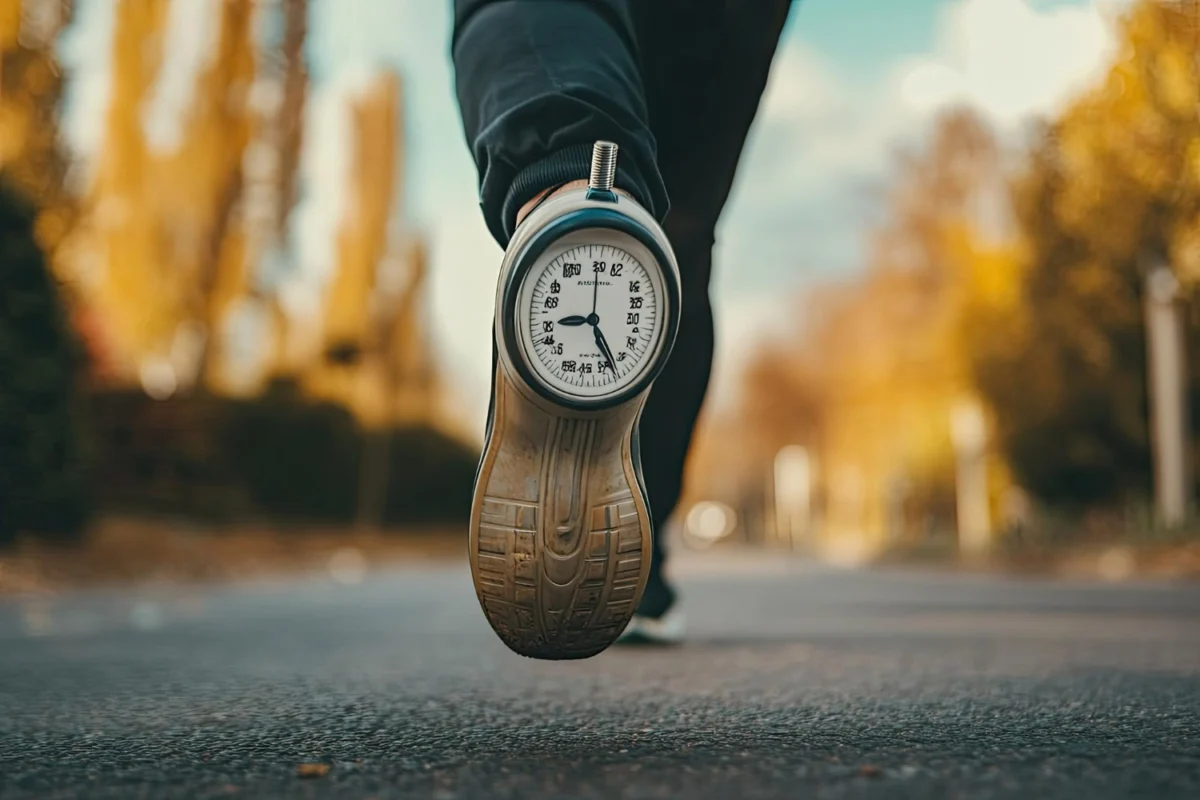
After a brisk evening walk through the local park, many of us develop a habit of checking our smartwatches. The device pulses with a number: 142 calories. The mind immediately begins a quick, often guilt-ridden calculation. Is that half a samosa? Maybe a couple of tea biscuits?
This ritual, while common, is fraught with misconceptions. Walking is arguably the most accessible and popular form of human movement, yet most people remain in the dark regarding the actual metabolic cost of their steps. Is that digital readout accurate? Does increasing your pace provide a significant physiological advantage? And is the fabled 10,000-step benchmark a medical necessity or a clever marketing relic? To demystify the science of movement, we must move beyond the hype and look at the physics of the human body.
The Physics of Movement: What Actually Determines Your Burn?
There is no "universal constant" for calorie burn, a reality that often frustrates those looking for a simple formula. A 60 kg individual strolling leisurely for thirty minutes will expend significantly less energy than a 90 kg individual climbing a slight incline at a power-walking pace.
The Role of METs
Exercise physiologists quantify energy expenditure using Metabolic Equivalents (METs). A MET is a physiological measure expressing the energy cost of physical activities as a multiple of the resting metabolic rate. Essentially, it compares the energy expended during an activity to the energy used while sitting perfectly still.
- Slow walking (3.2 km/h): ~2.8 METs
- Moderate walking (4.8 km/h): ~3.5 METs
- Brisk walking (5.6 km/h): ~4.3 METs
- Very brisk walking (6.4 km/h): ~5.0 METs
To estimate your personal caloric expenditure, you can apply this formula:
MET value × Body Weight (kg) × Time (hours) × 1.05 = Total Calories Burned.
For example, a 70 kg person walking briskly for one hour consumes approximately 316 calories. While this may not seem dramatic in isolation, the cumulative impact of daily movement is profound.

Variables That Influence Your Energy Expenditure
Understanding why your numbers fluctuate requires looking at five core pillars:
- Body Weight: Simply put, it takes more energy to move a heavier mass. Two people walking side-by-side at the same speed will inevitably burn different amounts of fuel—this is not a failure of the tracker, but a fundamental law of physics.
- Pace and Intensity: As you increase speed, the demand on your cardiovascular system and muscular engagement grows exponentially. The transition from a "leisurely stroll" to a "brisk walk" creates a disproportionate jump in caloric output.
- Duration: Time is the primary multiplier. A slow 60-minute walk will often yield a higher total calorie burn than a high-intensity 20-minute dash.
- Terrain: Walking on flat surfaces is efficient; introducing stairs, hills, sand, or uneven gravel forces the body to stabilize and engage more muscle groups, raising the energy cost significantly.
- Individual Physiology: Age, sex, and baseline fitness levels determine metabolic efficiency. A highly trained athlete may burn calories differently than someone just beginning their fitness journey due to differences in muscle mass and metabolic adaptation.
Quantifying the Effort: Calorie Burn Tables
For those looking for a practical reference, the following data illustrates the estimated caloric burn for 30 minutes of walking on a flat surface.
Calories Burned in 30 Minutes
| Body Weight | Slow (3.2 km/h) | Moderate (4.8 km/h) | Brisk (5.6 km/h) | Very Brisk (6.4 km/h) |
|---|---|---|---|---|
| 50 kg | 74 kcal | 92 kcal | 113 kcal | 131 kcal |
| 60 kg | 88 kcal | 110 kcal | 135 kcal | 158 kcal |
| 70 kg | 103 kcal | 129 kcal | 158 kcal | 184 kcal |
| 80 kg | 118 kcal | 147 kcal | 181 kcal | 210 kcal |
| 90 kg | 132 kcal | 165 kcal | 203 kcal | 236 kcal |
| 100 kg | 147 kcal | 184 kcal | 226 kcal | 263 kcal |
A simple heuristic for pace: If you can chat comfortably, you are at a "moderate" pace. If you can talk but would prefer not to sing, you are "brisk." If full sentences become labored, you are in "very brisk" territory.
The 10,000-Step Myth vs. Clinical Reality
The "10,000 steps" rule is one of the most successful health marketing campaigns in history. It originated in 1965 with a Japanese pedometer called Manpo-kei, which translates to "10,000-step meter." The number was chosen as much for its aesthetic symmetry as its physiological accuracy.
Modern research, however, offers a more nuanced view. A landmark meta-analysis published in The Lancet Public Health indicated that the mortality benefits of walking plateau at different thresholds based on age. For adults over 60, the risk of early death decreases significantly up to 6,000–8,000 steps, while younger adults may see continued benefits up to 8,000–10,000 steps.
Ultimately, 10,000 steps should be viewed as a flexible guidepost rather than a rigid medical mandate. Depending on your stride length and terrain, this distance typically spans 7 to 8 kilometers and can burn anywhere from 300 to 500 calories.

Implications for Weight Management
Can walking help you lose weight? The answer is a qualified "yes," but with an important caveat: it is rarely a rapid transformation.
While the "3,500-calorie deficit for one pound of weight loss" rule is widely cited, it often fails to account for metabolic adaptation—the process by which your body becomes more efficient and burns fewer calories as you lose weight. Consequently, relying solely on walking to "outrun" an poor diet is mathematically difficult. However, when combined with a balanced nutritional approach, daily walking creates a consistent, sustainable energy deficit that is much more likely to result in long-term weight maintenance than crash dieting.
Moreover, the benefits of walking extend far beyond the scale. Regular activity improves insulin sensitivity, blood sugar control, and cardiovascular health, providing systemic benefits that occur even if the number on the scale remains stagnant for a period.
The "Smartwatch Paradox"
Why does your fitness tracker often display a higher number than the tables provided here? Research into wearable technology suggests that while most devices are excellent at tracking heart rate and step counts, their energy expenditure algorithms can be inconsistent. A study analyzing seven popular wrist-worn devices found that they often struggle to accurately calculate caloric burn, frequently overestimating the intensity of the effort.
Journalistic Advice: Use your device to spot trends in your personal activity levels—are you moving more today than you did last week?—rather than as an precise ledger for what you can consume at dinner.
Simple Strategies to Increase Intensity
If you wish to maximize your walks without transitioning to high-impact running, consider these minor adjustments:
- Incorporate Incline: Even a slight hill can increase caloric burn by 15–20%.
- Interval Walking: Alternate between two minutes of a leisurely stroll and one minute of power-walking. This forces your heart rate to spike and recover, boosting metabolic demand.
- Add Resistance: While carrying heavy dumbbells is not recommended for joint health, wearing a light, well-fitted weighted vest can increase the load on your muscles safely.
- Change Your Terrain: Move from the concrete sidewalk to a grassy trail or sand. The instability forces your core and stabilizing muscles to work harder.
Final Thoughts: The Path Forward
Walking is the most foundational of human exercises. While it may not torch calories at the same intensity as a high-intensity interval training (HIIT) session, it offers superior consistency and a lower risk of injury. For the average adult, 30 minutes of brisk walking—meeting the World Health Organization’s recommendation of 150 minutes of moderate activity per week—is sufficient to build meaningful health markers.
Important Note: If you are managing a chronic heart condition, have existing joint issues, or are returning to exercise after a prolonged period of inactivity, consult with your physician before significantly increasing your intensity.
The best exercise is the one you actually perform. If you find joy in the rhythm of a morning stroll or the clarity of an evening walk, you are already winning. The calories are simply a byproduct; the health, the mood stabilization, and the long-term vitality are the real rewards. Lace up your shoes—your future self will thank you.
Disclaimer: The information provided in this article is based on standard MET values and clinical research. Individual results vary significantly based on unique physiological profiles. Always prioritize how you feel over data-driven metrics.