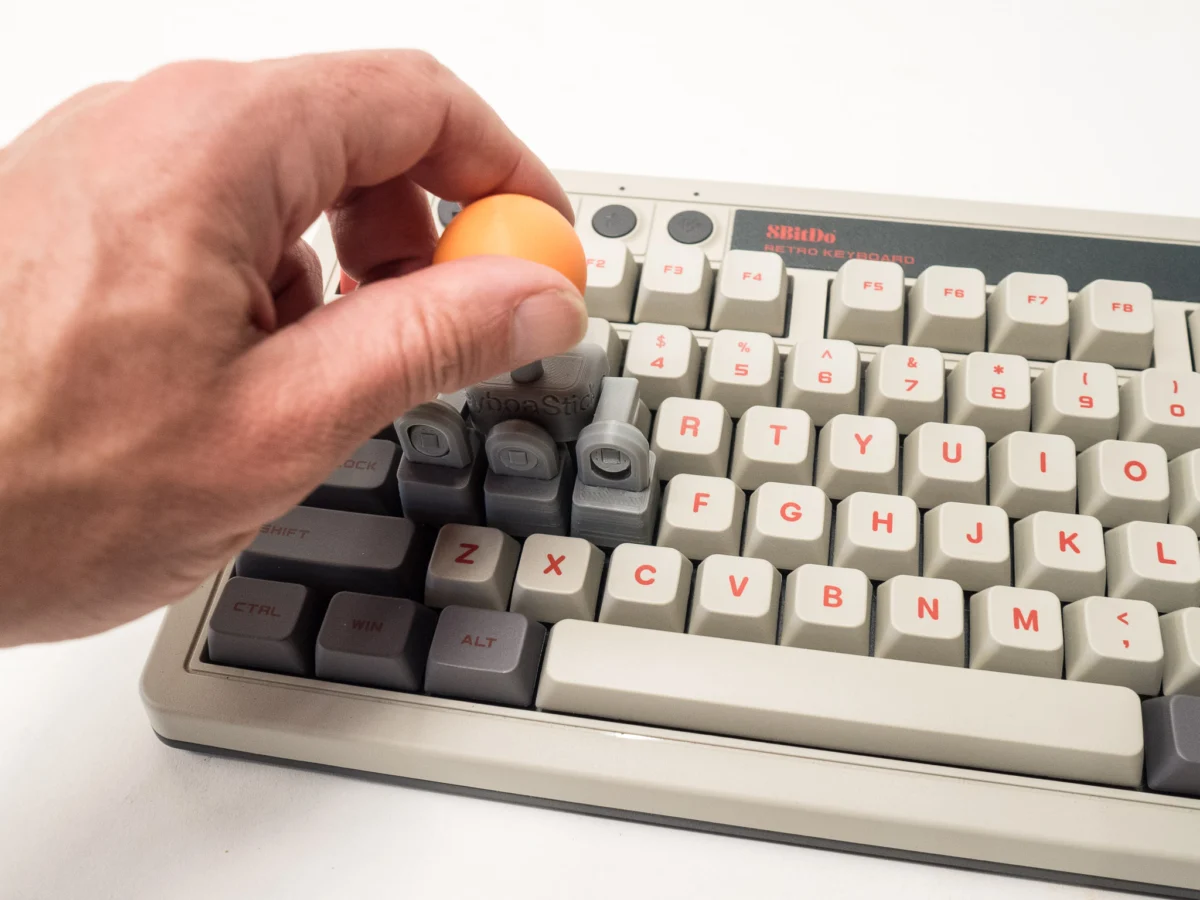
In the world of mechanical keyboards, customization is king. From artisan resin keycaps to custom-lubed switches and intricate plate-mounted stabilizers, enthusiasts have spent decades fine-tuning the feel and sound of their typing experience. However, a new invention from Korean maker FunOrNothing is shifting the focus from aesthetics to functional utility. The "KeyboaStick"—a 3D-printed modular joystick system that replaces standard WASD keycaps—is turning ordinary mechanical boards into hybrid arcade-style controllers.
Main Facts: What is the KeyboaStick?
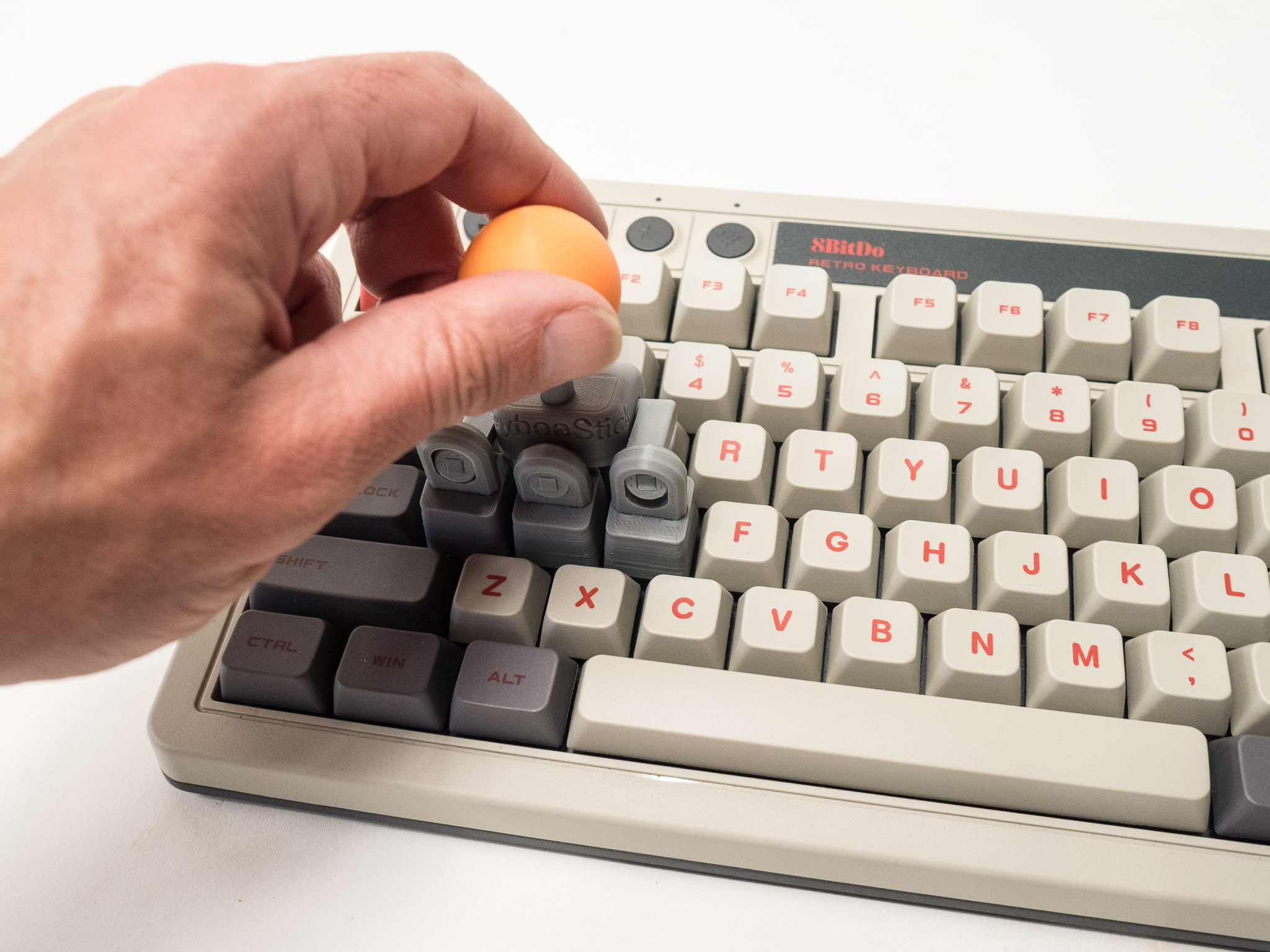
The KeyboaStick is an ingenious piece of hardware engineering designed to bridge the gap between traditional QWERTY layouts and the fluid movement required for gaming. At its core, the system replaces the standard "W," "A," "S," and "D" keycaps with a specialized, articulated linkage mechanism. Once installed, these four switches act as a central joystick, allowing the user to input directional commands with a single thumb or finger, mimicking the tactile feedback of a classic console controller.
The project is highly accessible, catering to both 3D printing hobbyists and casual users. It is designed to be printer-friendly; the articulated joints are engineered to be printed in place, meaning minimal assembly is required. The design is notably "forgiving," functioning reliably even on older, less-than-perfectly-calibrated 3D printers.
Key product details include:
- Designer: FunOrNothing
- Availability: Open-source files via MakerWorld (Free to $17)
- Physical Sales: Official prints available via RadianLab on Etsy
- Compatibility: Standard mechanical keyboard switches (Cherry MX style)
Chronology: From Concept to Viral Phenomenon
The journey of the KeyboaStick reflects the rapid evolution of the "maker" community. It began as a niche experiment in ergonomic input, intended to solve a common complaint among PC gamers: the binary nature of keyboard switches. Unlike analog joysticks, which allow for varying degrees of movement, standard keys are either "on" or "off."
- The Prototyping Phase: FunOrNothing spent months iterating on the linkage geometry. The challenge was to translate vertical switch actuation into horizontal movement without causing friction or "stickiness" in the mechanism.
- MakerWorld Launch: Upon uploading the files to MakerWorld, the design gained immediate traction. Its simplicity—using existing switch stems to provide the return force for the joystick—made it a viral hit on platforms like Reddit and TikTok.
- The Proliferation of Clones: As the design’s popularity exploded, it inevitably fell victim to the "Amazon and AliExpress effect." Unscrupulous sellers began mass-producing the design, often undercutting the original creator and selling lower-quality, injection-molded, or poorly printed versions.
- The "Pro" Evolution: In response to the market demand and the shortcomings of early home-printed versions, the official RadianLab store introduced the "Pro" iteration. This version features refined tolerances and smoother, more responsive linkages, setting a new standard for performance.
Supporting Data: Engineering and Usability
When analyzing the performance of the KeyboaStick, one must consider the physics of mechanical switches. Because the KeyboaStick relies on the underlying switches to act as the "springs" for the joystick, the performance of the mod is heavily influenced by the type of switch installed on the keyboard.
Technical Performance
User reports indicate that linear switches provide the smoothest experience, while tactile or clicky switches add an additional layer of resistance that some gamers find satisfying, but others find obstructive. The "stickiness" mentioned in early reviews is generally a byproduct of print resolution. On a high-quality printer (e.g., a Bambu Lab X1C or a well-tuned Voron), the joints move fluidly.
The "Sonic Test"
During field testing, the KeyboaStick was put through its paces using classic platformers like Sonic the Hedgehog 2. The ability to navigate the Emerald Hill Zone with a joystick-like interface provides a significantly more intuitive experience than the traditional "stutter-step" movement associated with digital keyboard inputs. While high-level play in challenging areas like the Chemical Plant Zone may still result in the occasional "Game Over," this is generally attributed to the learning curve of adapting to a new input device rather than a hardware failure.
Official Responses and the Fight Against Plagiarism
The rise of the KeyboaStick has been accompanied by a cautionary tale regarding intellectual property in the 3D printing community. Because the original files were released as open-source, the design became a prime target for resellers.
FunOrNothing and the official distributors at RadianLab have been vocal about the importance of supporting the original creator. By purchasing from the official Etsy store, users are not just buying a piece of plastic; they are funding the R&D required for the "Pro" version and future iterations.

The community’s response has been largely supportive. Discord communities dedicated to custom keyboards and 3D printing have actively campaigned against "re-sellers," encouraging users to download the free files and print their own or buy from authorized sources. This solidarity has helped maintain the viability of the project despite the influx of unauthorized, low-quality clones.
Implications for the Future of Peripheral Input
The KeyboaStick is more than a novelty; it represents a growing trend in "input democratization." As 3D printing technology becomes more accessible, the barrier to entry for custom hardware design has effectively vanished.
Customization vs. Mass Production
Traditional peripheral giants like Razer, Corsair, and Logitech rely on mass-produced, standardized form factors. The KeyboaStick proves that a single independent designer can disrupt this model by offering a modular, low-cost solution that users can customize to their specific needs. We are likely to see more "bolt-on" peripherals in the future—devices that attach to standard hardware to provide specialized functionality without requiring a completely new peripheral purchase.
Ergonomics and Accessibility
There is a profound implication for accessibility here as well. For gamers with limited mobility or those who struggle with the repetitive, rigid motion of traditional WASD keys, the KeyboaStick provides a more natural, ergonomic alternative. By reducing the physical strain of long gaming sessions, these 3D-printed mods are proving that the future of hardware might not be in a lab, but on our desktops.
Final Verdict: A Worthy Addition?
For anyone looking to breathe new life into an aging mechanical keyboard, the KeyboaStick is a must-try. Whether you opt to print it yourself—utilizing the forgiving tolerances that make it a great project for beginners—or choose to support the designer by purchasing the refined "Pro" version from RadianLab, the result is the same: a more tactile, engaging, and unique typing and gaming experience.

While it won’t replace a high-end arcade stick for professional fighting games, it serves as a brilliant bridge for casual gaming and daily tasks. It is a testament to what happens when the worlds of mechanical engineering, 3D printing, and gaming culture collide. As the project continues to evolve, we can expect to see even more variations, perhaps even incorporating hall-effect sensors or hall-effect compatibility to offer true analog movement in the future.
For now, the KeyboaStick remains one of the most accessible and exciting innovations in the custom keyboard space. If you have a printer, the cost is essentially the price of a few grams of filament. If you don’t, the $17 price point for a professional-grade print is a small price to pay for the "cool factor" alone. Just be prepared: once you start navigating your favorite games with a joystick, going back to standard keys might feel a little boring.