In an era defined by the relentless pursuit of optimization, the literary world has not been spared. From “blink-read” apps that flash single words across a screen to high-octane seminars promising to double your word-per-minute (WPM) rate, the message is clear: if you aren’t consuming books at an industrial pace, you are falling behind. But according to bestselling author and intellectual strategist Ryan Holiday, this obsession with velocity is not merely misguided—it is a fundamental barrier to the very wisdom that reading is intended to bestow.
The Mirage of Efficiency
The modern reader is plagued by a peculiar kind of anxiety. We track the number of books we finish as if it were a competitive sport, prioritizing the volume of finished titles over the depth of the insights absorbed. This performance-based approach to literature is fueled by the industry of "speed reading," a movement that suggests the primary goal of reading is the rapid extraction of data.
However, a critical look at the history of intellectual pursuit reveals that no great thinker—from the Stoics of antiquity to the polymaths of the Enlightenment—ever attributed their genius to how quickly they could flip pages. As Holiday argues, equating reading speed with intelligence is a category error. Reading is not a data-processing task; it is an act of communion with the greatest minds in history. To rush through a profound text is to treat a gourmet meal like a calorie-intake requirement. We do not rush through the experiences that define our lives, and we should not rush through the ideas that shape our character.
A Chronology of the "Fast-Reading" Fallacy
The evolution of the "speed reading" industry tracks closely with the rise of the information age.
- 1950s–1960s: The inception of modern speed reading courses, pioneered by figures like Evelyn Wood, aimed to help corporate executives keep up with the mounting flood of paper-based documentation.
- 1990s–2000s: The digital revolution brought with it the "information overload" crisis. Techniques that were once for professionals were marketed to the general public as a means to "conquer" the growing digital backlog of content.
- 2010s–Present: The rise of mobile apps and AI-driven summarization tools. These technologies further incentivize a "skim-first" culture, where the goal is to extract the gist of an argument while bypassing the nuance of the prose.
Despite these advancements, the scientific consensus remains largely unchanged: there is a hard, biological limit to how quickly the human brain can process complex language. When you exceed that limit, comprehension plummets. Speed reading, in its most extreme form, is often indistinguishable from not reading at all.

Supporting Data: The Case for Deliberate Engagement
If speed is not the metric for success, what is? The lives of history’s most prolific readers provide a blueprint for a different approach. Joan Didion and Ralph Waldo Emerson were not defined by the speed at which they consumed literature, but by their "commonplace books"—manuals of handwritten passages, quotes, and reflections.
Consider the following benchmarks of "deep reading":
- Marginalia: The practice of engaging in a written dialogue with the author in the margins of a book. Figures like John Adams and Michel de Montaigne were legendary for their dense, handwritten commentary, which turned reading into a creative, collaborative act.
- The Dyslexic Model: Major George Patton and Octavia Butler, both of whom faced significant hurdles in traditional literacy, became voracious readers not through speed, but through sheer, repetitive, and patient effort. Their success underscores that reading is a cognitive challenge that yields higher rewards the more it is practiced with intent.
- The Cowen Principle: Economist Tyler Cowen, a proponent of the "slow-burn" approach, famously noted that the best way to read quickly is to simply read a lot. There is no technical hack for reading; there is only the commitment to sustained, habitual engagement.
The Samurai’s Lesson: Why Hurrying is Counter-Productive
To understand the paradox of reading, one need only look to the parable of the samurai warrior, Banzo. As the story goes, a young warrior approached a master, seeking to master the sword. Upon being told it would take ten years, he grew anxious and asked how he could shorten the time. When the master adjusted the timeframe to thirty years, the student grew desperate, offering to work twice as hard. The master’s final retort—that the student’s impatience would extend his training to seventy years—is the ultimate rebuke of our modern, "hack-oriented" culture.
In education, as in the martial arts, a student in a hurry learns the slowest. The resistance one feels when reading a challenging, dense, or philosophical text is not a sign of inefficiency; it is a sign of transformation. If a book is easy, it likely confirms what you already know. If it is hard, it is changing you.
Implications for Modern Life
The movement toward "mindful reading" has profound implications for how we operate in our professional and personal lives. If we accept that reading is a form of deep work, we must restructure our relationship with information:

- Quality over Quantity: The goal is not to finish fifty books a year, but to let the insights of five books change your decision-making, your parenting, and your leadership style.
- Professionalizing the Act: Recognizing that reading is an essential part of one’s "job"—regardless of one’s career—shifts the activity from a leisure-time luxury to a core competency.
- The Investment Mindset: Marcus Aurelius, in his Meditations, emphasized the necessity of investing in one’s education. He viewed the costs—time, money, and mental energy—as investments that yielded compounding returns in wisdom.
Conclusion: The Path Forward
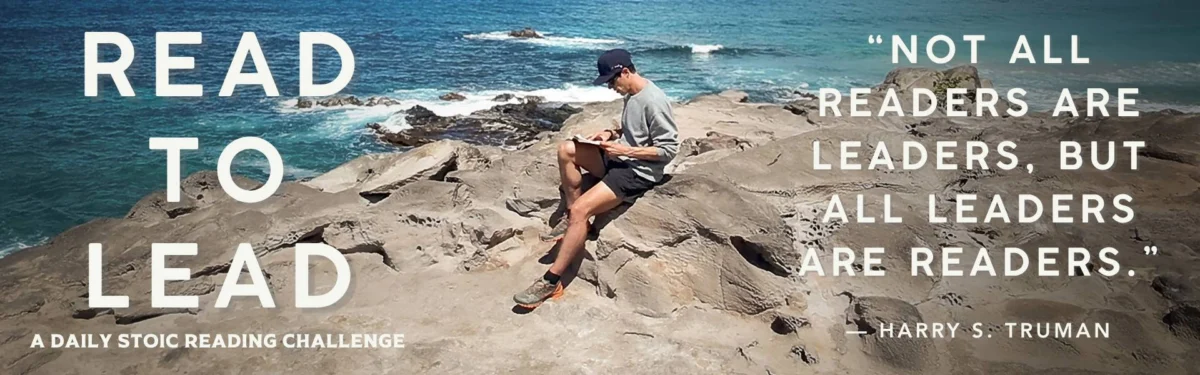
The "Read to Lead" movement, championed by figures like Ryan Holiday, seeks to reverse the trend of superficial consumption. It is an invitation to move away from the metrics of speed and toward the metrics of application. The challenge is not to read more books, but to extract more wisdom from the pages we hold.
There are no shortcuts to intellectual maturity. The truly great readers are those who sit patiently with difficult ideas, who annotate their thoughts, and who recognize that the time spent in quiet study is never wasted. By slowing down, we do not fall behind; we move ahead of those who are simply racing through content without ever stopping to let the wisdom take root.
As we look to the future of education and self-improvement, the message remains stark: stop trying to hack the process. Pick up a book, find a comfortable chair, and prepare to spend a long, rewarding amount of time with the text. After all, the best way to become a reader is to simply read—patiently, deliberately, and with the full intention of being changed by what you encounter.