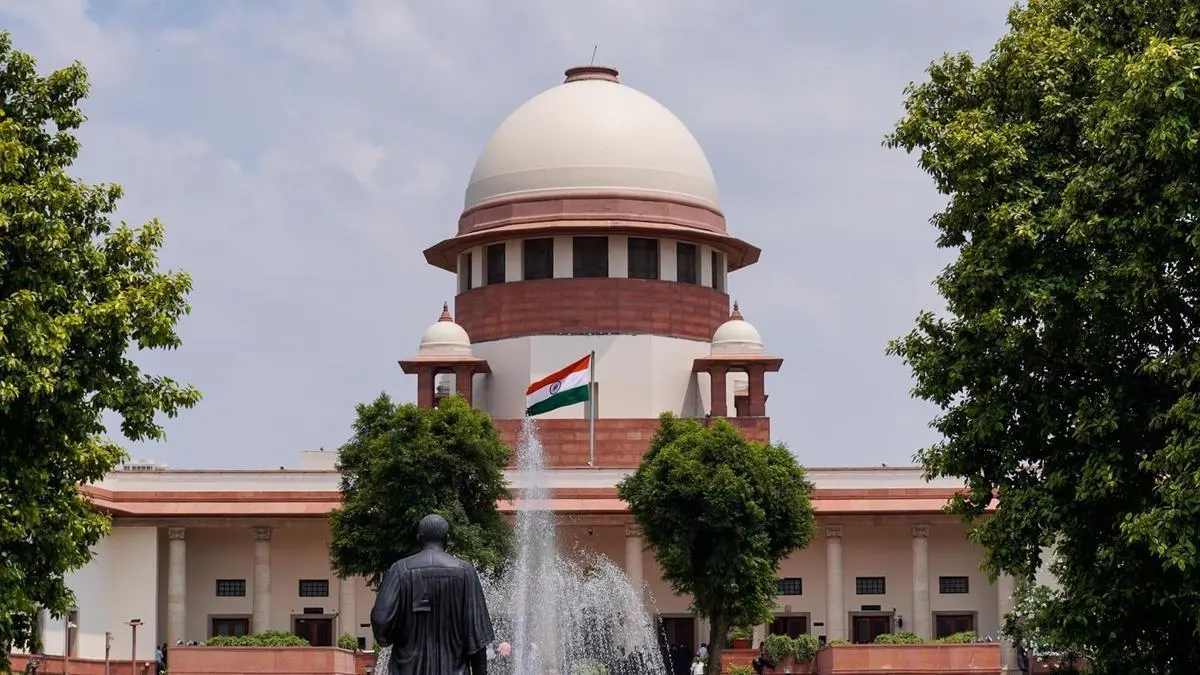
In a significant legal development that could redefine the boundaries of legislative conduct in India, the Supreme Court of India has formally intervened in the contentious issue of political defections. On Tuesday, a Bench headed by Chief Justice of India Surya Kant issued notices to the Union Government, the Election Commission of India (ECI), and several high-ranking state officials, signaling a rigorous judicial review of the practice where legislators resign to switch parties, only to seek re-election on a different ticket.
The case, brought forward by advocate K. Suthan, challenges a September 24 judgment by the Madras High Court, which had previously dismissed a plea against the resignation and subsequent political realignment of six AIADMK MLAs in Tamil Nadu. The petitioner contends that these maneuvers effectively bypass the constitutional safeguards intended to prevent political instability, rendering the Tenth Schedule—the anti-defection law—a "dead letter."
The Core Dispute: A "Side-Door" to Defection
At the heart of the matter is the conduct of six former AIADMK legislators—S. Jayakumar, Maragatham Kumaravel, P. Sathyabama, E. Subbaiya, M.R. Vijayabaskar, and C. Vijayabaskar—who, according to the petition, abandoned their party after voting against the party whip during a confidence motion in the Tamil Nadu Legislative Assembly.
The petition highlights a disturbing trend: rather than waiting for the inevitable disqualification proceedings under the Tenth Schedule, these members chose to resign. Their resignations were accepted with remarkable speed, and shortly thereafter, they were inducted into the ruling Tamilaga Vettri Kazhagam (TVK). The petitioner argues that this "design is plain." By resigning, the MLAs circumvent the legal consequences of the anti-defection law, which would typically bar them from holding office for the remainder of the term. By forcing a by-election, they attempt to "launder" their defection, returning to the legislature under the banner of the ruling party.
Chronology of the Political Crisis
The sequence of events leading to this Supreme Court challenge reflects the fragility of the post-2026 Tamil Nadu political landscape:
- May 2026: Following the declaration of the Tamil Nadu Legislative Assembly election results, the state finds itself with a hung Assembly. No single party secures the 118-seat majority threshold, leading to a government heavily dependent on the support of allies and, crucially, cross-party transfers.
- The Confidence Motion: Shortly after the assembly convenes, several AIADMK members vote against the direction of their party whip during a confidence motion. This triggers immediate calls for their disqualification under the Tenth Schedule.
- The Resignation Pivot: Before the Speaker of the Legislative Assembly can rule on the pending disqualification petitions, the six MLAs tender their resignations. The resignations are accepted on the same day.
- The Political Re-entry: The resigned MLAs are subsequently welcomed into the fold of the ruling party, TVK. In specific instances, such as in the constituencies of Dharapuram and Madurantakam, these individuals are declared the official candidates of the ruling party for the very seats they had vacated.
- September 24, 2026: The Madras High Court dismisses K. Suthan’s challenge to this process, prompting the current appeal to the Supreme Court.
- October 26, 2026: The Supreme Court issues formal notice to the Centre and the ECI, seeking a comprehensive explanation regarding the constitutional validity of these by-elections.
Constitutional Implications: The Trust of the Voter
The petitioner’s argument extends beyond mere procedural irregularities, touching upon the fundamental tenets of Indian democracy. The plea posits that "a seat in the Legislature does not belong to the person who sits in it; it belongs to the people who sent him there."
The "Luxury Election" Burden
The petition describes the resulting by-elections as "luxury elections." Unlike by-elections triggered by the death or incapacity of a representative, these are viewed as manufactured crises. The petitioner argues: "The people did not seek it. No law compelled the Members to resign. Its only purpose is to launder a defection through a fresh poll. Yet every rupee of its cost comes from the public exchequer, and the electorate is made to pay twice for the same seat."
Muted Representation
During the Budget session, the constituencies represented by these six MLAs were effectively unrepresented. The petition notes that the injury is twofold: the financial burden on the state and the systematic silencing of the electorate. Representation is the bedrock of the social contract in a democracy; when that representation is sacrificed for political maneuvering, the very foundation of the legislative process is undermined.

Judicial Scrutiny and the Tenth Schedule
The Tenth Schedule of the Constitution was introduced specifically to combat the "Aaya Ram, Gaya Ram" culture of frequent floor-crossing that plagued Indian politics in the 1960s and 70s. However, legal experts have long argued that the law contains loopholes, particularly regarding the Speaker’s role in disqualification proceedings.
The Supreme Court’s decision to issue notices to the Election Commission and the Secretary of the State Legislative Assembly suggests that the judiciary is prepared to examine whether the Speaker’s discretion or the timing of resignations can be used to defeat the purpose of the law. If a legislator can resign, join the ruling party, and re-contest within weeks, the anti-defection law effectively loses its teeth.
Official Responses and Legal Stance
As of the current hearing, the defendants have begun to mobilize their legal teams. Advocate Ram Sankar, appearing on caveat for the six former AIADMK MLAs, represents the first line of defense, arguing that the right to resign is a personal prerogative of a legislator.
However, the Supreme Court’s focus is expected to be broader. The court is interested in whether the ECI can prevent the misuse of by-elections as a mechanism for institutionalized defection. The Union Government is now tasked with explaining how the state can allow the "severing of public trust at will," especially in a hung Assembly where every vote is a "prize."
Broader Implications for Indian Democracy
The outcome of this case will likely set a precedent for all future legislative assemblies in India. If the Supreme Court rules that such resignations and subsequent re-contests constitute a fraud on the Constitution, it could lead to:
- Strict Timeframes for Disqualification: Mandating that disqualification proceedings must take precedence over voluntary resignations.
- Barring Re-election: Potentially imposing a "cooling-off" period for legislators who resign under suspicious circumstances, preventing them from contesting the subsequent by-election.
- Financial Liability: Exploring whether the costs of by-elections necessitated by voluntary resignations should be recovered from the political parties that orchestrated the move.
The case serves as a stark reminder that in a representative democracy, the mandate of the voter is not a commodity to be traded. As the Supreme Court begins its deliberation, the question remains: Can a system survive if those who are elected to represent the people prioritize their own political survival over the mandate they were entrusted to uphold?
The legal community, along with the electorate of Tamil Nadu, now looks to the Supreme Court to provide clarity. The court’s eventual ruling may well determine whether the Tenth Schedule remains a robust defense against political instability or whether the "side door" of resignation will forever erode the sanctity of the Indian electoral system.