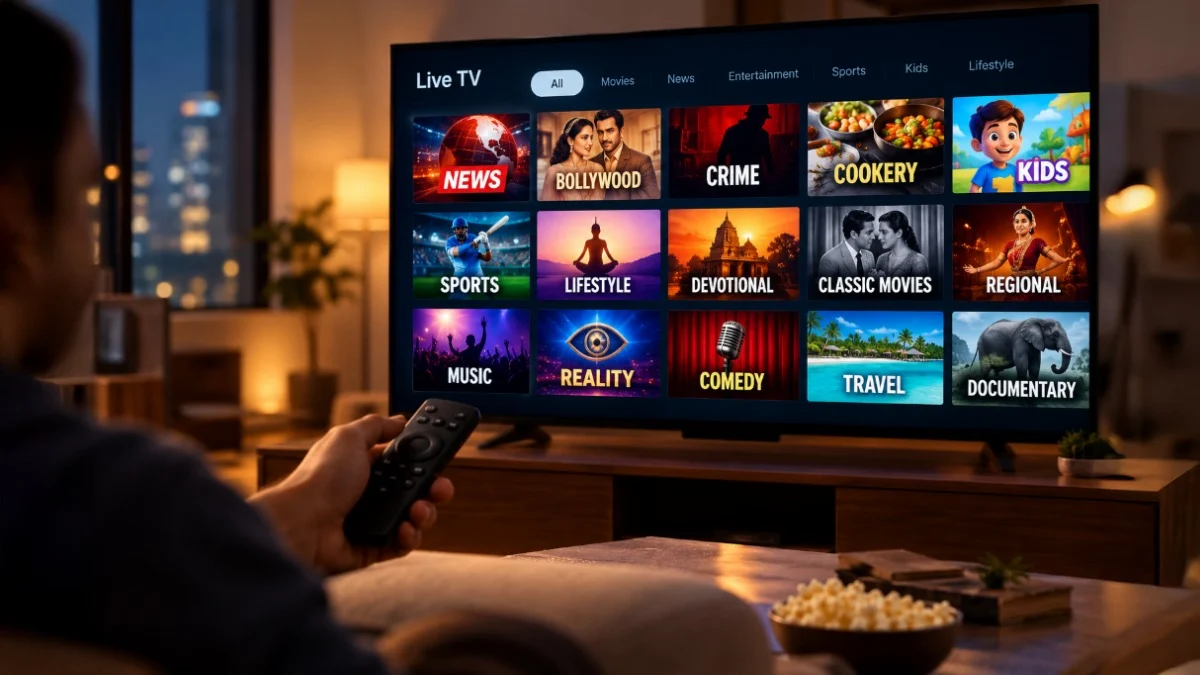
For millions of Indian households, the ritual of "switching on the TV" has undergone a silent, tectonic shift. Whether in the bustling urban centers of Mumbai or the emerging markets of Meerut, the modern smart TV experience no longer begins with a static cable menu. Instead, users are greeted by a vibrant, pre-loaded grid of live channels—cookery shows, true-crime marathons, vintage cinema, and niche cartoons—all accessible instantly and free of charge, subsidized by targeted digital advertising.
For years, this ecosystem operated in a regulatory vacuum. No government oversight, no broadcast licenses, and no adherence to the stringent "Programme Codes" that cable and Direct-to-Home (DTH) operators have navigated for decades. However, this period of unbridled experimentation is drawing to a close. On October 26, the Telecom Regulatory Authority of India (Trai) submitted its long-awaited recommendations to the Ministry of Information and Broadcasting (MIB), proposing a framework for "Application-based Linear Television Distribution" (ALTD). This move signals the end of the "wild west" era of digital broadcasting in India.
The Chronology of a Regulatory Overhaul
The push for this policy change did not emerge in a vacuum; it was the result of sustained pressure from the traditional cable and satellite industry. For over a year, the All India Digital Cable Federation (AIDCF) lobbied the MIB, arguing that Free Ad-Supported Streaming Television (FAST) apps were effectively cannibalizing their business model by broadcasting content without the requisite permissions, oversight, or financial obligations.
The timeline of this regulatory journey is as follows:
- December 2025: The MIB formally requested Trai to examine the proliferation of FAST platforms and formulate a regulatory roadmap.
- April 2026: Trai released a comprehensive consultation paper, inviting stakeholders to weigh in on the future of internet-delivered linear television.
- Mid-2026: A total of 207 detailed comments were submitted by industry players, consumer groups, and tech giants.
- October 26, 2026: Trai delivered its 206-page final recommendation, defining the parameters for the ALTD framework.
Supporting Data: The Scale of the Shift
The urgency behind the regulation is justified by the sheer scale of the shift in viewing habits. According to Trai’s own data, India boasts 193 million TV-owning households. As of 2025, the number of connected TV (CTV) viewers has eclipsed 129 million. Industry projections are even more aggressive, estimating that the number of FAST users in India could reach 149 million by 2027.
The living room screen has effectively transformed into an "app store," and the regulator’s decision to follow the viewer into this digital space is a strategic necessity to maintain a level playing field in the media landscape.
The ALTD Framework: What Trai Got Right
Trai’s proposal is a masterclass in modernizing legacy regulations for a digital-first world. By moving away from the cumbersome structures of traditional broadcasting, the regulator has introduced several forward-thinking provisions:
A Low Barrier to Entry
Unlike the prohibitive costs associated with traditional DTH licenses—which can reach Rs 10 crore and mandate heavy financial guarantees—the ALTD license is designed to be accessible. It carries a nominal processing fee of Rs 10,000 and an entry fee of Rs 1 lakh, valid for 20 years. By removing annual authorization fees and minimum net worth requirements, Trai has ensured that a lean Bengaluru-based startup can compete on the same footing as a global hardware conglomerate.
Device-Neutrality
Trai wisely abandoned the term "FAST," recognizing that the industry is rapidly evolving toward hybrid and subscription-based models. By defining "ALTD" as a delivery mechanism rather than a business model, the rules apply equally to smart TVs, mobile phones, laptops, and web browsers, "future-proofing" the regulation against inevitable technological pivots.
Discarding Legacy Baggage
The internet is not a medium of scarcity, and Trai has acknowledged this. There are no "must-carry" mandates, nor are there caps on platform service channels. By refusing to impose artificial constraints on bandwidth—which is not a scarce resource on the open internet—Trai has allowed market forces to dictate the volume and variety of content available to viewers.
Data-Driven Transparency
Perhaps the most significant victory for the industry is the integration of ALTD viewership into official TV ratings. Under the 2026 TV Ratings Policy, apps are permitted to publish anonymized data, providing broadcasters and advertisers with a granular, holistic view of audience engagement that was previously hidden behind the "walled gardens" of tech platforms.
Localized Accountability
A critical loophole has been closed: all ALTD operators must now be incorporated as Indian companies. Each app must appoint an India-based grievance officer, and user data must be stored in domestic data centers. This ensures that when issues of content compliance or consumer grievances arise, there is a local entity answerable to Indian law.
The Challenges: Where the Framework Stumbles
Despite the progressive nature of the proposal, critics argue that the framework places an undue burden on stakeholders and leaves fundamental economic questions unanswered.
TV Manufacturers as "Traffic Police"
The mandate requiring hardware manufacturers and OS providers to act as gatekeepers—monitoring and removing unlicensed apps from their platforms—has met with significant pushback. TV makers, who view themselves as hardware providers, argue that they are being forced into a compliance role that requires them to juggle an ever-changing "Master ALTD app repository" curated by the ministry. The requirement for "immediate" removal of unlicensed content is particularly concerning for companies that push over-the-air updates to millions of devices annually.
The News Exclusion Dilemma
While entertainment-focused apps face a low barrier to entry, internet-native news and current affairs channels face a different reality. The current proposals effectively exclude them from the ALTD route, forcing them to navigate the much more rigorous "downlinking" permission process. Critics argue this is counterproductive, as news channels will simply migrate to social media platforms like YouTube, which remain outside the ALTD scope, thereby rendering the regulation ineffective for the news segment.
The Financial Squeeze on the "Long Tail"
The requirement to pay Rs 1 lakh per channel per year, while modest for major players, poses an existential threat to the "long tail" of niche content. A platform aggregator hosting 100 specialized channels—such as those dedicated to regional yoga, niche culinary arts, or vintage animation—could face a Rs 1 crore annual bill before generating a single rupee in ad revenue. This could lead to a consolidation where only the largest, most generic channels survive.
Drafting Broadcasters as Enforcers
By requiring licensed broadcasters to pull their feeds from any platform that remains unlicensed one year after notification, Trai has essentially turned broadcasters into private enforcement agencies. This could create scenarios where broadcasters are forced to terminate profitable partnerships solely to comply with administrative list-checking, regardless of the platform’s actual content quality.
The Unresolved Economic Elephant in the Room
The most glaring omission in the Trai recommendations is the pricing model. The cable trade’s primary grievance has always been that pay-channels are often offered for free on digital apps, undercutting the regulated tariff orders that govern cable and DTH. Trai has effectively "parked" the issues of interconnection, must-provide rules, and quality of service for a future consultation phase. For the cable operators, this is a bittersweet outcome: they have secured a licensing regime for their competitors, but they are still waiting for the "level playing field" that would address the fundamental price disparity between their services and digital streaming.
Implications and the Road Ahead
The success of the ALTD framework now rests squarely on the shoulders of the Ministry of Information and Broadcasting. The ministry must navigate the complexities of drafting rules under the Telecommunications Act of 2023, building the necessary digital infrastructure, and establishing the app repository.
History suggests that such administrative processes are rarely swift. As the ministry deliberates, the market continues to expand. Every day that passes sees more smart TVs entering homes, pre-loaded with more content.
Ultimately, Trai has succeeded in the "easier half" of the equation—bringing order to the chaos of digital distribution. It has created a formal identity for app-based television and established a clear chain of accountability. However, the "harder half"—deciding who pays whom and ensuring that the traditional cable sector can coexist with a digital-first future—remains a work in progress. Until these economic questions are addressed, India’s media landscape will remain a tale of two screens: one heavily regulated and priced, and the other navigating a nascent, evolving regulatory frontier. The industry now waits to see if the final rules will foster a truly competitive market or merely add another layer of bureaucratic friction to the streaming revolution.