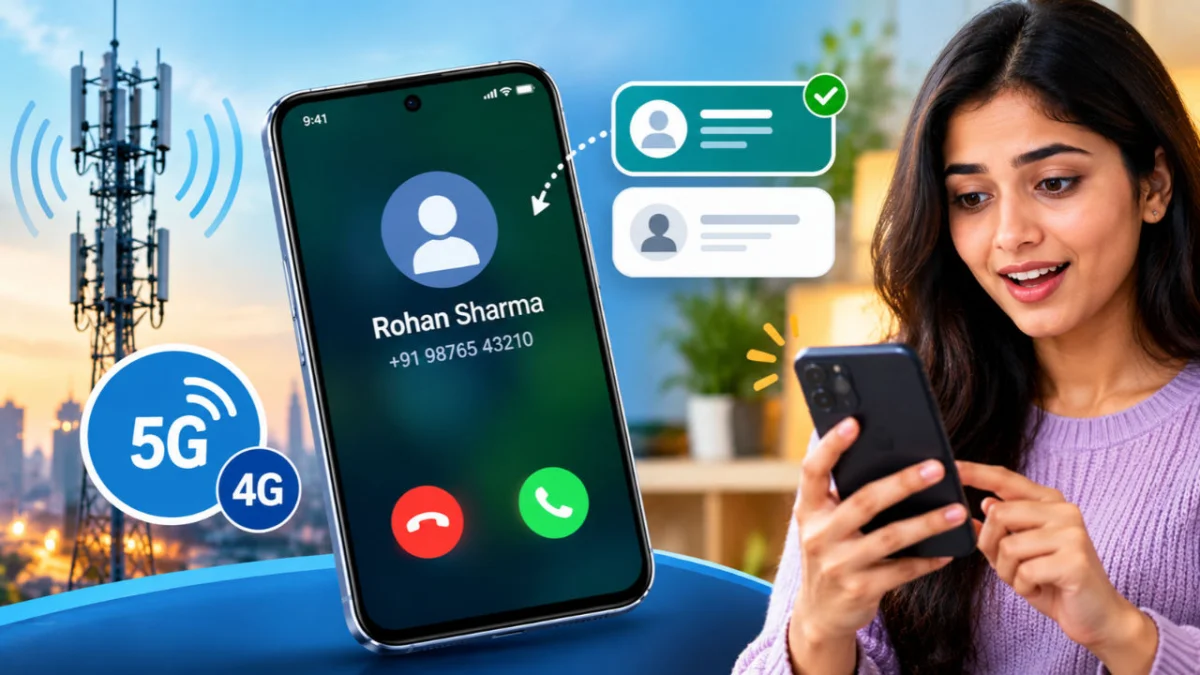
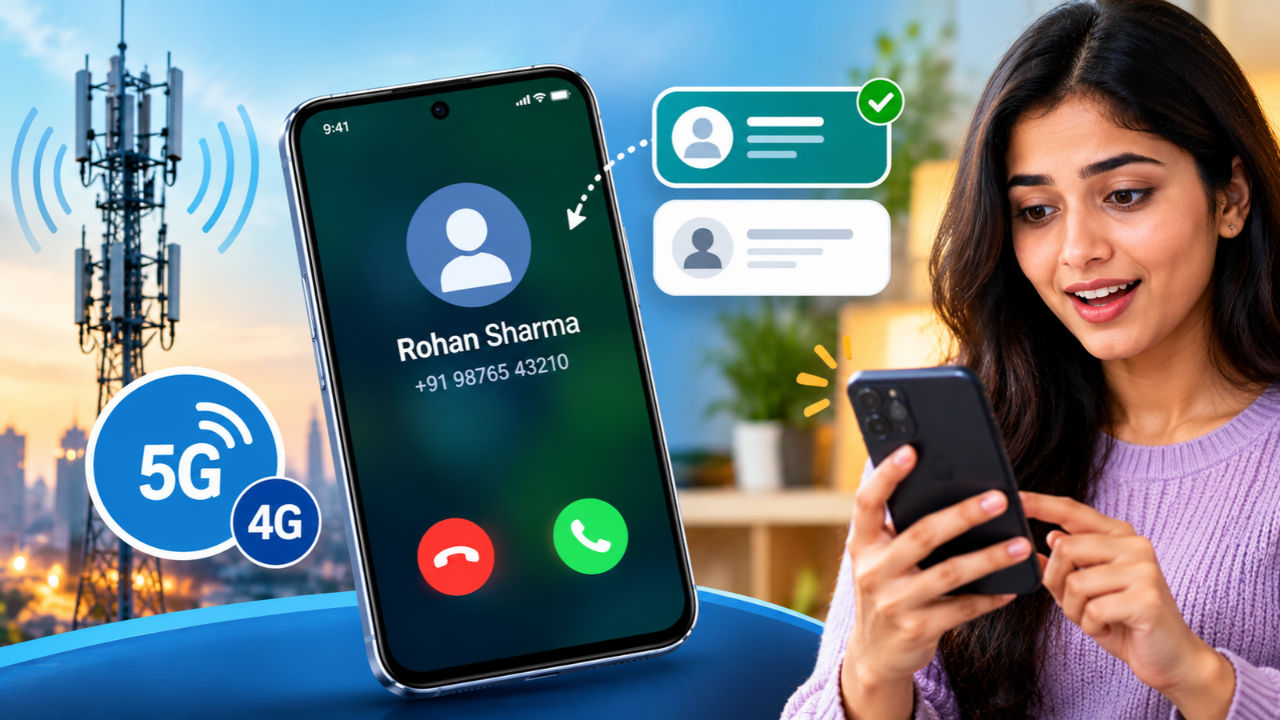
In an era where digital communication is the backbone of the economy, the sanctity of a simple phone call has been increasingly compromised by an onslaught of spam, telemarketing, and sophisticated financial fraud. To reclaim the trust of mobile users, the Government of India, through the Department of Telecommunications (DoT), has officially set a deadline for a transformative shift in the nation’s telecom landscape. Starting November 1, 2026, every mobile subscriber in India will have access to Calling Name Presentation (CNAP)—a service that ensures the "real name" of a caller is displayed on the receiver’s screen, regardless of whether the contact is saved in their phonebook.
This move marks a significant departure from the current reliance on third-party, crowdsourced applications like Truecaller. By integrating caller identification at the network level using verified Know Your Customer (KYC) data, the Indian government aims to create a more transparent, secure, and accountable communication ecosystem.
Main Facts: The New Architecture of Caller ID
The core of the DoT’s new directive is the mandatory implementation of CNAP across all Telecom Service Providers (TSPs) in India. Unlike existing caller ID apps that rely on users’ contact lists to "guess" a name, CNAP will pull the name directly from the subscriber’s official registration records.
Key Pillars of the Directive:
- Verified Identification: When a call is made, the recipient’s screen will display the name of the caller as it appears in the telecom operator’s database. This name is verified through the stringent KYC process required to obtain a SIM card in India.
- Universal Implementation: The rule applies to all 4G and 5G networks by default. For these modern networks, CNAP will be an "always-on" feature, requiring no manual activation by the user.
- The 2026 Deadline: The DoT has provided a two-year window for telecom giants like Reliance Jio, Bharti Airtel, and Vodafone Idea to upgrade their infrastructure. The system must be fully operational by November 1, 2026.
- International Calls: To combat cross-border spoofing and "vishing" (voice phishing), any call originating from outside India will not display a name but will instead carry the explicit label "International Call."
- Enterprise and Bulk Users: Recognizing the needs of businesses, the DoT has allowed a "Preferred Name" option. Companies can display their brand name instead of a legal entity name, provided they present valid Trademark or GST registration documents.
Chronology: The Journey to CNAP
The implementation of CNAP is not a sudden decision but the culmination of years of regulatory deliberation and technical trials.
- November 2022: The Telecom Regulatory Authority of India (TRAI) released a consultation paper on "Introduction of Calling Name Presentation (CNAP) in Telecommunication Networks." This was prompted by rising complaints regarding the inaccuracy of third-party apps and the increase in spam.
- February 2024: After extensive discussions with stakeholders, including telecom operators and privacy advocates, TRAI issued its formal recommendations to the DoT. TRAI suggested that CNAP should be introduced as a supplementary service.
- Late 2024: The DoT conducted technical trials on 4G and 5G networks to assess "call setup time" (latency). Concerns were raised by operators that querying a database for every call might delay the connection by a few milliseconds.
- October 2024: The DoT officially accepted the recommendations and issued the directive to all TSPs, setting the implementation roadmap for 2026.
- November 1, 2026: The scheduled date for the nationwide "Go-Live" of the CNAP service.
Supporting Data: The Spam Crisis in India
The urgency behind the CNAP mandate is supported by alarming data regarding telecommunication misuse in India. According to various industry reports, India consistently ranks among the top countries globally for spam calls.
- Volume of Spam: A 2023 report by LocalCircles revealed that nearly 66% of mobile subscribers in India receive three or more spam calls every day. Despite the existence of "Do Not Disturb" (DND) registries, telemarketers often use unregistered 10-digit mobile numbers to bypass filters.
- Financial Fraud: The National Cyber Crime Reporting Portal has seen a surge in "FedEx scams," "trapped relative scams," and "KYC update scams," almost all of which begin with an anonymous or spoofed phone call.
- The Reliability Gap: While third-party apps like Truecaller have over 350 million users in India, their data is crowdsourced. This leads to issues where a legitimate person might be marked as "Spam" by a malicious group, or a scammer might register themselves under a fake name like "Bank Customer Care." CNAP eliminates this ambiguity by using government-mandated KYC data.
Official Responses and Stakeholder Perspectives
The announcement has elicited a variety of responses from the government, the telecom industry, and privacy experts.
The Government’s Stance
The Department of Telecommunications maintains that CNAP is a consumer-rights initiative. "The subscriber has a right to know who is calling," a senior DoT official stated during a recent briefing. "By using the KYC name, we are ensuring that the identity displayed is the identity verified by law."
Telecom Service Providers (TSPs)
The reaction from TSPs has been more cautious. While they support the objective of reducing fraud, they have highlighted technical challenges:
- Infrastructure Costs: Building and maintaining a real-time, high-speed database that can handle billions of queries daily requires significant investment.
- Legacy Networks: Operators have noted that implementing CNAP on 2G and 3G networks is significantly harder than on IP-based 4G/5G networks. The DoT has acknowledged this, stating that 2G/3G and Public Switched Telephone Networks (PSTN) will be handled through separate technical considerations.
Privacy Advocates
Privacy experts have raised questions about the "right to be anonymous." In response, the DoT has included the Calling Line Identification Restriction (CLIR) feature. If a user has a legitimate reason to hide their identity (such as whistleblowers or high-security officials), they can avail of the CLIR facility, which will override the CNAP display.
Technical Mechanics: How CNAP Works
The transition to CNAP involves a complex backend process known as "Security-by-Design." When Caller A dials Caller B, the following happens in milliseconds:
- The Trigger: The originating exchange identifies the call.
- The Query: The terminating exchange (the receiver’s network) sends a query to the originating network’s Subscriber Database.
- The Response: The database retrieves the KYC name associated with the number and sends it back.
- The Presentation: The name is displayed on Caller B’s handset before they pick up.
To protect privacy, the DoT has mandated that the name data obtained through this query-response process must not be stored by the receiving network after the call is terminated. This prevents operators from harvesting the names of subscribers belonging to rival networks.
Implications: A New Era of Communication
The ripple effects of the 2026 CNAP mandate will be felt across several sectors:
1. The Decline of Third-Party Apps
Apps like Truecaller may face a significant challenge to their core value proposition. If the phone’s native dialer provides a more accurate, KYC-verified name without requiring an app download or data sharing, users may migrate away from third-party solutions.
2. Enhanced Accountability for Businesses
For years, "bulk callers" have hidden behind a rotating door of anonymous numbers. With CNAP, every business call will be branded. If a company uses "shady" tactics, their registered name will be visible, making it easier for consumers to report them to the Telecom Regulatory Authority.
3. Reduction in Social Engineering Crimes
Most cyber-crimes rely on the victim believing the caller is a person of authority (police, bank manager, etc.). If a scammer calls claiming to be from a bank, but the CNAP display shows an individual’s name or "International Call," the potential for deception is drastically reduced.
4. Impact on Personal Privacy
While the government has introduced CLIR, the default "opt-out" nature of CNAP on 4G/5G means that the era of "private calling" is effectively over for the average citizen. This has sparked a debate on whether the move complies with the spirit of the Digital Personal Data Protection (DPDP) Act, though the government argues that "public interest" and "prevention of fraud" take precedence.
Conclusion
The November 1, 2026, deadline for CNAP implementation represents a bold step by the Indian government to clean up the country’s telecommunication channels. By leveraging verified KYC data, the DoT is attempting to restore the phone call as a trusted medium of communication. While technical hurdles regarding latency and legacy networks remain, and privacy concerns continue to be debated, the shift toward a verified-only calling ecosystem appears inevitable. For the Indian consumer, the days of staring at an unknown 10-digit number and wondering whether to answer may soon be a relic of the past.