When Manolo Arroyo stepped into the role of global chief marketing officer at The Coca-Cola Company in early 2020, he did not inherit a broken brand—he inherited a legacy giant suffering from "institutional inertia." Despite its status as the world’s most recognizable beverage manufacturer, the company was grappling with a stagnation that had persisted for nearly two decades: it was failing to recruit new consumers.
Today, after a multi-year overhaul that involved gutting its agency roster, slashing its portfolio, and fundamentally changing how it measures success, Coca-Cola is reporting its most robust growth in years. The company recently finalized a massive restructuring of its marketing operating system, signaling a new era of digital-first, data-driven engagement.
The State of Play: Addressing the "Three Burning Issues"
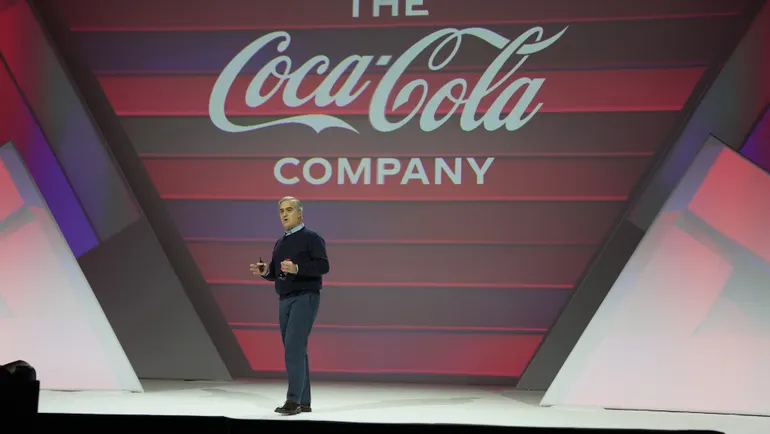
At the Association of National Advertisers (ANA) Masters of Marketing conference in Orlando on October 21, Arroyo candidly outlined the three critical challenges that defined his mandate when he took the reins in 2020.
First, the company had hit a wall in terms of consumer growth. Despite massive annual advertising spends, the total volume of new consumers entering the Coca-Cola ecosystem had plateaued. Second, the company—a pioneer of television-era advertising—had been slow to pivot to the digital age. Finally, the organization was operationally bloated and dangerously fragmented.
"It was a time to stop for a minute, in the view of the game, and rethink the future of our market," Arroyo told the audience. At the time, the beverage titan was managing an unwieldy network of over 6,000 agencies, juggling 3,000 product launches annually, and running roughly 2,000 distinct marketing programs globally. The complexity had become an anchor, preventing the agility required in a post-pandemic retail landscape.
Chronology of a Corporate Pivot
The transformation of Coca-Cola’s marketing engine did not happen overnight. It was a calculated, phased approach designed to modernize a century-old machine.
- 2020: Manolo Arroyo assumes the role of global CMO. He initiates a strategic review of the company’s global marketing operations.
- 2021: The company launches "Studio X," a globally connected network designed to unify creative media, data, and technology across all markets.
- 2022–2023: Coca-Cola aggressively prunes its brand portfolio, reducing the count from over 400 brands to approximately 170.
- 2023: The company begins a major transition in media spend, shifting the balance from traditional television (which dominated for decades) toward a digital-heavy allocation.
- October 2024: Coca-Cola announces the completion of its "global marketing operating system review," solidifying its agency partnerships for the coming years.
- December 1, 2024: The new organizational structure, featuring specialized partners like Omnicom and WPP, begins its phased implementation.
The Agency Overhaul: A New Global Ecosystem
The completion of the marketing operating system review on October 22 marks a definitive shift in how Coca-Cola interacts with its creative and media partners. In a move to simplify its global footprint while maintaining local relevance, the company has finalized its agency lineup.
Omnicom has been selected as the media partner for North America, a key victory that will see the agency unite media, data, CRM, loyalty programs, and creator management into a single, connected ecosystem. Globally, WPP Open X will retain its position as the primary creative partner, maintaining oversight of media and marketing in regions outside of North America. Dentsu will continue to handle operations in Japan and South Korea.
This restructuring comes on the heels of a high-profile shift involving Publicis Groupe, which won the North American media account last year but subsequently withdrew following its appointment as the global media partner for PepsiCo.
"Our review was about designing the future of our marketing organization," Arroyo stated. "The best marketing systems are built when you combine the best marketing talent with the right partnerships. We are confident that this combination of global scale, local expertise, innovation, and collaboration gives us exactly that."
Redefining Success: From "Brand Love" to Behavioral Metrics
Perhaps the most radical departure in Arroyo’s strategy is the shift in Key Performance Indicators (KPIs). For decades, the industry standard—and Coca-Cola’s north star—was "brand love." However, Arroyo discovered a fundamental disconnect: increasing brand sentiment did not always correlate with actual business performance.
"We decided to shift to total consumer base, which is a behavioral-driven metric, as the primary correlation and causation of growth in our P&L," Arroyo explained. By focusing on behavioral change rather than abstract brand affection, the company began to map specific equity drivers to distinct audience segments.
This pivot allowed the company to move away from "marketing for the sake of marketing" toward a model where every campaign is expected to generate tangible economic value.
Portfolio Pruning: Quality Over Quantity
In a move to simplify operations and sharpen the company’s focus, Coca-Cola slashed its brand portfolio by more than half. Today, the company manages about 170 brands, down from the 400+ it operated previously. This consolidation has streamlined the supply chain and allowed marketing teams to focus on "bigger and bolder" innovation.
Of these remaining brands, 32 have reached the "billion-dollar" threshold. This roster includes powerhouses like Sprite, Fanta, and the Coca-Cola trademark, alongside functional and sports-focused brands like Powerade, Bodyarmor, Smartwater, and Vitaminwater.
Arroyo describes this evolution as the creation of "memory structures." He posits that a brand is essentially a promise delivered through experiences that leave lasting, actionable memories. "It’s about memory structures that trigger a behavior change that results in and generates economic value," he said.
Digital as the Connective Tissue
The most striking shift in Coca-Cola’s resource allocation has been the migration to digital platforms. In 2019, digital marketing accounted for less than 30% of the company’s media spend. By the end of 2024, that figure is expected to reach 70%.
This digital transition is supported by "Studio X," the integrated network that ensures all regions are speaking the same "data language." By embedding technology into the creative process, Coca-Cola has ensured that its marketing is not just an artistic endeavor, but a scientific one. Whether it is using digital platforms to amplify a summer World Cup activation or turning a brand like Fanta into a cross-platform Halloween experience, the company is leveraging digital as the connective tissue between retail, product, and live experience.
Financial Implications and Future Outlook
The results of this transformation are already appearing on the balance sheet. After two decades of struggle, Coca-Cola has successfully added 160 million new consumers to its base. The company has seen sustained top-line growth, expanded profit margins, and a higher return on invested capital.
In Q2 2026, the company beat Wall Street estimates for both earnings and revenue, a streak it hopes to maintain when it reports Q3 results on October 27.
"We drove not only behavioral change, but also brand equity," Arroyo said. "Love can be increased as well, but it follows the behavior, and that has translated immediately in our volume growth, in our transactions growth and therefore in our P&L."
Conclusion: A New Blueprint for CPG Giants
Coca-Cola’s journey serves as a case study for legacy corporations navigating the modern digital landscape. By ruthlessly auditing its partnerships, simplifying its brand portfolio, and tethering its creative output to behavioral data, the company has managed to reverse years of stagnation.
As the new marketing operating system takes effect in December 2024, the focus will shift to maintaining this momentum. The challenge for Arroyo and his team will be ensuring that as the company grows, it does not fall back into the trap of complexity that defined its past. For now, however, the "Great Refresh" at Coca-Cola appears to be exactly the fuel the company needed to power its next century of growth.