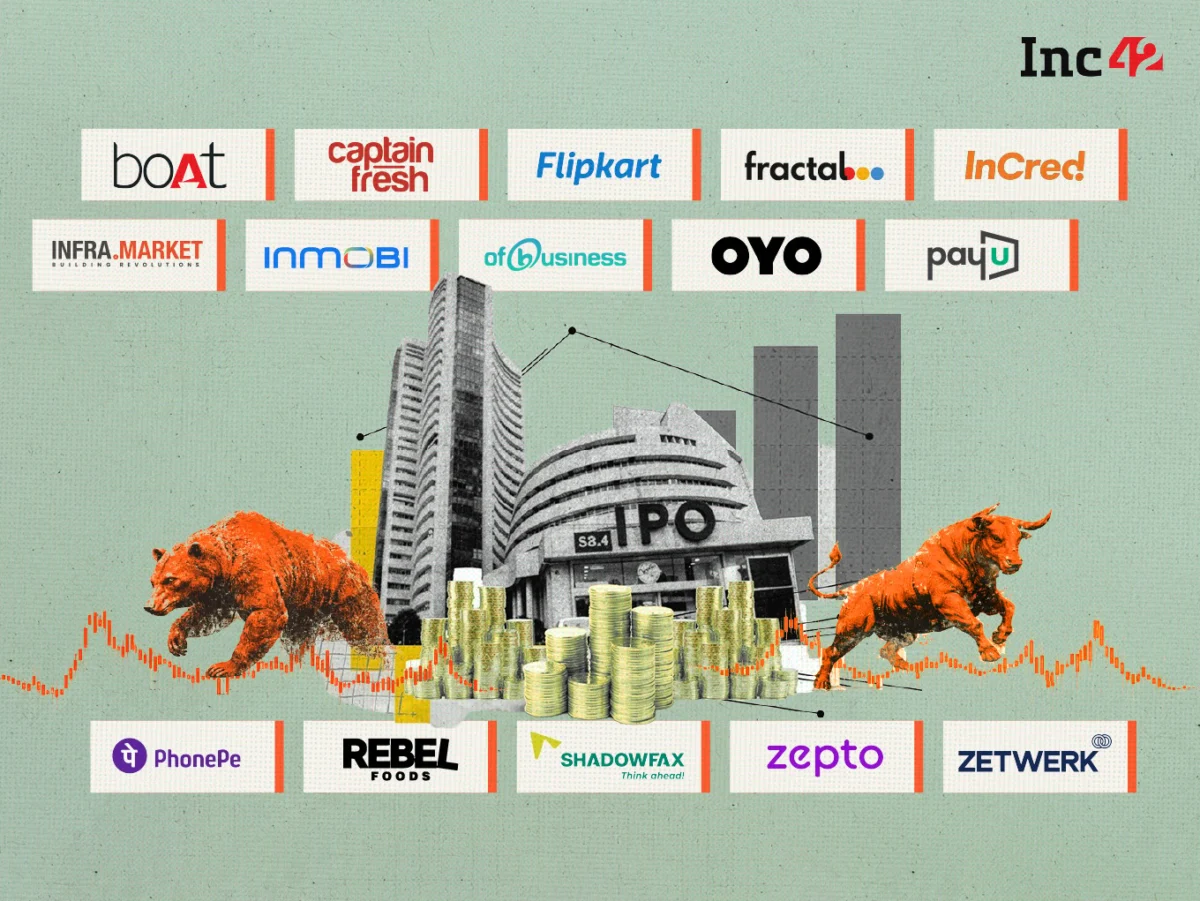
In 2025, Dalal Street transformed into a "founder’s paradise." A historic surge saw 18 Indian startups debut on public bourses, collectively mopping up a record-breaking INR 41,248 Cr. This momentum has spilled into 2026, with an additional fifteen new-age tech companies already testing the waters of the secondary market. From bumper listings of firms like Shiprocket and Kissht to the cautious recalibration of investor sentiment, the Indian startup ecosystem is currently undergoing its most significant evolution since the dawn of the unicorn era.
The Drivers of the IPO Frenzy
The unprecedented activity on the stock exchanges was not an accident; it was the result of a confluence of macroeconomic tailwinds and proactive regulatory intervention. Robust GDP growth projections bolstered investor appetite, but it was the Securities and Exchange Board of India (SEBI) that acted as the primary catalyst.
SEBI’s reforms, including the simplification of Draft Red Herring Prospectus (DRHP) filings, significantly reduced the bureaucratic friction that previously deterred young companies. Furthermore, more flexible Employee Stock Option Plan (ESOP) regulations enabled founders to retain meaningful control while providing the liquidity necessary to attract top-tier talent. Complementing this was a massive influx of retail capital, as the number of demat accounts in India surged past the 20 Cr mark, democratizing access to startup equity.
A Shift in Investor Philosophy: From Hype to Fundamentals
While 2025 was defined by the scale of the IPOs, 2026 is being defined by a "recalibration." Public market investors are increasingly looking past headline-grabbing growth figures, focusing instead on capital efficiency, sustainable unit economics, and operational discipline.
"IPO-bound startups in 2026 will be increasingly defined by their ability to demonstrate predictable cash flows and operational discipline rather than headline growth alone," says Rehan Yar Khan, Managing Partner at Orios Venture Partners. This sentiment is echoed by Ashish Kumar, co-founder and general partner at Fundamentum Partnership, who notes that public markets are now handsomely rewarding founders who demonstrate a commitment to long-term value creation through adjacent profit pools.
Chronology of the 2026 Debutants
The first half of 2026 saw a flurry of activity as several high-profile companies made their D-Street debut:
- AceVector (October 2026): Despite a 4.93X oversubscription, the parent of Snapdeal saw a weak debut, listing at an 11.6% discount. The company’s focus on narrowing losses (down 64% YoY) is its primary leverage for long-term recovery.
- Amagi (January 2026): After an oversubscription of 30.2X, the SaaS major faced a lacklustre opening, listing 12.2% below its issue price.
- Kissht (May 2026): A standout performer, the lending-tech firm made a robust debut with an 11.7% premium, signaling continued retail confidence in AI-powered credit assessment models.
- Shiprocket (August 2026): Following a 99.38X oversubscription—the highest in this cohort—Shiprocket enjoyed a bumper listing, trading at a 35% premium, proving that logistics unicorns with strong network effects remain investor darlings.
- Moneyview (October 2026): The fintech unicorn mirrored the success of earlier lending plays, listing at a 64% premium, the highest among the recent batch of debutants.
The IPO Pipeline: A Deep Dive into Future Listings
The pipeline remains robust, with 26 startups currently holding SEBI approval and over 25 in the final stages of planning. The narrative for 2027 is already being written by industry giants:
- OYO (PRISM): With an IPO size of INR 6,650 Cr, OYO is targeting a valuation of $7–$8 Bn. Having survived multiple delays, the hospitality giant is now lean, profitable, and ready for the public markets.
- Razorpay: As the fintech giant gears up for a $500–$700 Mn raise, its focus remains on its omnichannel payments and banking stack. Despite a temporary slip into the red in FY25 due to ESOP expenses, its core growth remains strong.
- Zetwerk: With a planned fresh issue of INR 2,600 Cr, the B2B manufacturing giant is looking to solidify its position as the backbone of Indian industrial procurement.
- Zepto: The quick commerce unicorn, currently the most talked-about name in the pipeline, has pushed its IPO plans to early 2027. The company is currently focused on optimizing unit economics and curbing cash burn before approaching the bourses.
Supporting Data: Financial Health of the IPO Class
| Company | Sector | Revenue (FY26/Latest) | IPO Size (Approx) | Status |
|---|---|---|---|---|
| OfBusiness | Ecommerce | INR 20,645 Cr | INR 7,600 Cr | DRHP Pending |
| PhonePe | Fintech | INR 7,920 Cr | INR 10,700 Cr+ | DRHP Filed |
| CarDekho | Auto Tech | INR 2,795 Cr | INR 3,500 Cr | Pipeline |
| Atomberg | D2C | INR 1,293 Cr | INR 1,500 Cr | DRHP Filed |
Challenges and Macro-Implications
The road to Dalal Street is not without its hazards. Foreign Institutional Investors (FIIs) have shown signs of caution, pulling back amidst geopolitical tensions—particularly the ongoing conflicts in West Asia. This has led to a moderation in retail subscription levels, forcing companies to adopt more conservative valuation benchmarks.
However, the broader outlook remains bullish. The maturing business models of Indian startups, coupled with deeper domestic capital pools and an evolving regulatory framework, have effectively positioned India as the global hub for startup IPOs.
Official Responses and Strategic Pivot
Company leadership teams have been vocal about the strategic necessity of the public market transition. For many, like Captain Fresh, the IPO is a means to fund inorganic growth in European markets. For others, like Infra.Market, the IPO process has forced a rethink of corporate structure, leading to a potential reverse-listing strategy via its subsidiary, Shalimar Paints.
This "IPO-first" mentality is also driving a culture of transparency. As companies move toward the public domain, the rigorous auditing and disclosure requirements are essentially acting as a forcing function for better corporate governance across the ecosystem.
Conclusion: A New Era of Maturity
The 2025-2026 period will be remembered as the coming-of-age for Indian startups. The transition from "growth-at-any-cost" to "sustainable profitability" has been painful but necessary. As the market digests the recent wave of listings, it is clear that the companies that will define the next decade are those that have mastered the art of balancing scale with financial prudence. With heavyweights like PhonePe and OYO waiting in the wings, the next twelve months promise to be the most definitive chapter yet in the history of Indian public markets.