NEW DELHI — The heart of India’s national capital remained in a state of high-alert paralysis for the second consecutive day on Sunday, as the Cockroach Janta Party (CJP) intensified its nationwide campaign against Chief Election Commissioner (CEC) Gyanesh Kumar. Following a weekend of mass detentions, barricaded thoroughfares, and a widening political rift, the situation has now escalated into a constitutional confrontation, with the opposition INDIA bloc preparing to take its grievances directly to the doorstep of the Supreme Court.
The Crucible of Conflict: A Summary of Events
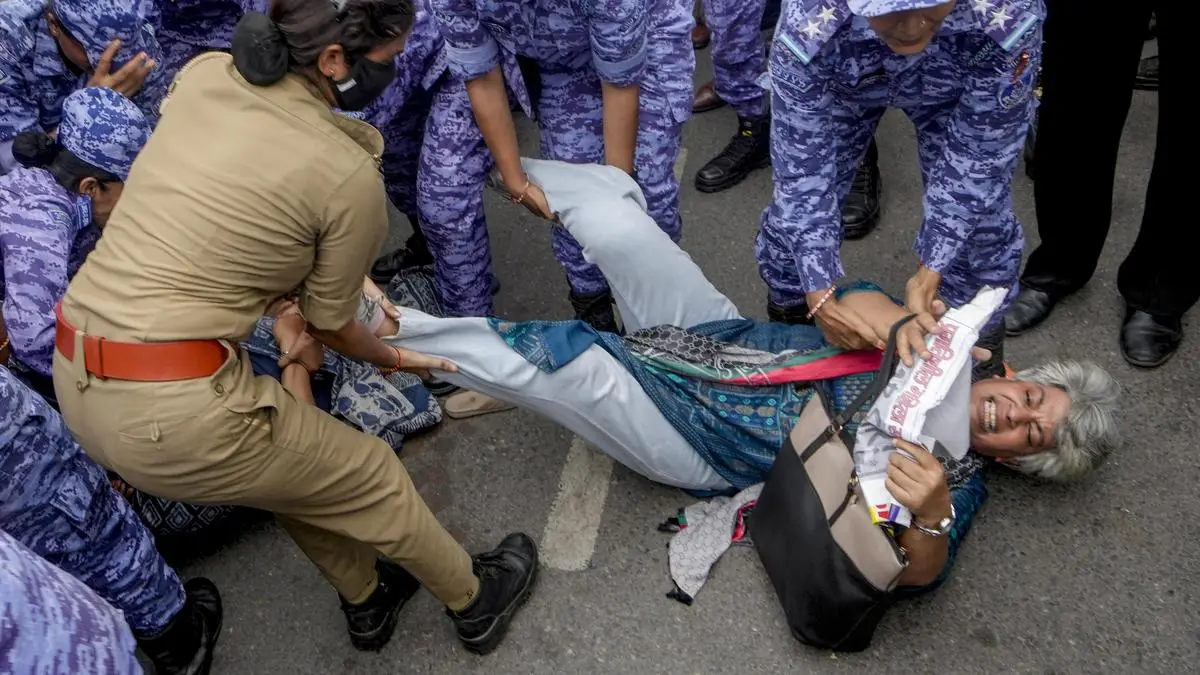
The unrest, which has transformed the Lutyens’ Zone and the bustling commercial hub of Connaught Place into a fortress of security personnel, was ignited by allegations of "vote theft" and concerns surrounding the Special Intensive Revision (SIR) of electoral rolls. More than 100 protesters were taken into custody by Delhi Police and paramilitary forces on Sunday as they attempted to voice their dissent against the CEC.
The CJP, led by figures such as Abhijeet Dipke, Saurav Das, and Ashutosh Ranka, has remained steadfast in its demand for the resignation of Gyanesh Kumar, accusing the Election Commission of India (ECI) of failing to ensure the integrity of the electoral process. The tension has drawn in broader opposition elements, including the Congress party and the Communist Party of India (Marxist), setting the stage for a massive, multi-party march scheduled for Monday.
Chronology of the Standoff
Saturday: The Initial Crackdown
The demonstrations began in earnest on Saturday as CJP supporters converged on central government zones. The Delhi Police, anticipating large-scale disruption, implemented a "security chokehold," cordoning off major roads and restricting the movement of both protesters and local citizens. The rapid deployment of paramilitary forces signaled the state’s intent to quell the uprising before it gained further momentum.
Sunday: Escalation and Detentions
By Sunday, the atmosphere in Delhi had grown more volatile. Police detained prominent CJP leadership, including Abhijeet Dipke, Saurav Das, and Ashutosh Ranka. Although these leaders were released later in the day, their accounts of their time in custody—ranging from the denial of legal counsel to the confiscation of personal communication devices—have added a new dimension of human rights scrutiny to the ongoing protests.

The day also saw the detention of CPI (M) Rajya Sabha MP John Brittas. Witnesses reported that Brittas was roughed up by security personnel while attempting to participate in the demonstration. The images of a high-ranking parliamentarian being forcibly detained have reverberated across political circles, prompting outrage and calls for an investigation into the conduct of the police force.
The Core Allegations: ‘Vote Chori’ and SIR
At the heart of the crisis is the "Special Intensive Revision" (SIR) of electoral rolls. The opposition claims that this process is being used as a mechanism for systemic voter disenfranchisement, or "vote chori" (vote theft). Critics argue that the current administration under CEC Gyanesh Kumar has allowed for the arbitrary removal of eligible voters from the rolls, thereby undermining the democratic foundation of upcoming electoral cycles.
The CJP and the INDIA bloc maintain that the ECI has become a partisan tool. Their demands are three-fold:
- The immediate resignation of CEC Gyanesh Kumar to restore public confidence in the electoral body.
- An immediate halt to the SIR process, which they label as inherently flawed and biased.
- A transparent, independent audit of the voter registration database to identify and rectify deletions.
Official Responses and Legal Maneuvering
The Delhi Police have taken a hardline stance, registering at least 20 First Information Reports (FIRs) in connection with the Sunday protests. Law enforcement officials maintain that the restrictions in Connaught Place and the surrounding areas are necessary to maintain public order and prevent the disruption of essential services.
In a poignant statement posted to X (formerly Twitter) following his release, CJP founder Abhijeet Dipke detailed the conditions of his detention. "I had requested to let me speak to my cousin who lives with my grandmother. Asked for my phone just for a couple of minutes… Why didn’t the Delhi Police let me use my phone? I had also asked for a call with my lawyer, which was again denied," Dipke wrote.

On the national stage, Congress leader and Leader of the Opposition, Rahul Gandhi, has taken a decisive step to elevate the dispute to the judiciary. Gandhi has officially sought an audience with the Chief Justice of India (CJI) for Monday afternoon. "Tomorrow, we will march to the Supreme Court as Indians, united beyond party, gender, caste, community and state," Gandhi stated. "We will submit a memorandum to the Chief Justice on behalf of the nation, demanding an end to vote chori."
Implications for Indian Democracy
The current standoff represents one of the most significant challenges to the perceived neutrality of the Election Commission in recent memory. By seeking the intervention of the Supreme Court, the opposition is effectively signaling a breakdown of trust in the constitutional mechanisms that govern elections.
The Constitutional Stakes
The involvement of the Chief Justice of India shifts the narrative from a mere street-level protest to a constitutional crisis. If the Supreme Court agrees to hear the memorandum and investigate the ECI’s processes, it could lead to a landmark ruling on the autonomy of election officials and the standards of transparency required for electoral roll revisions.
The Social and Political Fallout
The optics of heavy barricading, police-on-parliamentarian violence, and the widespread detention of youth activists are likely to dominate the national discourse for weeks. For the CJP, the movement has become a rallying cry for civil society. "No matter what the Delhi police does, we will be here until our last breath," MP John Brittas declared, highlighting the determination of the protesting coalition.
However, the government’s refusal to engage with these demands and its continued reliance on police force suggests that the administration is preparing for a prolonged battle of attrition. With the march to the Supreme Court set for Monday, the capital is bracing for another day of high-stakes political theater.

Conclusion: A City on Edge
As October 11, 2026, passes into history, the events in New Delhi underscore a fragile democratic moment. The Cockroach Janta Party, despite its small stature, has succeeded in capturing the national imagination, forcing the state to defend its electoral integrity in the public eye.
Whether this movement will lead to a substantive change in the Election Commission’s operations or whether it will result in further crackdowns remains to be seen. What is clear, however, is that the issue of electoral transparency has become a lightning rod for the Indian opposition, and the path to the next general election will likely be marked by an intense, and perhaps unprecedented, scrutiny of the institutions meant to protect the vote.
As the nation waits for the Supreme Court’s potential involvement, the streets of Connaught Place remain a silent witness to a debate that strikes at the very core of India’s democratic identity. The upcoming week will be a litmus test for the resilience of India’s constitutional framework and the government’s willingness to address the growing chorus of voices demanding accountability.