In the rapidly evolving landscape of search engine marketing, the shift from traditional SEO to Answer Engine Optimization (AEO) has moved from a theoretical possibility to a business imperative. As AI-powered platforms like ChatGPT, Gemini, and Perplexity become the primary gateways for information retrieval, brands are scrambling to ensure they remain the cited authority in these AI-generated responses.
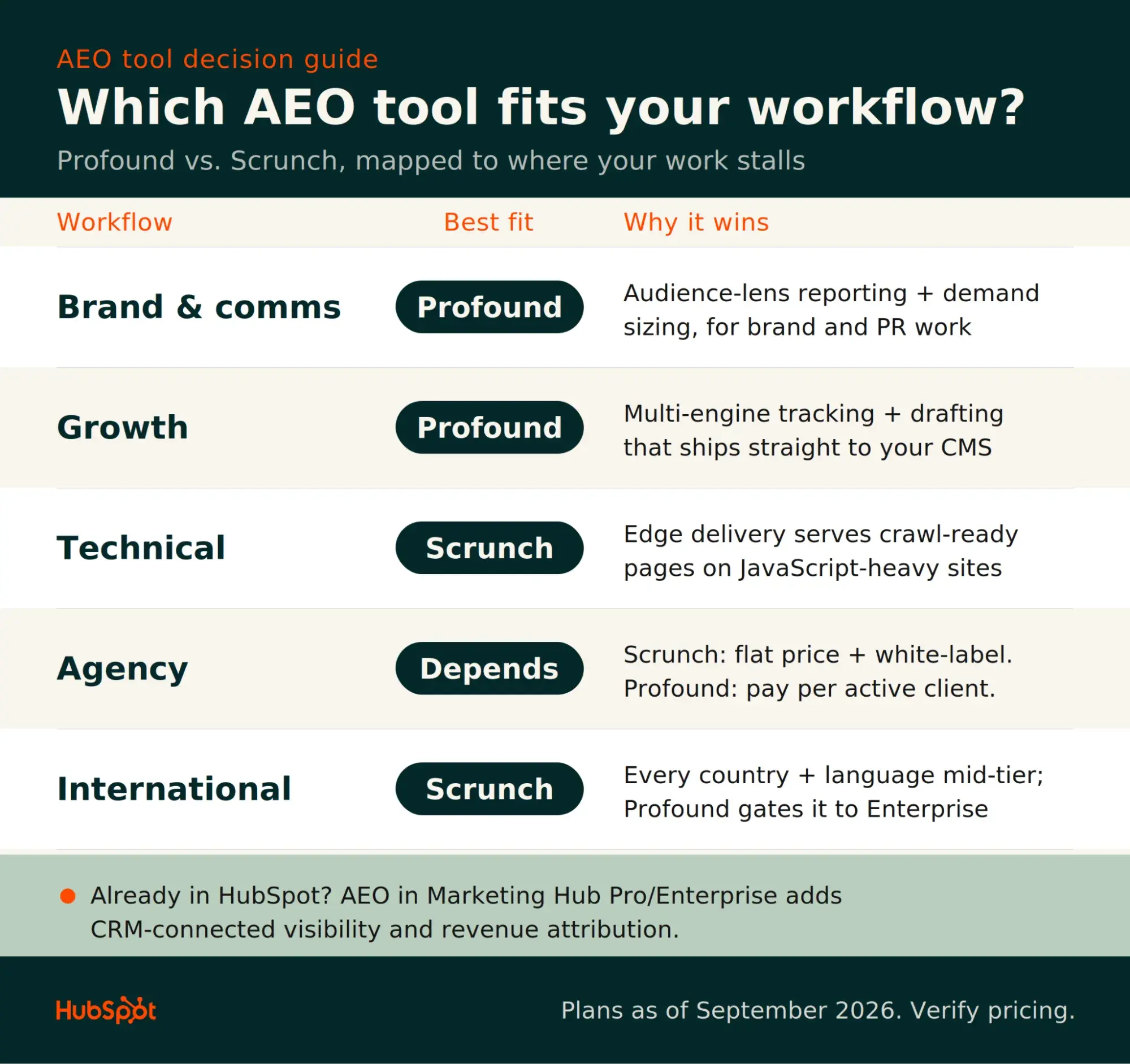
However, the market for AEO tooling is currently bifurcated. On one side stands Profound, a platform heavily oriented toward market analysis and strategic content generation. On the other sits Scrunch, a tool designed for technical optimization and developer-driven intervention. For many organizations, the choice between them isn’t about which tool tracks more engines, but rather where their current search workflow is stalling.
The Evolution of Search: A Chronology of AEO Maturity
To understand why Profound and Scrunch exist in their current forms, we must look at the timeline of AI search adoption.
- 2023: The Discovery Phase. Early adopters began realizing that traditional SEO rankings were losing their relevance as LLMs started synthesizing answers directly on the search results page.
- 2024: The Instrumentation Phase. Tools emerged to measure "visibility" in AI models. Profound focused on the "why"—understanding consumer intent—while Scrunch focused on the "how"—ensuring crawlers could actually read the content.
- 2025–2026: The Integration Phase. The industry moved toward actionable workflows. Organizations began demanding that AEO data be pulled into existing content management systems (CMS) and customer relationship management (CRM) platforms, leading to the rise of integrated solutions like HubSpot AEO.
Methodological Comparison: The Core Differentiators
When evaluating these platforms, it is essential to distinguish between a "monitoring tool" and an "optimization engine." Our methodology for this analysis relies on a synthesis of product documentation, 2025–2026 G2 user sentiment, and hands-on testing of free-tier features.

1. Engine Coverage and Prompt Capacity
Both Profound and Scrunch advertise broad capabilities, but the "Engine Count" is often a vanity metric.
- Profound targets a high-end enterprise audience, offering customized engine access on a quote-only basis.
- Scrunch offers a more transparent tiered structure, beginning with four core engines and scaling up to nine under enterprise contracts.
- HubSpot AEO maintains a consistent, focused approach, tracking ChatGPT, Gemini, and Perplexity across all plans, arguing that these represent the vast majority of current commercial search intent.
2. Reporting Lenses: Market Analysis vs. Execution
The fundamental difference between these tools lies in their analytical output:
Profound (The Strategic Lens): Profound excels at "Prompt Volumes." It models AI search demand by analyzing the actual queries driving traffic. By layering persona-based insights over this data, Profound allows brands to understand how their narrative is perceived by different stakeholders—technical buyers versus C-suite decision-makers. It is a tool for narrative adjustment and content strategy.
Scrunch (The Tactical Lens): Scrunch operates with an execution-first mindset. It filters prompts by funnel stage and content topic, allowing marketing teams to identify exactly where they are losing ground to competitors. It purposefully limits per-prompt estimates, favoring "directional" data over granular, potentially noisy metrics. Its strength lies in pinpointing the specific content gaps that need immediate patching.

Technical Optimization: Diagnostics vs. Intervention
One of the most critical factors for technical SEO teams is how these platforms interact with the website’s infrastructure.
Profound: The Diagnostic Approach
Profound treats technical optimization as a read-only process. Through "Agent Analytics," it parses server logs to provide a health report on crawlability. It identifies where AI bots are hitting robots.txt walls or encountering page speed issues. However, the onus remains on the internal team to implement these changes within their CMS.
Scrunch: The Edge Intervention Model
Scrunch offers a more aggressive solution through its Agent Experience Platform (AXP). By sitting at the CDN edge, Scrunch can serve a lightweight, optimized version of a page specifically to AI bots, while keeping the standard site intact for human visitors. For enterprises struggling with bot-readability, this automated "intervention" is a significant value-add that differentiates Scrunch from simple monitoring tools.
Supporting Data: Bot-Traffic Tracking
Both platforms address the reality that standard analytics suites (like GA4) often miss AI traffic because they rely on client-side JavaScript that many bots ignore.

- Profound processes server logs in real-time, effectively distinguishing between "indexing" crawls and "on-demand" retrieval. This is vital for understanding when a model is actively using your brand as a source.
- Scrunch mirrors this by pulling CDN logs to categorize bot behavior, providing a clear path to attribute AI referrals to specific revenue outcomes.
Implications for Agencies and Enterprise Teams
For agencies managing multiple clients, the structural differences are stark:
- Scrunch provides a predictable model, charging a flat fee for a set number of client workspaces and unlimited user seats. This is ideal for agencies that want to avoid "seat tax" as they scale.
- Profound operates on a per-client billing model, which is better suited for high-touch, strategy-heavy consulting engagements where the tool itself acts as a content-generation partner.
The Role of CRM Connectivity: Why HubSpot AEO Fits
While Profound and Scrunch are robust, they are "point solutions." For teams already embedded in a CRM-centric workflow, the disconnect between an AI visibility tool and the actual sales pipeline is a major friction point.
HubSpot AEO bridges this gap. By tying visibility data to the marketing funnel and CRM records, it allows teams to see the direct correlation between an AI citation and a lead’s journey. While it may lack the granular, deep-edge intervention of Scrunch or the massive market-trend modeling of Profound, its strength is in the workflow. It enables a marketer to spot a missing citation, draft a correction, and publish it—all within the same ecosystem where they manage their leads.
Final Recommendations: How to Choose
To determine the right fit for your team, follow this three-step pilot framework:

- Baseline Audit: Use the HubSpot AI Search Grader to establish a baseline. If you cannot define how your brand appears in AI results today, you cannot measure the efficacy of any tool.
- Define the Bottleneck:
- If your bottleneck is strategy and content creation, choose Profound.
- If your bottleneck is technical crawlability and bot intervention, choose Scrunch.
- If your bottleneck is cross-departmental visibility and CRM-tied publishing, choose HubSpot AEO.
- The 10-Prompt Pilot: Select 10 prompts that represent your most important buyer personas and product lines. Track them for 30 days. The tool that provides the most actionable insights—not just the most data—is the one that will deliver the highest ROI for your specific organizational structure.
Conclusion: The Future of the AEO Stack
As we look toward 2027, the "best" tool will be the one that minimizes the time between discovery and resolution. While Profound and Scrunch provide powerful, specialized lenses, the industry is clearly trending toward integration. Whether you prioritize deep-market intelligence or technical edge-optimization, ensure your chosen tool complements your existing stack rather than creating an isolated silo of data. In the era of AI-driven search, the brands that win will be those that can adapt their content at the speed of the algorithm.