
By Jake Peterson
Senior Technology Editor
October 9, 2026
It has been over four years since Apple first introduced the ability to store state-issued driver’s licenses and identification cards in the Apple Wallet app. When the feature launched alongside iOS 15.4, it was heralded as the "death of the physical wallet"—a futuristic promise that your smartphone would become the singular authority for identity verification. Yet, as we navigate the landscape of iOS 27 in late 2026, that promise remains largely unfulfilled for the vast majority of Americans.
What was once envisioned as a rapid, nationwide transition has devolved into a slow, fractured, and increasingly contentious bureaucratic stalemate. While the technology is robust, the political and logistical hurdles have proven far more formidable than Apple’s engineers likely anticipated.
The State of Play: A Geography of Inequality
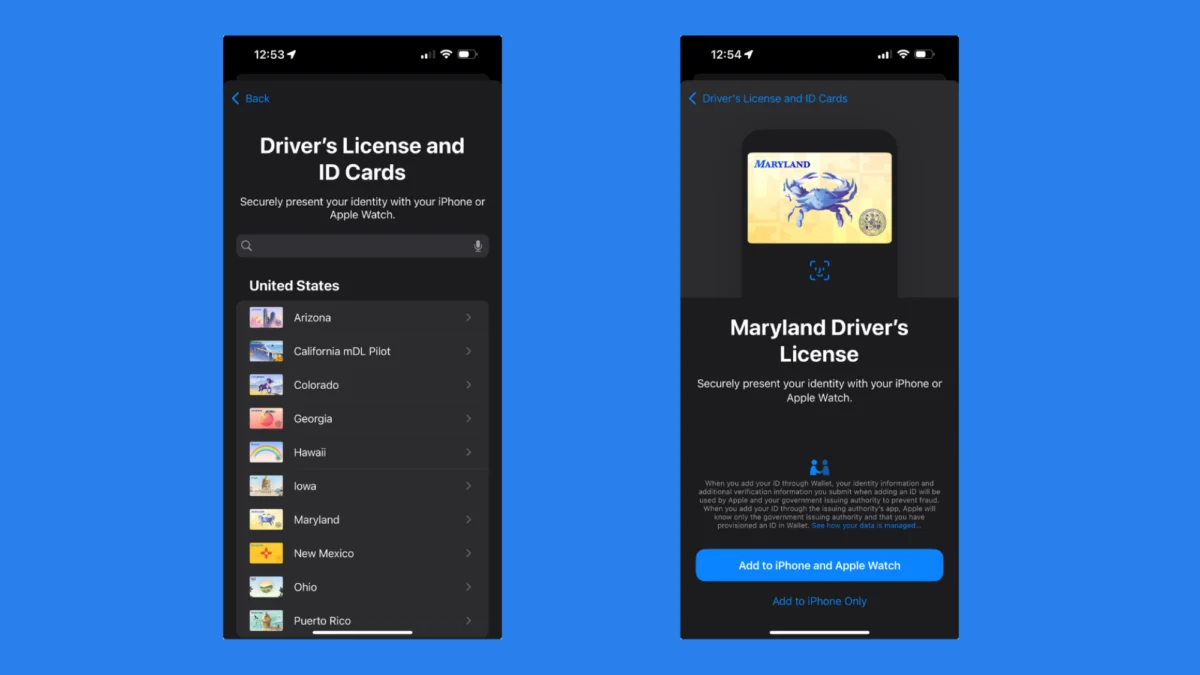
The promise of digital IDs was predicated on the idea of seamless, ubiquitous access. In reality, the rollout has been defined by extreme fragmentation. As of October 2026, only 16 states and one territory officially support the integration of state-issued IDs into the Apple Wallet. This means that if you live in one of the other 34 states, you are still required to carry your plastic card everywhere you go, rendering the "digital wallet" dream little more than a convenient, yet limited, digital backup.
The disparity is glaring. Some states, such as Arizona and Maryland, were early adopters, integrating the technology with enthusiasm. Others, however, have remained firmly in the "coming soon" category for nearly half a decade. This list of states that once pledged support but have failed to deliver—or have simply gone silent—includes several major population centers, effectively stalling the nationwide momentum that Apple needs to make digital IDs a standard, rather than a novelty.
Chronology of a Stalled Revolution
To understand why we are in this position, we must look at the timeline. In 2022, when the feature was in its infancy, only two states allowed digital IDs. Industry analysts predicted that by 2026, the feature would be standard across the majority of the U.S.
- 2022: Apple launches digital IDs with two pilot states. The roadmap for 10 additional states and Puerto Rico is announced, with the vague promise of "coming soon."
- 2024: Momentum begins to sag. While a handful of states launch their programs, the complexity of verifying identities and integrating with state motor vehicle databases proves costlier and more legally sensitive than state legislatures anticipated.
- 2025: Apple undergoes a rebranding of its operating system nomenclature, moving toward the "iOS 20-series" and beyond, yet the digital ID infrastructure remains largely static.
- 2026: The first major public rejections occur. Florida and Rhode Island officially signal that they will not be pursuing integration with Apple Wallet, citing security concerns and the desire for platform-agnostic solutions.
The Infrastructure Gap: Why States Are Saying "No"
The most significant development this week is the overt rejection of Apple Wallet IDs by Florida and Rhode Island. This is the first time states have officially closed the door on the program, shifting the narrative from "it’s coming eventually" to "it’s not coming at all."

The resistance is multifaceted. For many, it boils down to the "walled garden" issue. As Walter Craddock, Chair of the American Association of Motor Vehicle Administrators (AAMVA) International Board of Directors, noted in a recent industry podcast, state officials are hesitant to build systems that are tethered to a single corporate entity.
"I don’t want to replicate and duplicate efforts," Craddock explained. "I’m looking to do a solution that is across all platforms. Instead of just doing one for Apple or the Google Wallets, I want a universal adoption."
For state administrators, the cost of developing a custom digital ID system that plays nicely with both Apple and Google’s proprietary frameworks is high. Furthermore, there is a persistent fear of vendor lock-in. If a state spends millions of taxpayer dollars to build an interface for the Apple Wallet, they are effectively tethered to Apple’s terms of service and security standards, which may change at any time.
Security, Privacy, and the TSA Factor
The primary use case for digital IDs currently is the Transportation Security Administration (TSA). If you are lucky enough to live in a state where your ID is supported, you can breeze through security checkpoints at select airports by simply tapping your iPhone against a reader.
However, even this has limitations. While the TSA has worked closely with Apple to implement these readers, the list of supported airports has become increasingly opaque. Apple has removed its public-facing list of supported locations, leaving travelers to guess whether their digital ID will be accepted at their destination airport.
Furthermore, there is the issue of law enforcement. Many citizens mistakenly believe that a digital ID in their phone is a universal legal document. It is not. If you are pulled over by a police officer, you are still legally required to produce your physical driver’s license in most jurisdictions. Digital IDs are currently relegated to "trusted" environments—like airport security and some age-verified retail settings—rather than general law enforcement interactions.
The Technical Hurdle: Hardware and Software Requirements
Even if your state supports digital IDs, your hardware might not. The requirements for adding an ID to your Apple Wallet are surprisingly steep.

For standard state IDs, you generally need an iPhone 8 or later and an Apple Watch Series 4 or later. However, the requirements for more advanced features, such as passport integration, are much more restrictive. To store a passport, Apple requires an iPhone 11 or later running iOS 26.1 or newer.
This creates a "digital divide" within the Apple ecosystem. Users with older, perfectly functional devices are excluded from the program, which may discourage the very people who would benefit most from a digitized wallet. Additionally, some states, like North Dakota, have introduced fees for using the digital ID service, further complicating the adoption rate for cost-conscious citizens.
Implications: The Future of Digital Identity
Where does this leave us? The reality is that the digital ID revolution is currently a "luxury feature" for the tech-savvy in a small subset of the country.
- The Rise of Platform-Agnostic Apps: As states like Florida and Rhode Island look for their own solutions, we may see the rise of independent, government-run "Mobile ID" apps. These apps would theoretically work on both iOS and Android, sidestepping the need to partner directly with Apple or Google. While this solves the "walled garden" problem, it creates a new one: user experience. Most citizens would rather keep their ID in their existing wallet app than download a separate, potentially clunky, state-developed application.
- Privacy Concerns: Every time you use your digital ID, you are creating a digital footprint. While Apple emphasizes privacy—stating that they do not see when or where you use your ID—the skepticism remains. Critics argue that digitizing identity verification creates a centralized point of failure and a tempting target for hackers.
- The Normalization of Hybrid Living: We are entering an era where we must exist in both physical and digital spaces simultaneously. For the foreseeable future, the "physical" is not going anywhere. The expectation that you can leave your wallet at home is, for now, a dangerous gamble.
Conclusion: A Long Road Ahead
The dream of a fully digitized wallet is not dead, but it is certainly in a state of hibernation. The initial rush of excitement has been replaced by the gritty, unglamorous reality of state-level politics, budgetary constraints, and the tension between corporate proprietary tech and public service requirements.
For now, if you live in a supported state, enjoy the convenience of your digital ID at the airport. But do not be fooled into thinking the world has caught up to your phone. Carry your plastic card, keep your physical wallet in your pocket, and stay tuned—because the battle for how we prove who we are is only just beginning.
Quick Summary: How to Add Your ID (If You’re One of the Lucky Ones)
If you are a resident of a supported state, the process remains as straightforward as it was in 2022:
- Open the Wallet App: Tap the (+) button in the top right corner.
- Select "Driver’s License or State ID": Choose your state from the list.
- Verification: You will be prompted to scan your physical card and take a "selfie" to verify your identity against the state’s database.
- Submission: Once you confirm your details, the state will verify the information, and your ID will be added to your device.
Note: Always ensure your device is running the latest software version, as Apple frequently updates security protocols for Wallet-based identification.