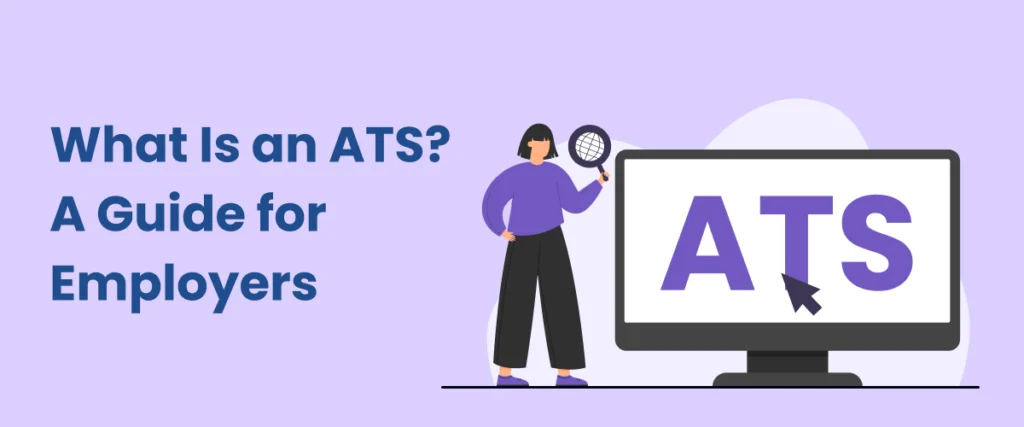
In the modern corporate landscape, the sheer volume of job applications for a single open role can be overwhelming. As organizations pivot toward data-driven decision-making, the Applicant Tracking System (ATS) has emerged as the essential infrastructure for human resources departments. Far from being a mere digital filing cabinet, an ATS serves as the central nervous system of a company’s talent acquisition strategy.
Understanding the ATS: The Modern Recruitment Engine
At its core, an Applicant Tracking System is specialized software designed to automate and streamline the recruitment lifecycle. By centralizing the intake, organization, and management of candidate data, these platforms replace disparate spreadsheets and overflowing email inboxes with a unified, searchable database.
For recruiters, an ATS is the primary workspace where they publish job openings across multiple boards, parse resumes for key skills, schedule interviews, and track candidate progress through defined hiring stages. The objective is simple: to reduce administrative friction and allow human talent acquisition teams to focus on the nuance of human interaction.
The Evolution of Recruitment: A Chronological Shift
The transition from manual recruitment to software-based tracking mirrors the broader digital transformation of the workplace.
- The Paper Era: Before the 1990s, recruitment was defined by paper resumes, physical filing cabinets, and manual data entry. Finding a candidate’s information required time-consuming manual searches.
- The Digital Dawn (Late 1990s – 2000s): With the rise of the internet, job boards began to proliferate. Companies required a way to aggregate the incoming digital resumes, leading to the birth of basic ATS platforms.
- The Integration Phase (2010s): ATS platforms began to integrate with HRIS (Human Resource Information Systems), allowing for seamless transitions from applicant to employee.
- The AI and Analytics Era (Present Day): Today’s systems utilize machine learning and predictive analytics to identify "best-fit" candidates, automate communication, and provide deep insights into the efficacy of hiring pipelines.
Supporting Data: Why ATS is Essential for Scaling
The necessity of an ATS is best understood through the lens of efficiency metrics. Industry benchmarks indicate that high-volume recruiters receive, on average, over 250 applications per job opening. Without an automated filter, the "time-to-hire"—a critical KPI for business growth—can balloon, causing organizations to lose top-tier talent to faster competitors.
Data suggests that companies leveraging advanced ATS workflows see:

- Reduction in Time-to-Hire: By automating repetitive tasks, teams can move candidates through the pipeline 30–50% faster.
- Increased Quality of Hire: By using standardized screening questions and skill-based parsing, organizations can ensure that the candidates who reach the interview stage are inherently more qualified.
- Regulatory Compliance: An ATS maintains a digital audit trail, ensuring that recruitment practices remain compliant with labor laws regarding equal opportunity and data privacy (such as GDPR or CCPA).
The Strategic Role of ATS in HR
While recruitment is the primary focus, the impact of an ATS ripples throughout the entire HR department. An ATS is not an isolated tool; it acts as the bridge between "candidate" and "employee."
Enhancing Collaboration
An ATS allows hiring managers, department heads, and interviewers to access the same centralized information. When an interviewer adds notes or ratings to a candidate’s profile, the entire team gains visibility, reducing the likelihood of biased or redundant questioning.
Data-Driven Decision Making
Modern ATS platforms provide robust analytics. HR leaders can track metrics such as:
- Source of Hire: Which platforms (e.g., LinkedIn, Indeed, internal referrals) produce the most successful candidates.
- Bottleneck Analysis: Identifying which stages of the interview process cause the most candidate drop-offs.
- Cost-per-Hire: Calculating the exact investment required to fill a role, allowing for better budget forecasting.
Choosing the Right System: A Guide for Employers
Selecting the right ATS is a strategic decision that goes beyond price points. Organizations must evaluate their specific needs against the capabilities of the software.
Business Needs and Hiring Volume
A startup hiring five people a year requires a fundamentally different system than a multinational corporation processing 5,000 applications a month. Assess whether you need basic pipeline management or advanced AI-driven candidate matching.
Integration Capabilities
The best ATS is one that "talks" to your existing stack. Ensure the system integrates with your calendar (for scheduling), your communication tools (like Slack or Microsoft Teams), and your HRIS (to facilitate onboarding).

The Importance of User Experience (UX)
If the software is difficult to use, your recruiters will find workarounds, rendering the system useless. Prioritize platforms with intuitive interfaces that allow for rapid adoption across the team.
Security and Compliance
Because an ATS handles sensitive personal information, security is non-negotiable. Look for vendors that offer robust encryption, multi-factor authentication, and clear protocols for data deletion in compliance with global privacy regulations.
Implications for Job Seekers: How to "Beat" the System
The presence of an ATS has fundamentally changed how candidates approach the job hunt. Because the system often uses "resume parsing" to extract data, the format of your resume matters as much as the content.
- Keep it Simple: Avoid complex graphics, tables, or non-standard fonts. An ATS reads text best when it is clean and straightforward.
- Keywords are Key: Customize your resume for every job description. If a job listing emphasizes "Project Management" and "Agile Methodology," ensure those exact phrases appear in your experience section.
- Standard Headings: Use standard section headers like "Experience," "Education," and "Skills." Creative headers might confuse the software and cause your information to be miscategorized.
Official Perspectives: The Human Element
Despite the rise of automation, industry experts maintain that an ATS is a tool, not a decision-maker. "The goal of an ATS is to surface the best candidates for a human to evaluate," says a leading HR systems consultant. "It is meant to augment human judgment, not replace it."
Concerns regarding "automated rejection" are often misunderstood. While an ATS can filter out unqualified candidates based on "knockout questions" (e.g., "Are you legally authorized to work in this country?"), the final hiring decision remains a human endeavor. The ATS creates the shortlist, but the recruiter creates the hire.
Conclusion: Investing in the Future of Hiring
The Applicant Tracking System has moved from a luxury to a necessity. As the competition for specialized talent intensifies, the ability to organize, communicate, and analyze the hiring process becomes a competitive advantage.

By investing in the right technology, businesses can build more inclusive, efficient, and successful hiring pipelines. However, the software is only as good as the strategy behind it. Employers must ensure they are using their ATS to build relationships with candidates, not just to filter them. When implemented correctly, an ATS empowers HR teams to shift their focus from the administration of hiring to the art of talent development.
Frequently Asked Questions (FAQs)
Q1. What does an ATS actually do?
An ATS manages the entire hiring lifecycle, from the moment a job is posted until a candidate is hired. It collects applications, stores resumes, facilitates communication, and helps track a candidate’s status through various interview stages.
Q2. Does an ATS automatically reject qualified candidates?
It is rare for an ATS to "reject" a candidate based on vague criteria. Typically, systems use "knockout questions" for binary requirements (e.g., certification, visa status). If a candidate fails these, they may be disqualified automatically. Otherwise, the ATS serves to rank candidates based on keyword relevance for the recruiter to review.
Q3. How can I ensure my resume is "ATS-friendly"?
Use a clean, single-column layout, standard file formats (like .docx or .pdf), and clearly labeled sections. Ensure your resume contains keywords found in the job description to increase your "match" score.
Q4. Is an ATS the same as an HRIS?
No. An ATS is focused exclusively on the pre-hire process. An HRIS (Human Resource Information System) is a broader tool that manages employee data, payroll, benefits, and performance management after the candidate has been hired.
Q5. Can small businesses benefit from an ATS?
Absolutely. Even for businesses with low hiring volume, an ATS saves time, keeps candidate data organized in one place, and provides a professional experience for applicants, which is essential for employer branding.