As we approach the weekend, the pace of change in the artificial intelligence landscape shows no signs of slowing. From the democratization of high-end graphic design to major shifts in large language model (LLM) performance, the tools available to modern marketers and developers are evolving at an unprecedented velocity.
This week’s industry insights reveal a common theme: the transition from "AI as a novelty" to "AI as an essential infrastructure." Whether you are looking to streamline your print design workflows, scale your video production without a film crew, or integrate persistent agents into your business operations, the following updates provide a roadmap for the week ahead.
1. Design Without Borders: Leveraging ChatGPT and Canva
For the modern professional, the term "multi-hyphenate" has become a literal job description. Between developing high-level strategy and managing the minutiae of day-to-day analytics, the responsibility of graphic design often falls onto desks ill-equipped for the task.
The New Design Workflow
Industry experts are increasingly advocating for a "Brief-to-Draft" workflow using AI. Instead of attempting to act as a professional designer, users are learning to act as "Art Directors." By feeding ChatGPT specific print specs, brand guidelines, and content requirements, users can generate high-fidelity drafts that serve as a foundation for final production.
The process involves iterative feedback loops—using ChatGPT’s built-in editing tools to remove backgrounds or annotate specific design elements. Once the draft reaches a near-final state, professionals are transitioning the file into Canva. By utilizing "Magic Layers," users can decompose AI-generated designs into individual, editable elements. This allows for precise font adjustments and spacing refinements, effectively bridging the gap between generative AI ideation and professional, print-ready output.
2. Professional Video Production via Gemini Omni
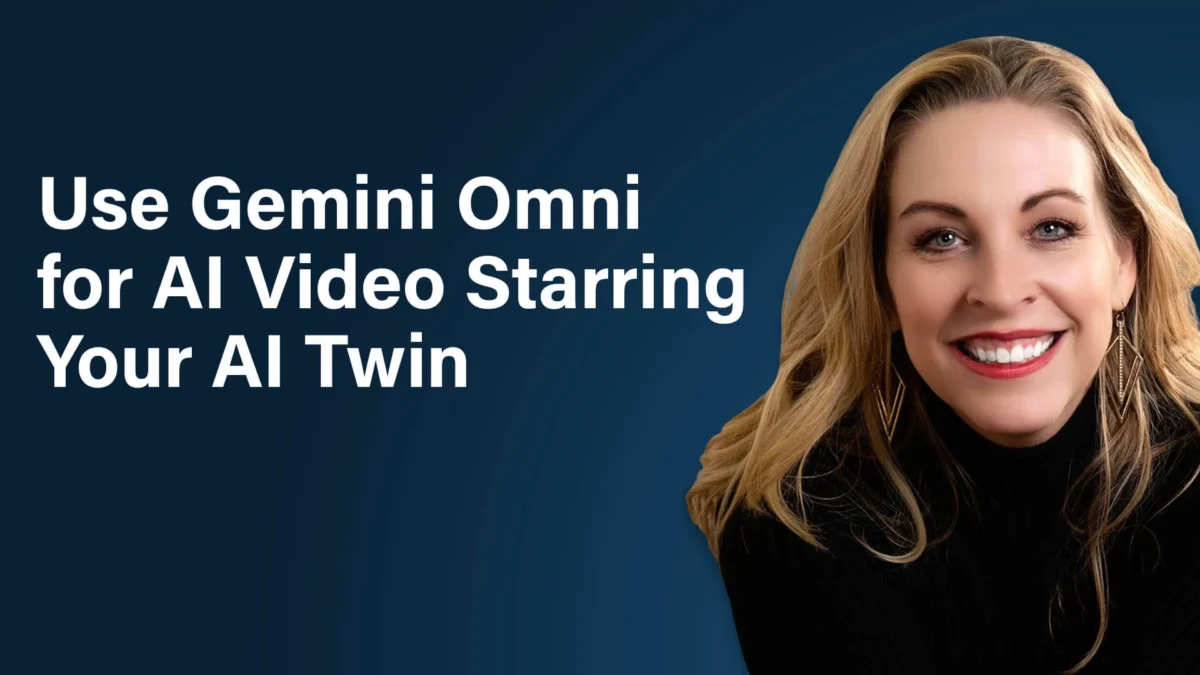
Video remains the undisputed king of digital engagement, yet the barrier to entry—specifically the need for professional film crews and post-production suites—has historically sidelined small businesses. That paradigm is shifting rapidly with the integration of Google’s Gemini Omni.

Beyond the Prompt
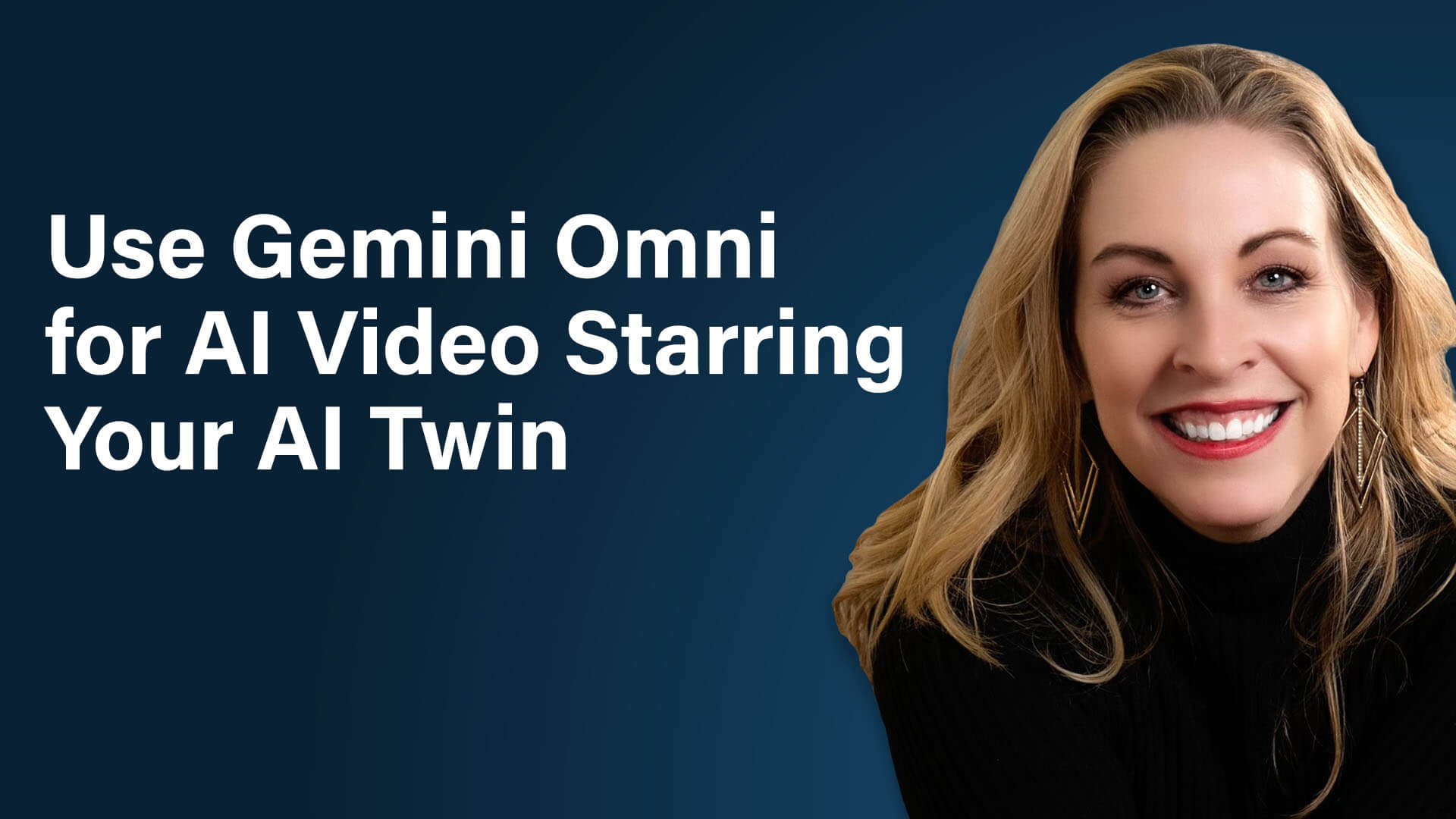
The era of struggling with complex, technical prompting is waning. Gemini Omni now allows creators to produce professional-grade video content with minimal technical friction. Key capabilities now available to creators include:
- The "AI Twin" Phenomenon: Users can now generate highly realistic avatars in minutes. However, experts caution that recording quality is paramount; poor lighting or inconsistent audio can lead to "hallucinated" details that diminish the authenticity of the twin.
- Director-Level Control: By applying a "TV Director" mindset to prompting—specifically regarding camera placement and framing—marketers can dictate the emotional arc of a video before a single frame is generated.
- Post-Production Agility: Perhaps most revolutionary is the ability to edit real, pre-shot footage using simple text prompts. Gemini Omni can now swap backgrounds, alter seasonal lighting, or change the clothing of the subject in the video, significantly reducing the cost and time associated with reshoots.
3. Systems Over Tools: The Portability Framework
In the volatile world of AI, tools rise and fall with alarming frequency. A common pitfall for organizations is tethering their entire workflow to a single platform.
Nicole Leffer, a noted expert in AI workflows, recently demonstrated the importance of platform-agnostic systems. During a live demo, when the Claude interface experienced a temporary outage, she seamlessly transitioned her data to ChatGPT, picking up the task without a loss in momentum. This level of operational resilience is achieved through a "Portable System" framework—a methodology that focuses on building workflows that exist independently of the AI engine powering them.
4. Chronology of Industry Updates (October 2026)
The past week has seen a flurry of announcements that define the current state of the AI market:

- Anthropic’s Efficiency Play: The launch of Claude Sonnet 5.5 marks a shift toward cost-efficiency. With 30% faster response times and lower token usage, it aims to capture the market segment between high-volume, low-cost models and high-intelligence enterprise models.
- Google’s Visual Pivot: Gemini 3.8 Live has introduced "Live Avatar," enabling real-time, interactive personas. This move signals a transition from text-based chatbots to visual, multimodal agents capable of handling complex enterprise tasks in 97 languages.
- OpenAI’s DevDay 2026: In a massive expansion, OpenAI unveiled over 20 updates, moving ChatGPT from a chat interface to a persistent "Agent Platform." The introduction of "Dots" agents and cloud-based Codex workflows aims to capture the 1.2 billion weekly users by embedding AI into the fabric of daily team operations.
- OpenAI’s Performance Scaling: The release of GPT-6 Sol and Luna models, alongside a 50% price reduction for API calls, underscores OpenAI’s commitment to making "computer use" and scaled automation accessible to the broader developer community.
5. Official Responses and Industry Implications
The Rise of the AI Agent
The consensus among industry leaders is that we are moving out of the "Chat" era and into the "Agent" era. OpenAI’s recent focus on "always-on" agents indicates that the future of business software is not just answering questions, but executing multi-step workflows. Companies that adopt these systems now—specifically those that focus on building transferable, platform-agnostic frameworks—will likely be the ones to survive the inevitable consolidation of the AI tool market.
Multimodal Integration
Google’s aggressive expansion of Gemini into third-party ecosystems (Airtable, Linear, monday.com, etc.) reflects an industry-wide push for "Contextual AI." By allowing AI to live within the apps where work is actually performed, Google is removing the friction of "context switching," where employees lose time moving between browser tabs.

6. Strategic Takeaways: How to Prepare
As the landscape continues to evolve, professionals should focus on three strategic pillars:
- Prioritize Workflow Resilience: Do not marry your processes to a specific tool. If a service goes down, your systems should be robust enough to shift to a competitor without a total reboot of your operations.
- Invest in "Prompt Engineering" as "Directing": Whether in video or design, the quality of your output is directly tied to your ability to communicate intent. Learning to speak the language of "camera angles," "lighting cues," and "brand guidelines" will yield significantly higher ROI than generic, high-level requests.
- Adopt a "Human-in-the-Loop" Mindset: Despite the advancements in generative audio, video, and text, the most successful implementations remain those where human intuition directs the AI. Use AI to handle the heavy lifting of production, but keep human creative judgment at the core of the final output.
Conclusion
The rapid evolution of models like GPT-6 and Claude 5.5 is not just about faster computing; it is about the fundamental restructuring of how we define productivity. As we move through the remainder of the year, the winners will be those who view these tools not as toys, but as foundational infrastructure.

For those looking to deepen their understanding, industry conferences like AI Business World offer a critical opportunity to move beyond theory and into implementation. As Michael Stelzner, founder of Social Media Examiner, frequently emphasizes, the gap between those who "know about" AI and those who "use AI to change their business" is widening. Now is the time to close that gap.