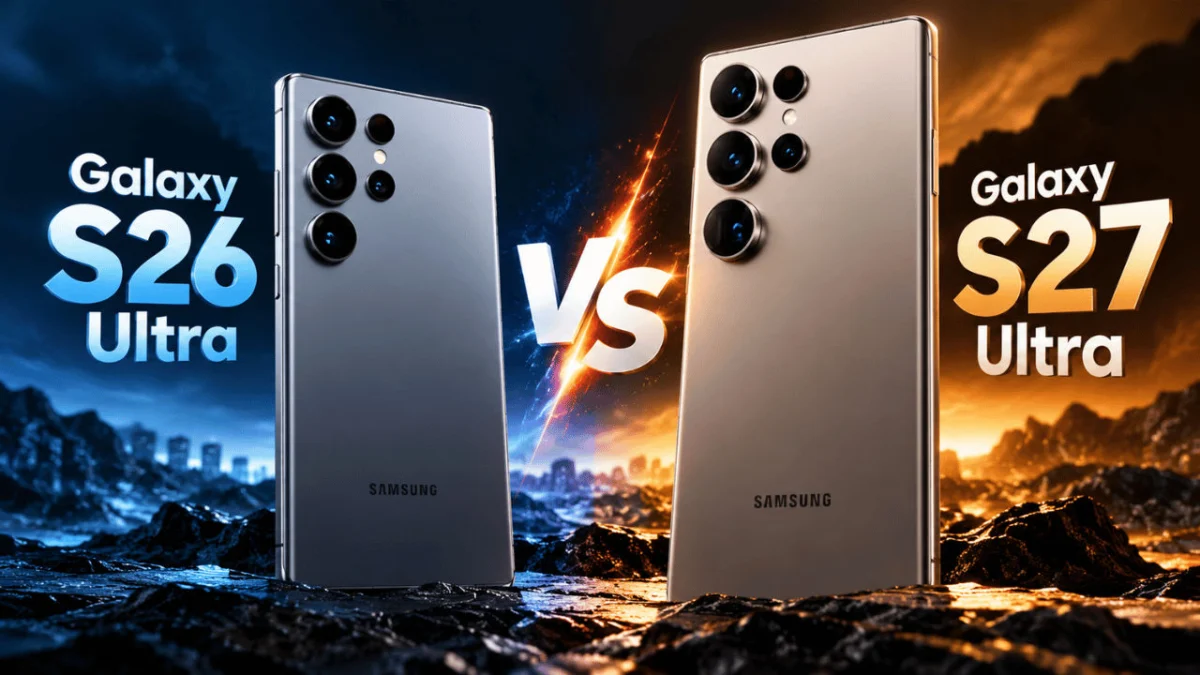
The premium smartphone landscape is characterized by a relentless pursuit of innovation, where yesterday’s "cutting-edge" quickly becomes today’s "standard." In the realm of Android flagships, Samsung’s "Ultra" moniker represents the zenith of mobile engineering. Even as the current Samsung Galaxy S26 Ultra continues to dominate the market with its robust performance and sophisticated camera array, the rumor mill has already shifted its gears toward its successor.
Recent leaks and regulatory filings have begun to paint a detailed picture of the Samsung Galaxy S27 Ultra. With reports of significant upgrades in display technology, processing power, and a potentially revolutionary shift in battery chemistry, the S27 Ultra is shaping up to be more than just an iterative update. This article provides a comprehensive deep dive into the expected changes, technical specifications, and market implications of Samsung’s next-generation titan.
1. Main Facts: The Generational Leap
The transition from the Galaxy S26 Ultra to the S27 Ultra appears to be focused on three core pillars: visual fluidity, AI-driven performance, and endurance. While the S26 Ultra set a high bar with its Snapdragon 8 Elite Gen 5 chipset and 2600-nit display, the S27 Ultra aims to shatter those benchmarks.
Key Comparison Points:
- Display: A jump from a 120Hz refresh rate to a gaming-grade 144Hz, alongside a peak brightness exceeding 3,000 nits.
- Processor: The debut of the Qualcomm Snapdragon 8 Elite Gen 6 Pro, likely built on an advanced 2nm or refined 3nm process.
- Battery: A move away from traditional Lithium-ion toward a higher-density 5,700 mAh Silicon-Carbon battery.
- Memory: The introduction of LPDDR6 RAM, which promises significantly higher bandwidth for on-device AI tasks.
- Pricing: A projected price hike that could push the device into a new luxury tier, potentially starting near Rs 1,89,990 in the Indian market.
2. Chronology: From Concept to Certification
The lifecycle of a Samsung flagship begins years before it reaches the consumer’s hand. For the Galaxy S27 series, the timeline has recently accelerated due to sightings in international regulatory databases.
- Early 2024: Conceptualization of the "S27" project begins within Samsung’s MX (Mobile eXperience) division, focusing on the integration of next-generation Silicon-Carbon battery technology.
- Late 2024: Supply chain leaks suggest Samsung is testing 144Hz AMOLED panels, a feature previously reserved for dedicated gaming handsets.
- Q1 2025: Initial reports emerge regarding the "Galaxy S27 Pro" and "S27 Ultra" receiving safety certifications.
- Recent Developments: The Galaxy S27 Ultra has reportedly appeared in China’s 3C (Compulsory Certification) and India’s BIS (Bureau of Indian Standards) databases. These certifications are critical milestones, as they confirm the device’s electrical safety and charging standards, signaling that the hardware design has been finalized.
- Expected Launch: While not officially confirmed, Samsung traditionally hosts its "Galaxy Unpacked" events in the first quarter of the year, suggesting a Q1 2026 or early 2027 debut depending on the specific product cycle alignment.
3. Supporting Data: A Technical Comparison
To understand the magnitude of the S27 Ultra, one must look at the granular technical data comparing it to the current S26 Ultra.
Display and Ergonomics
The Galaxy S26 Ultra features a 6.9-inch QHD+ AMOLED panel. It is widely praised for its anti-reflective Corning Gorilla Armor 2, which reduces reflections by up to 75%. However, the S27 Ultra is rumored to push the envelope further. By adopting a 144Hz refresh rate, Samsung is targeting the growing mobile e-sports market. Furthermore, the move to 3,000+ nits of peak brightness ensures that HDR content remains vivid even under direct, harsh sunlight, surpassing the 2,600 nits of the current model.
Performance and Architecture
The heart of the S26 Ultra is the Snapdragon 8 Elite Gen 5. While formidable, it operates on LPDDR5X RAM. The S27 Ultra is expected to utilize the Snapdragon 8 Elite Gen 6 Pro. This chipset is anticipated to be a "custom" variant optimized specifically for Galaxy devices (often branded as "Snapdragon for Galaxy").
Perhaps the most significant jump is in memory and storage. The move to LPDDR6 RAM is not just about speed; it is about the "AI era." Higher RAM bandwidth allows Large Language Models (LLMs) to run locally on the device without relying on the cloud, enhancing privacy and response times. Coupled with UFS 4.1 or UFS 5.0 storage, data transfer speeds could double, making the S27 Ultra a portable workstation.
The Battery Revolution: Silicon-Carbon
For years, smartphone battery capacities have hovered around 5,000 mAh due to the physical limitations of Lithium-ion. The S27 Ultra is tipped to break this ceiling by using a 5,700 mAh Silicon-Carbon battery. Silicon-carbon anodes can hold significantly more energy in the same physical volume as traditional graphite anodes. This allows Samsung to increase battery life by nearly 15-20% without making the phone thicker or heavier.
Camera Evolution
The S26 Ultra currently utilizes a quad-camera system:
- 200MP Main (OIS)
- 50MP Ultrawide
- 50MP Periscope (5x Optical)
- 10MP Telephoto (3x Optical)
The S27 Ultra rumors suggest a "streamlining" of the camera island. While the 200MP primary sensor and the 5x periscope lens will remain, Samsung may drop the dedicated 3x telephoto lens. This suggests that the 200MP sensor’s in-sensor crop capabilities have reached a level of quality where a dedicated 3x lens is redundant. Additionally, the front-facing camera is expected to see a bump from 12MP to 16MP, likely focusing on improved low-light performance for video conferencing.
4. Official Responses and Market Positioning
As is standard practice, Samsung Electronics has maintained a strict "no comment" policy regarding unannounced products. However, industry analysts point to the 3C and BIS certifications as concrete evidence that the device exists in a near-final state.
Samsung’s strategy with the S27 Ultra appears to be a shift toward the "Ultra-Premium" segment. By potentially pricing the device at Rs 1,89,990, Samsung is moving away from the mass-premium market and targeting enthusiasts and professionals. This price hike is likely driven by the increased cost of 2nm/3nm chip wafers and the premium associated with Silicon-Carbon battery production.
Internal sources suggest that Samsung’s One UI 9.0 (based on Android 17) will be the software vessel for these hardware changes, focusing heavily on "Galaxy AI" features that can take advantage of the rumored 16GB of LPDDR6 RAM.
5. Implications: What This Means for the Industry
The rivalry between the Galaxy S27 Ultra and its contemporaries (likely the iPhone 17/18 Pro Max and Google Pixel 10/11) will define the next era of mobile computing.

1. The End of the "3x Lens" Era?
If Samsung successfully removes the 3x telephoto lens without sacrificing image quality, it will set a trend for other manufacturers to follow. This "sensor-crop" philosophy allows for larger batteries or better thermal cooling systems by freeing up internal space.
2. The Normalization of High-Refresh Rates
By moving to 144Hz, Samsung is signaling that the line between "gaming phones" and "business flagships" is blurring. This will likely force competitors to upgrade their 120Hz LTPO panels to stay relevant in the spec war.
3. Economic Barriers
The rumored price of nearly Rs 1.9 Lakh (approximately $2,200 USD) reflects the rising cost of global logistics and semiconductor manufacturing. This may lead to a bifurcated market where the "Standard" and "Plus" models remain accessible, while the "Ultra" becomes a status symbol equivalent to high-end laptops.
4. Sustainability and Battery Life
The adoption of Silicon-Carbon batteries is a win for sustainability. Longer-lasting batteries mean fewer charge cycles over the device’s lifespan, potentially extending the usable life of the phone to 7 or 8 years, aligning with Samsung’s promise of long-term software support.
Conclusion: Is the S27 Ultra Worth the Wait?
For users currently holding a Galaxy S24 or S25 Ultra, the S26 Ultra offers a refined experience. However, for those looking for a "paradigm shift," the Galaxy S27 Ultra seems to be the target. The combination of a 144Hz display, a massive 5,700 mAh battery, and the next-generation LPDDR6 RAM suggests that Samsung is preparing for a future where the smartphone is the primary computing device for both work and high-end gaming.
While the projected price increase is steep, the technological leaps in battery density and AI processing power may justify the investment for power users. As we move closer to the official unveiling, the Galaxy S27 Ultra stands as a testament to Samsung’s ambition to remain the undisputed king of the Android ecosystem.