New Delhi, India – [Date of Publication] – In an aggressive move to fortify investor protection, the Securities and Exchange Board of India (SEBI) has unveiled two crucial, investor-centric digital tools aimed at combating the alarming surge in stock market scams. These initiatives, detailed in a SEBI circular dated June 11, 2025, are designed to empower investors by providing clear mechanisms to verify the authenticity of intermediaries and prevent financial losses at the hands of fraudulent entities. The rise in sophisticated scams, often orchestrated through social media by individuals impersonating SEBI-registered advisors and analysts, has necessitated these proactive measures.
The market regulator’s latest interventions, the "SEBI Valid UPI Handles" and the "SEBI Check" feature, address the growing menace of "finfluencers" and unregistered individuals who leverage social media platforms to solicit funds from unsuspecting investors. These fraudsters frequently present fabricated profit screenshots and counterfeit SEBI registration certificates to lure victims into transferring money under the guise of fees or investments. By the time investors recognize the deception, their capital has often vanished. The core challenge identified by SEBI is the lack of awareness among many investors regarding the simple yet effective methods to verify the legitimacy of the entities they engage with.
The Escalating Threat of Financial Impersonation
The digital age, while democratizing access to financial markets, has also created fertile ground for fraudulent activities. Social media platforms have become a primary conduit for scammers to reach a broad audience, preying on the aspirations of individuals seeking financial growth. These perpetrators meticulously craft convincing online personas, often adopting titles like "investment advisor" or "research analyst," and falsely claim SEBI registration.
A significant modus operandi involves soliciting payments via instant digital transfer platforms like UPI. The speed and ease of UPI transactions, while beneficial for legitimate purposes, can be exploited by fraudsters to bypass investor due diligence. Victims are often pressured to transfer funds directly to personal mobile numbers, leaving little to no time for reflection or verification. This lack of a mandatory pause in the transaction process has been a critical vulnerability that SEBI’s new measures directly address.
SEBI’s Proactive Stance: Introducing Valid UPI Handles
Recognizing the pervasive threat posed by fake UPI IDs, SEBI has mandated a standardized and exclusive format for UPI payment collection by all registered intermediaries. This initiative, effective from the date of the circular, aims to make it immediately apparent whether a payment request originates from a legitimate SEBI-registered entity or a fraudulent operator.
H3: The Mechanics of SEBI Valid UPI Handles
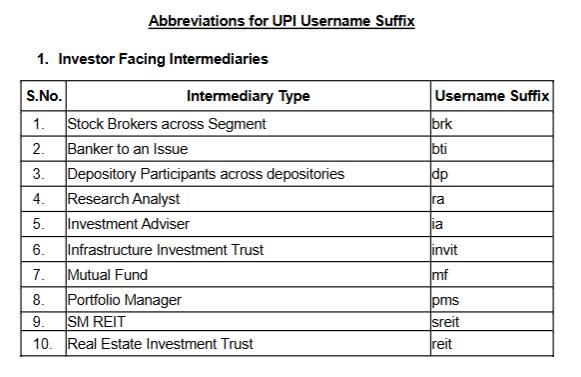
The new framework requires SEBI-registered intermediaries – including Investment Advisors (IAs), Research Analysts (RAs), and others – to adopt a specific UPI ID structure. This structure, developed in collaboration with stock exchanges (BSE/NSE) and banks, incorporates a clear identifier within the UPI address itself.
The mandated format for a SEBI Valid UPI Handle is as follows:
<username>.<intermediary_category>@valid.<Bank Name>
The critical element distinguishing these legitimate handles is the inclusion of the keyword @valid within the UPI address. This "valid" suffix serves as an unmistakable indicator of an intermediary’s registered status.
H3: Decoding the Structure: A Practical Guide
To illustrate the implementation, consider these scenarios:
-
Scenario 1: A Registered Investment Adviser (IA)
Let’s assume an entity named "ABC," which is a SEBI-registered Investment Adviser and uses ICICI Bank for its fee collections. A valid UPI handle for ABC would likely be structured as:
[email protected]In this example,
iais the designated intermediary category suffix for Investment Advisers, appearing between the username and the@validtag.
-
Scenario 2: A Registered Research Analyst (RA)
Consider another entity, "XYZ," a SEBI-registered Research Analyst, which utilizes HDFC Bank for its payment processing. A valid UPI handle for XYZ would be:
[email protected]Here,
rasignifies that XYZ is a Research Analyst. The inclusion ofiaorra(or other relevant category codes) immediately informs the investor about the nature of the intermediary’s SEBI registration.
H3: The Definitive Identifier: The @valid Suffix
The most crucial takeaway for investors is the presence of @valid. If a UPI ID shared for payment purposes lacks this specific string, it is a significant red flag. Investors should unequivocally understand that any UPI ID presented without this distinct marker is not from a SEBI-registered intermediary and should be treated with extreme caution.
It is imperative to note that the keyword valid must appear after the @ symbol and before the bank name. Any deviation from this placement, or its complete absence, indicates a potential scam. For instance, valid.abc@icici or abc@validicici would not conform to the SEBI mandate.
Addressing QR Code Payments: A Layered Verification Process
The new regulations also extend to payments made via UPI QR codes. While a QR code is essentially a visual representation of a UPI address, investors need to exercise diligence before completing a transaction.
H3: Verifying QR Code Authenticity
When presented with a QR code for payment:
- Scan the QR Code: Use your preferred UPI application to scan the provided QR code.
- Examine the UPI Handle: The UPI application will typically display the UPI ID associated with the QR code before you proceed with the payment. This is the critical verification step. Ensure that the displayed UPI handle strictly adheres to the
@valid.<Bank Name>format, including the@valididentifier. - Look for the Thumbs-Up Icon (with caveats): SEBI had previously suggested the inclusion of a "thumbs-up" icon within QR codes generated by registered intermediaries. However, the regulator has acknowledged potential flexibility in this aspect, and its absence may not always indicate fraud. Moreover, sophisticated fraudsters might attempt to mimic this icon. Therefore, while the thumbs-up icon can be a supplementary indicator, it should not be the sole basis for verification.
H3: The Unwavering Standard: The Valid UPI Format
The regulator emphasizes that the valid UPI format is non-negotiable. Even if a QR code appears legitimate or displays a thumbs-up icon, if the underlying UPI handle does not conform to the specified structure with the @valid identifier, investors should refrain from proceeding. The integrity of the UPI handle remains the paramount factor in ensuring a secure transaction.
Extending Protection to Traditional Transfer Methods: The SEBI Check Feature
Recognizing that fraudsters may adapt their tactics, SEBI has also introduced a robust solution for situations where payments are requested via traditional bank transfers, such as NEFT, IMPS, or RTGS. In these instances, scammers might provide bank account details instead of UPI IDs.
The new SEBI Check feature, accessible via the SEBI portal, empowers investors to verify the authenticity of account numbers and IFSC codes. This tool acts as a vital safeguard against fraudulent bank account solicitations.
H3: How the SEBI Check Feature Operates
The SEBI Check feature allows investors to verify the genuineness of:
- Account Numbers: By entering an account number, investors can confirm if it belongs to a SEBI-registered intermediary.
- IFSC Codes: Similarly, providing an IFSC code allows for verification against SEBI’s database of registered entities.
H3: The Verification Process
Investors can access the SEBI Check feature through the dedicated portal: https://siportal.sebi.gov.in/intermediary/sebi-check.
Upon entering the relevant bank details, the system will cross-reference the information with SEBI’s records. If the provided account number or IFSC code does not correspond to a legitimate SEBI-registered intermediary, the system will flag it.
H3: Decisive Action Against Suspected Fraud
If the QR code, UPI address, or bank details shared with an investor fails the SEBI Check, it is a clear indication that they are interacting with a fraudulent entity. In such scenarios, investors are strongly advised to:
- Immediately cease all communication with the individual or entity.
- Do not transfer any money.
- Avoid any further engagement or dealings.
Identifying a Potential Scammer: Key Red Flags
SEBI’s enhanced investor protection framework highlights several critical indicators that should alert investors to potential fraudulent activity:
- Absence of
@validin UPI Handles: As detailed earlier, any UPI ID for payment that does not contain@validis a significant warning sign. - Requests for Direct Bank Transfers to Personal Accounts: Legitimate SEBI-registered intermediaries typically have designated business accounts. While the SEBI Check feature is now available for verification, be wary of requests to transfer funds directly to individual bank accounts, especially if they are not verified through the SEBI portal.
- Use of Generic or Personal Email IDs: Registered intermediaries often use professional email addresses associated with their firm’s domain name.
- Vague or Unsubstantiated Profit Claims: Be skeptical of promises of guaranteed or exceptionally high returns without clear, data-backed explanations.
- Pressure Tactics: Scammers often create a sense of urgency, pressuring investors to make quick decisions and payments.
- Unsolicited Contact and Requests for Personal Information: Be cautious of unsolicited messages or calls asking for sensitive financial or personal details.
- Lack of SEBI Registration Details: Always demand and verify the SEBI registration number of any entity offering investment advice or services.
Conclusion: Empowering Investors in the Digital Age
The introduction of SEBI Valid UPI Handles and the SEBI Check feature marks a significant stride in SEBI’s ongoing commitment to safeguarding investors from the pervasive threat of financial scams. These tools demystify the verification process, providing investors with readily accessible and reliable methods to confirm the legitimacy of intermediaries before parting with their hard-earned money.
By equipping investors with these digital shields, SEBI aims to foster a more secure and transparent investment ecosystem. The onus now lies on investors to utilize these resources diligently, stay informed about evolving scam tactics, and remain vigilant. The message from SEBI is clear: verify before you pay, and protect your investments from those who seek to profit from deception.
The regulator continues to monitor the evolving landscape of financial fraud and is poised to introduce further measures as needed to ensure the integrity of the securities market and the financial well-being of its participants.
[Optional: Add a section on chronology if more details are available about the timeline of the problem and SEBI’s response. For instance, mentioning the year the scam trend started escalating, when SEBI first issued advisories, etc.]
[Optional: Add a section for supporting data if available, e.g., statistics on the increase in reported scams, financial losses incurred by investors due to such scams.]
[Optional: Add a section for official responses from SEBI officials or industry bodies commenting on the new initiative.]
[Optional: Add a section on implications, discussing the broader impact of these measures on investor confidence, market integrity, and the challenges that might still remain.]