The global media industry is currently navigating a period of profound transition, marked by the departure of iconic broadcasting figures, mounting legal pressures on news organizations, and a tactical pivot toward digital audio expansion. From the halls of CNN to the editorial offices of the BBC, legacy media institutions are grappling with the dual pressures of changing audience habits and increasing political scrutiny.
Main Facts: A Changing of the Guard at CNN
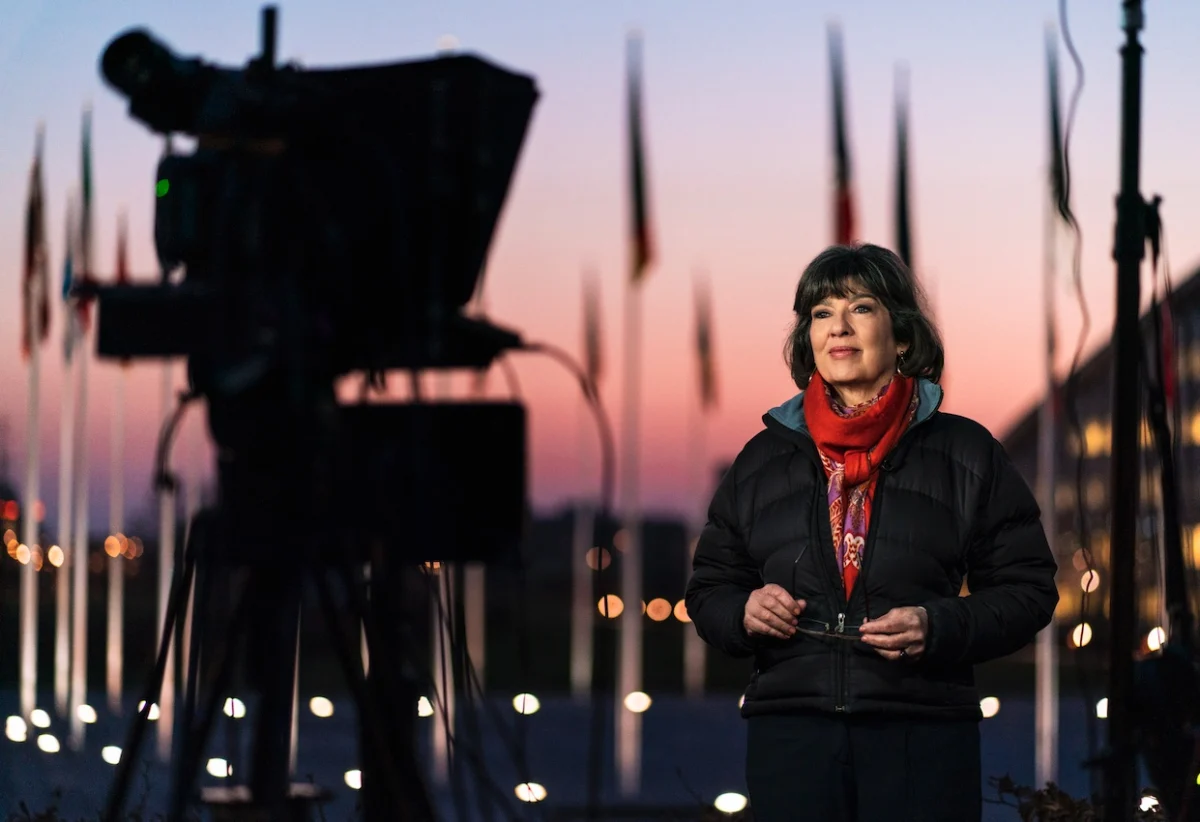
In a move that has sent shockwaves through the industry, Christiane Amanpour, the preeminent face of CNN’s international reporting for over four decades, has announced her departure from the network. Amanpour, whose career has been synonymous with CNN’s brand of global investigative journalism, broke the news during the closing moments of her namesake program on Monday.
"After thinking about this carefully for several months and experiencing a few sleepless nights, as you can imagine, I have decided to separate from CNN, my partner of 43 fantastic years," Amanpour stated. Her exit is not immediate; in a structured transition, her daily broadcast—which also airs on PBS—will continue until the end of the year, before shifting to a weekly format until her final departure in June.
While the reasons for her exit remain largely private, the move follows a pattern of high-level talent turnover at the network. Simultaneously, senior global affairs analyst Bianna Golodryga has confirmed her own exit from CNN after seven years. Golodryga, who has been a staple of the network’s international coverage since 2019, cited an “opportunity that I couldn’t pass up,” with reports indicating she is currently in advanced discussions with Politico and CBS News.
Chronology of the Shakeup
The timeline of these transitions reflects a rapid acceleration of changes within the network’s hierarchy:
- October 18, 2026: CBS News legal correspondent Jan Crawford issues a public apology and deletes a tweet criticizing a political candidate, acknowledging a violation of network editorial standards.
- October 22, 2026: Bianna Golodryga publicly announces her departure from CNN via social media, expressing gratitude for her nine-year tenure at the network.
- October 26, 2026: CBS News launches an aggressive expansion into the podcasting space, debuting Great Questions with Tony Dokoupil.
- November 2026 (Projected): The BBC begins the process of eliminating over 100 positions as part of a $7.4 million cost-cutting initiative.
- December 11, 2026: Deadline for President Trump’s court-ordered deposition in the $10 billion lawsuit filed against the BBC.
- June 2027: The official departure date for Christiane Amanpour from CNN.
Legal Briefs: Press Freedom and Litigation
The relationship between the press and the executive branch has reached a new nadir. CNN has escalated its dispute with the White House, engaging outside counsel Ted Boutrous to challenge the administration’s decision to exclude the network from traveling with the president on Air Force One during designated TV pool assignments. In a formal letter to the Justice Department, Boutrous characterized the administration’s actions as a discriminatory, retaliatory, and unlawful effort to penalize the network for its editorial coverage.
Simultaneously, the judiciary remains a central theater for media conflicts. Fox News is currently petitioning the Supreme Court to intervene in a long-standing case involving journalist Catherine Herridge. The network is seeking to overturn a civil contempt order—which includes daily $800 fines—centered on the protection of confidential sources. Fox News argues that the preservation of source confidentiality is a cornerstone of the First Amendment and that the lower court’s ruling sets a dangerous precedent that could effectively neuter investigative journalism in the United States.
Furthermore, the BBC finds itself entangled in a $10 billion litigation battle involving former President Donald Trump. U.S. Magistrate Judge Enjoliqué Lett has mandated that the former president must appear for a deposition by December 11. The court has signaled that failure to comply could result in severe sanctions, potentially including the dismissal of the lawsuit entirely.
Supporting Data and Financial Pressures
The industry’s contraction is not limited to the United States. The BBC has confirmed a significant restructuring plan aimed at addressing long-term funding shortfalls. The elimination of over 100 roles, announced by newly appointed BBC News director Rachel Jupp, is expected to yield $7.4 million in savings. However, Jupp has warned that these measures are merely a stopgap, suggesting that further austerity measures may be necessary as the broadcaster attempts to reconcile its mandate with a shrinking financial envelope.
Conversely, CBS News is leaning into growth through digital diversification. Recognizing the shift in media consumption, the network is investing heavily in original podcasting. The launch of Great Questions with Tony Dokoupil and the co-hosted Straight Up (featuring Vlad Duthiers and Kelly O’Grady) signals a strategic move to capture younger, digitally native audiences. This comes alongside internal management changes, as the network officially named Jon Tower the permanent executive producer of CBS Mornings, tasking him with the high-stakes objective of reversing the show’s recent ratings slide.
Official Responses and Implications
The reaction to these shifts has been largely one of tempered acknowledgment. CNN CEO Mark Thompson, in a memo to staff regarding Amanpour’s departure, offered a rare glimpse into the internal dialogue surrounding such a high-profile exit. "I’m very sorry to see her go," Thompson wrote, "but I’ve come to accept that this is the right time for her, both personally and professionally."
The implications of these developments are twofold. First, the departure of "legacy" anchors like Amanpour signifies the end of a specific era of broadcast journalism. The influence of a single, monolithic international voice is being replaced by a more fragmented, multi-platform approach, where talent is increasingly mobile and news outlets are forced to fight harder for relevance in a digital-first ecosystem.
Second, the legal environment suggests that the "Fourth Estate" is under unprecedented pressure. Whether it is the clash over Air Force One access or the battle for source protection in the Supreme Court, the legal risks associated with reporting have become a primary operational concern. When organizations like CBS News are forced to publicly walk back social media content to maintain credibility, and others like the BBC are forced to cut staff to remain solvent, the industry is clearly in a state of defensive consolidation.
As the industry looks toward 2027, the central theme is survival through evolution. For those who remain—like Jonathan Capehart and Eugene Daniels, whose recent recognition as Out100 2026 honorees highlights the continued value of individual voices—the challenge will be to maintain editorial integrity while navigating a landscape that is increasingly defined by lawsuits, budget cuts, and the constant, relentless shift toward on-demand digital content. The departures of today are not merely the exits of individuals; they are indicators of a profound, systemic recalibration of how the world receives its news.