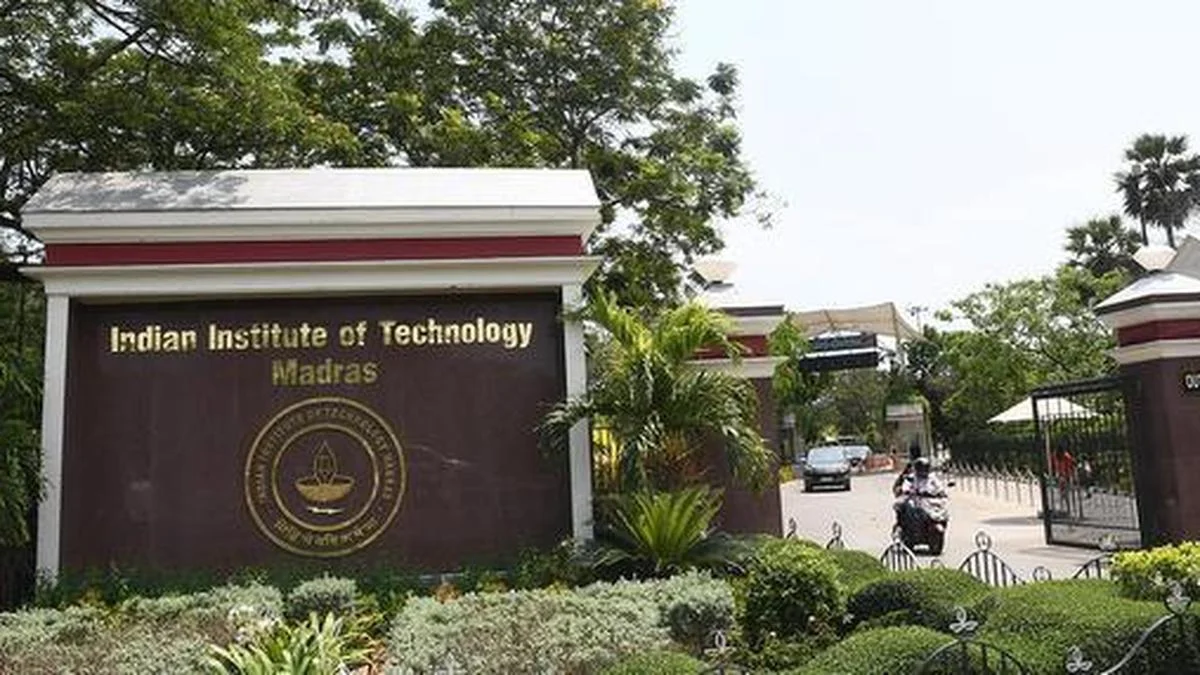
New Delhi — In a landmark policy shift aimed at addressing the burgeoning crisis of substance abuse within the nation’s academic ecosystem, the Union government has initiated a sweeping, multi-year program to screen students for narcotics use. Starting with the 2026 academic session, premier institutions including the Indian Institutes of Technology (IITs) and Indian Institutes of Management (IIMs) have begun requesting that incoming students submit voluntary urine tests for a range of psychoactive substances, including amphetamines, cocaine, marijuana, benzodiazepines, and phencyclidine (PCP).
This unprecedented health-monitoring initiative, spearheaded by the Ministry of Education’s Department of Higher Education, is not merely a localized campus policy but a cornerstone of the Union government’s "Vision Document on Narcotics Control 2026-29." The move signals a transition from reactive disciplinary measures to a data-driven, preventive health approach toward substance use among India’s youth.
The Core Mandate: Protecting the Campus Ecosystem
The directive, which was communicated to various central institutions over the past several months, is designed to be as non-intrusive as possible. According to official guidelines, the testing process is strictly voluntary. Students are encouraged to visit NABL-certified laboratories within seven days of admission to undergo a multi-panel drug screen.
The results, once generated, are to be submitted to the respective student wellness committees in sealed, confidential envelopes. The overarching message from the Ministry of Education is clear: the data is intended solely for preventive health and support. Officials have emphasized that the testing is anonymized, and the findings are strictly for internal counseling purposes. Most importantly, the government has mandated that these tests should have no bearing on a student’s academic standing, admission status, or eligibility for campus housing.
Chronology of the Initiative
The seeds of this massive undertaking were sown in the Narcotics Control Bureau’s (NCB) strategic roadmap, which identified the rise of psychoactive substance misuse in higher education as a critical health and security concern. The rollout follows a structured, three-phase timeline:
- Phase I (2026-27): The current year focuses on the "creme de la creme" of Indian academia. This includes all IITs, IIMs, and one designated central university. This pilot stage is intended to calibrate the logistical framework for handling sensitive medical data while establishing a baseline for substance prevalence.
- Phase II (2027-28): The program will expand significantly to include 32 National Institutes of Technology (NITs), eight Indian Institutes of Science Education and Research (IISERs), three Schools of Planning and Architecture (SPAs), 25 Indian Institutes of Information Technology (IIITs), and four other centrally-funded technical institutes.
- Phase III (2028-29): The final phase of this initial roadmap will see the implementation of the screening program across 46 central universities and four deemed-to-be-universities. By the end of this period, the government aims to have covered approximately 10 lakh students.
Supporting Data and Strategic Vision
The government’s decision to move toward mass screening is backed by the urgent need for reliable data. While the government is currently finalizing the questions for an expansive national survey on substance use, the vision document characterizes the situation as a "growing health concern" that requires immediate, nationwide intervention.
The screening program is part of a broader "Nasha Mukt Yuva for Viksit Bharat Sankalp Abhiyan" (Drug-Free Youth for a Developed India Campaign). Prime Minister Narendra Modi is scheduled to officially launch this campaign on August 2, 2026. The campaign seeks to move beyond just screening; it aims to create an environment where drug-free campuses are the norm.

The National Drug Dependence Treatment Centre (NDDTC) at the All India Institute of Medical Sciences (AIIMS), New Delhi, has provided the scientific and clinical backbone for these guidelines. By utilizing standardized medical protocols, the government hopes to ensure that the testing is scientific, ethical, and focused on rehabilitation rather than punishment.
Official Guidelines: Confidentiality and the "Wellness" Approach
A critical aspect of the program is the distinction between "disciplinary action" and "wellness support."
For example, the admission documentation for incoming B.Tech students at IIT Goa explicitly states that the tests are for "preventive health" and that any findings will not lead to "disciplinary measures, suspension, or any form of expulsion." This language is crucial, as it aims to alleviate the anxiety that students might feel regarding the privacy of their medical data.
However, the implementation has seen minor variations. While IIT Goa’s documentation is comprehensive in its assurances, the brief provided to MBA students at IIM Lucknow is slightly more ambiguous. While it confirms that the results will not impact admission, it lacks the explicit guarantee that no negative repercussions will follow during the student’s tenure at the institute. Such variations highlight the complexities of implementing a nationwide policy across diverse autonomous institutions.
Implications: The Debate Over Privacy and Efficacy
The introduction of drug screening in higher education has triggered a multifaceted debate among educators, parents, and student activists.
1. The Ethics of Data Privacy
The requirement to submit a medical report in a "closed envelope" to a student wellness committee raises questions about data protection. In an era where digital privacy is paramount, the handling of sensitive health information in academic settings requires ironclad protocols. If a student is identified as having a substance dependency, ensuring that this information remains within the confines of the wellness committee is the single greatest challenge for the government.
2. The "Voluntary" Paradox
Critics argue that even "voluntary" testing creates a culture of surveillance. If a student chooses not to take the test, will they be viewed with suspicion? The government’s stance is that the test is an act of proactive self-care, similar to a routine physical check-up. However, the success of the program will depend on whether students view the administration as a partner in their well-being or as an extension of the state’s policing apparatus.

3. Rehabilitation vs. Screening
Many public health experts point out that screening is only effective if it is followed by robust rehabilitation infrastructure. If a student tests positive, the existence of a wellness committee is not enough; the university must be equipped with professional counselors, psychologists, and, where necessary, access to medical treatment facilities. The government’s plan to train teachers on the prevention of substance abuse is a positive step, but the scale of the challenge—covering 10 lakh students—will require a massive infusion of human and financial resources.
The Path Forward: Creating "Drug-Free" Zones
The vision document does not stop at urine tests. A significant portion of the strategy involves declaring university and college campuses, as well as their surrounding neighborhoods, as "drug-free zones." This implies a tighter coordination between campus security, local law enforcement, and the NCB to restrict the supply of narcotics in areas frequented by students.
By training teachers to recognize the early signs of substance abuse, the government hopes to create a "first-responder" network within the faculty. This moves the issue from the periphery of student life to the center of academic responsibility.
As India moves toward its goal of becoming a Viksit Bharat (Developed India) by 2047, the health and productivity of its youth demographic are paramount. The 2026-29 screening program represents a high-stakes gamble: if implemented with empathy, transparency, and a focus on genuine rehabilitation, it could provide a blueprint for other nations struggling with student substance use. If it fails to maintain the trust of the students, it risks becoming a bureaucratic hurdle that fails to address the root causes of the addiction crisis.
Ultimately, the success of this initiative will not be measured by the number of tests conducted, but by the number of students who find the help they need to lead healthy, productive lives. As the first phase rolls out across the IITs and IIMs, the eyes of the nation will be on how these institutions balance their duty of care with the individual privacy of their students.