By Financial Correspondent
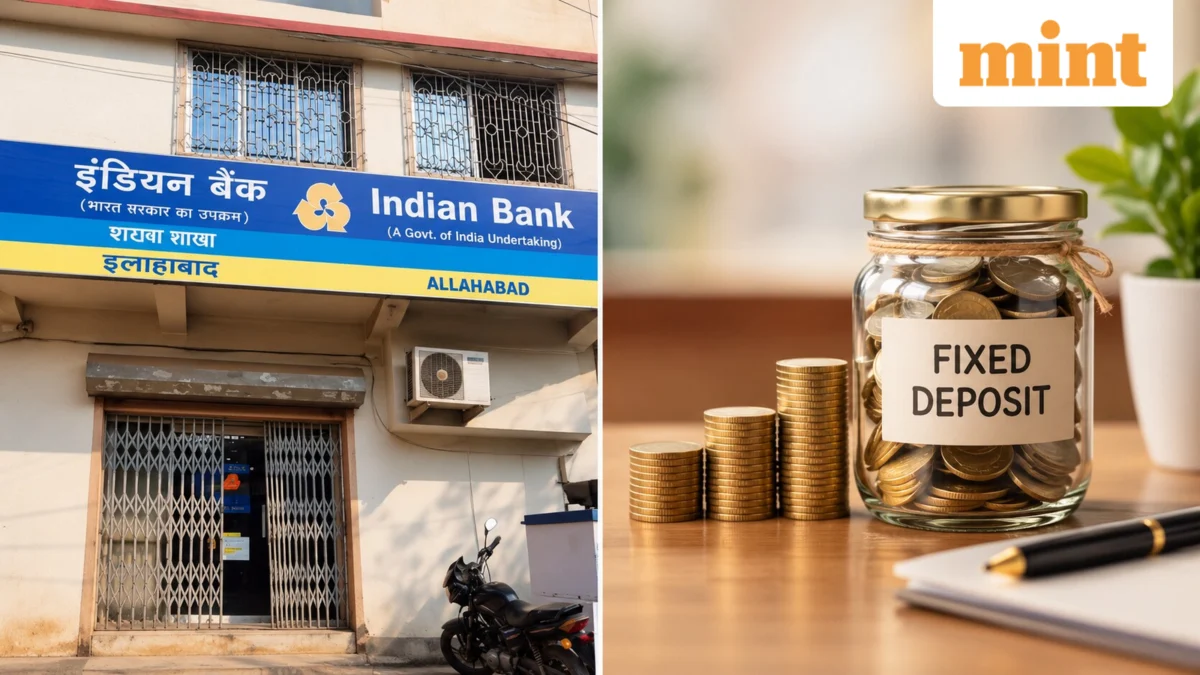
In a strategic move reflecting the shifting macroeconomic landscape, public-sector giant Indian Bank has announced a significant upward revision in interest rates for its flagship special-tenure fixed deposit (FD) products. Effective October 23, 2026, the bank has hiked rates by 15 basis points (bps) across two of its most popular schemes: the "Ind Grow" (555-day tenure) and the "Ind Prosper" (777-day tenure).
This decision, coming on the heels of the Reserve Bank of India’s (RBI) recent monetary policy intervention, signals a broader trend of banks attempting to balance liquidity management with the need to offer competitive returns to a yield-sensitive customer base.
The Core Revision: Understanding the New Yields
For retail depositors, the primary interest lies in the absolute returns offered by these instruments. Indian Bank has recalibrated its offering to ensure that its special-tenure products remain attractive compared to standard bank FDs and alternative investment avenues.
The Revised Rates at a Glance:
- Ind Grow (555-Day Tenure): The annual interest rate has been elevated to 6.80%, a rise from the previous 6.65%.
- Ind Prosper (777-Day Tenure): The annual interest rate has been moved up to 6.75%, an increase from the former 6.60%.
These adjustments, while seemingly modest at 15 basis points, represent a calculated effort by the bank to capture long-term retail deposits. By focusing on specific "special" tenures rather than a blanket rate hike, the bank is essentially engaging in duration-based liquidity planning, securing funds for specific cycles that align with their internal asset-liability management (ALM) projections.
Macroeconomic Context: The Ripple Effect of the RBI Repo Hike
The impetus for this revision can be traced back to the Monetary Policy Committee (MPC) meeting held on October 7, 2026. In a move that surprised some market participants, the RBI hiked the repo rate by 25 basis points, pushing it to 5.50% from the previous 5.25%.
This marks the first significant monetary tightening since February 2023. When the central bank increases the cost of borrowing for commercial banks, the financial ecosystem undergoes a cascading transformation. Banks typically respond in a two-stage process: first, by raising lending rates (MCLR and EBLR) to protect net interest margins (NIMs), and subsequently, by increasing deposit rates to ensure that the cost of capital does not lead to a deposit crunch.
Indian Bank’s decision to increase rates on these specific tenures is a direct response to this high-interest-rate environment. As the cost of funds rises across the banking sector, institutions must compete for the same pool of household savings. By offering 6.80% on the 555-day tenure, Indian Bank is positioning itself to be a preferred destination for conservative investors looking for a "safe haven" in an inflationary period.
The Senior Citizen Advantage: A Closer Look
One of the most critical aspects of Indian Bank’s policy is its commitment to the elderly demographic. In India, fixed deposits remain the primary instrument for retirement planning. Recognizing this, the bank continues to provide a "senior citizen premium" on these special schemes:
- Senior Citizens: An additional 0.50% (50 bps) over and above the general card rate.
- Super Senior Citizens: An additional 0.75% (75 bps) over and above the general card rate.
For a senior citizen, the 555-day "Ind Grow" scheme effectively yields a significantly higher return, often pushing the effective interest rate near or above 7.30%. This serves as a vital tool for inflation-adjusted income generation for those whose primary source of sustenance is interest income.
Strategic Investment: Choosing Between Ind Grow and Ind Prosper
For the average investor, the choice between the 555-day and 777-day schemes is not merely about the interest rate differential—it is about liquidity requirements and time-horizon planning.

1. The 555-Day (Ind Grow) Logic
This tenure is designed for the medium-term investor. If a depositor has a specific goal, such as a planned home renovation, a child’s tuition payment, or an impending celebration within the next 18 months, the Ind Grow scheme offers a superior return compared to the standard one-year FD. The 6.80% rate is currently among the most competitive for this specific duration among public sector banks.
2. The 777-Day (Ind Prosper) Logic
This tenure appeals to those with a longer time horizon—roughly two years. By locking money for 777 days, the investor is essentially betting that interest rates may plateau or even dip in the future. If the economy enters a cooling phase and the RBI decides to cut rates in 2027 or 2028, those who locked in their funds at 6.75% now will be shielded from the subsequent decline in market yields.
Technical Considerations: Taxation and Premature Withdrawal
Investors must navigate the regulatory framework surrounding these deposits to maximize their gains.
Taxation Rules
Interest earned on FDs is fully taxable according to the individual’s income tax slab. It is crucial to note that if the interest income exceeds the prescribed thresholds—₹50,000 for general citizens and ₹1,00,000 for senior citizens—Tax Deducted at Source (TDS) will be applicable. Investors should ensure their PAN is linked to their bank accounts to avoid the higher TDS rates associated with non-compliance.
The Nuance of Premature Withdrawal
Before committing funds, depositors must verify whether their chosen FD is "callable" or "non-callable."
- Callable FDs: These offer the flexibility to withdraw funds before the maturity date, albeit with a penalty. The penalty typically involves a reduction in the interest rate applicable to the duration for which the deposit was actually held.
- Non-Callable FDs: These often come with slightly higher interest rates but prohibit premature withdrawal except in extraordinary circumstances (such as the death of the depositor). Given that special-tenure FDs are often designed to lock in liquidity, they may have stricter "non-callable" clauses. Investors are advised to clarify this with their branch manager.
The Broader Landscape: Competition and Market Positioning
The Indian banking sector is currently witnessing a "war for deposits." As credit demand remains robust in the corporate and retail sectors, banks are facing a liquidity crunch. This has forced lenders like Indian Bank, along with its peers in the public and private sectors, to consistently recalibrate their FD offerings.
When comparing Indian Bank’s 6.80% offering with other players, investors should consider:
- Small Finance Banks (SFBs): These often offer higher rates (sometimes reaching 8%+) but carry a different risk profile compared to a major public-sector lender like Indian Bank.
- Private Sector Banks: These often offer superior digital-first experiences and faster liquidity, though their interest rates may vary significantly based on their individual loan-to-deposit ratios.
The move by Indian Bank is a testament to its conservative yet competitive strategy. By focusing on existing, trusted products like Ind Grow and Ind Prosper rather than launching experimental schemes, the bank maintains customer loyalty while keeping pace with the changing interest rate cycle.
Implications for the Future: What Should Investors Do?
As we head into the final quarter of 2026, the economic trajectory remains fluid. Investors should consider the following steps:
- Laddering Strategy: Rather than putting all capital into a single tenure, consider "laddering" FDs. By splitting the investment across different maturities (e.g., some in the 555-day and some in the 777-day), an investor ensures that they have liquidity maturing at different intervals, reducing the risk of being locked out of funds when rates might potentially rise further.
- Review Existing Portfolios: If you have existing FDs that are maturing soon, it is worth comparing the renewal rates against these new special-tenure rates.
- Consult the Portal: Given that bank websites are updated in real-time, investors should utilize the official Indian Bank portal to simulate returns using the online FD calculator. This allows for a precise calculation of post-tax maturity values based on the investor’s specific tax bracket.
Conclusion
The 15 basis point hike by Indian Bank is a clear signal that the era of "easy money" is behind us. For the retail investor, this is a welcome development. The increase in rates on the 555-day Ind Grow and 777-day Ind Prosper schemes provides a viable, low-risk, and predictable avenue for wealth preservation.
As the central bank navigates the complexities of inflation and economic growth, commercial banks will continue to adjust their deposit strategies. For the depositor, the key to success lies in staying informed, understanding the nuances of tenure-based returns, and aligning one’s investment horizon with the right financial instrument. While 6.80% may not be an exponential growth figure, in a volatile market, it represents a sturdy pillar of financial security for the prudent saver.