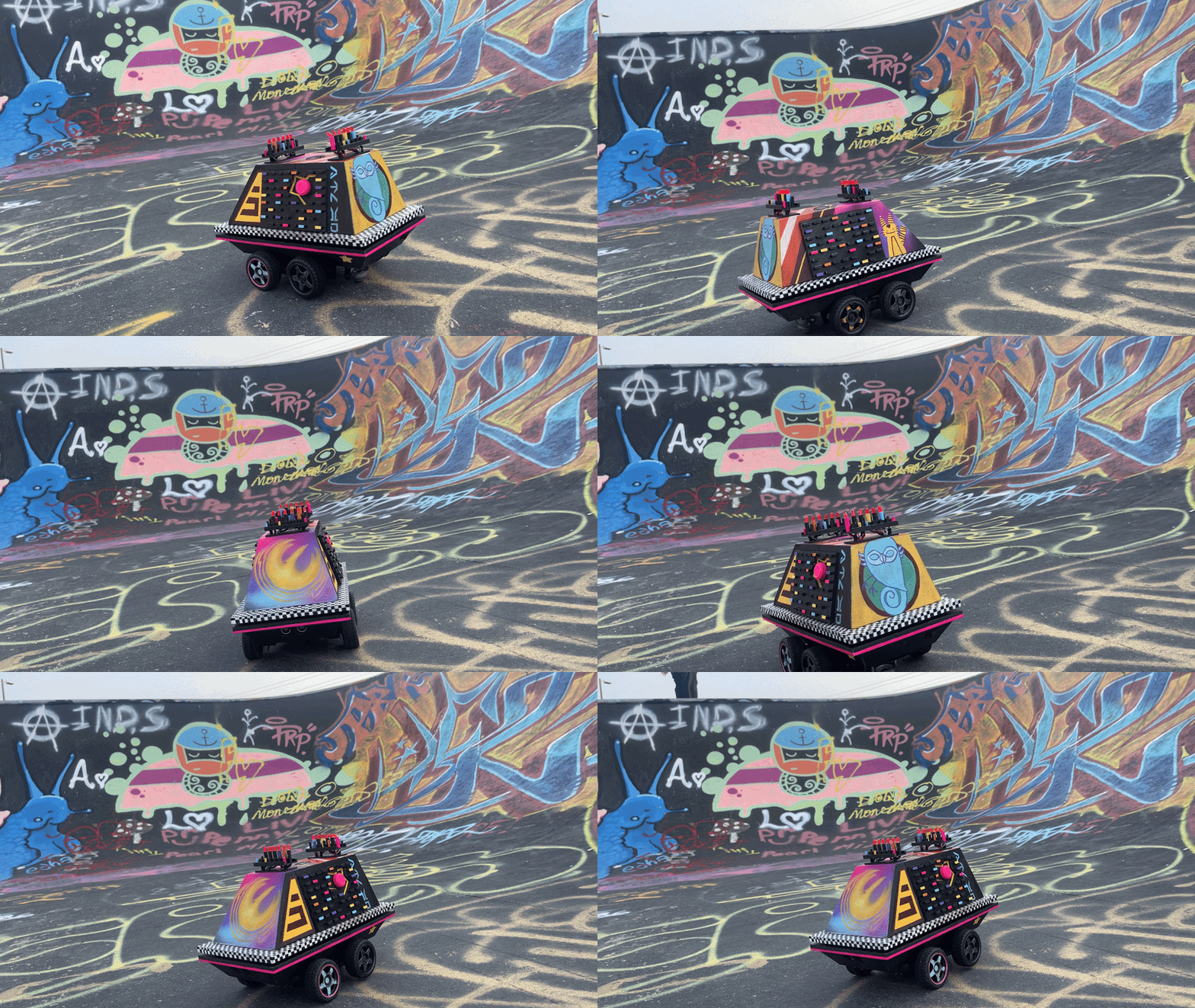
In the vast, expansive lore of the Star Wars universe, few background characters are as iconic—or as unassuming—as the MSE-6, colloquially known as the "Mouse Droid." Often relegated to the role of a metallic, toaster-like janitor scurrying through the corridors of the Death Star, the droid has long been a staple of galactic background design. However, for Canadian maker and engineer Cass, the creator behind the project "Chaos Theory," this humble machine deserved more than just a life of imperial servitude.
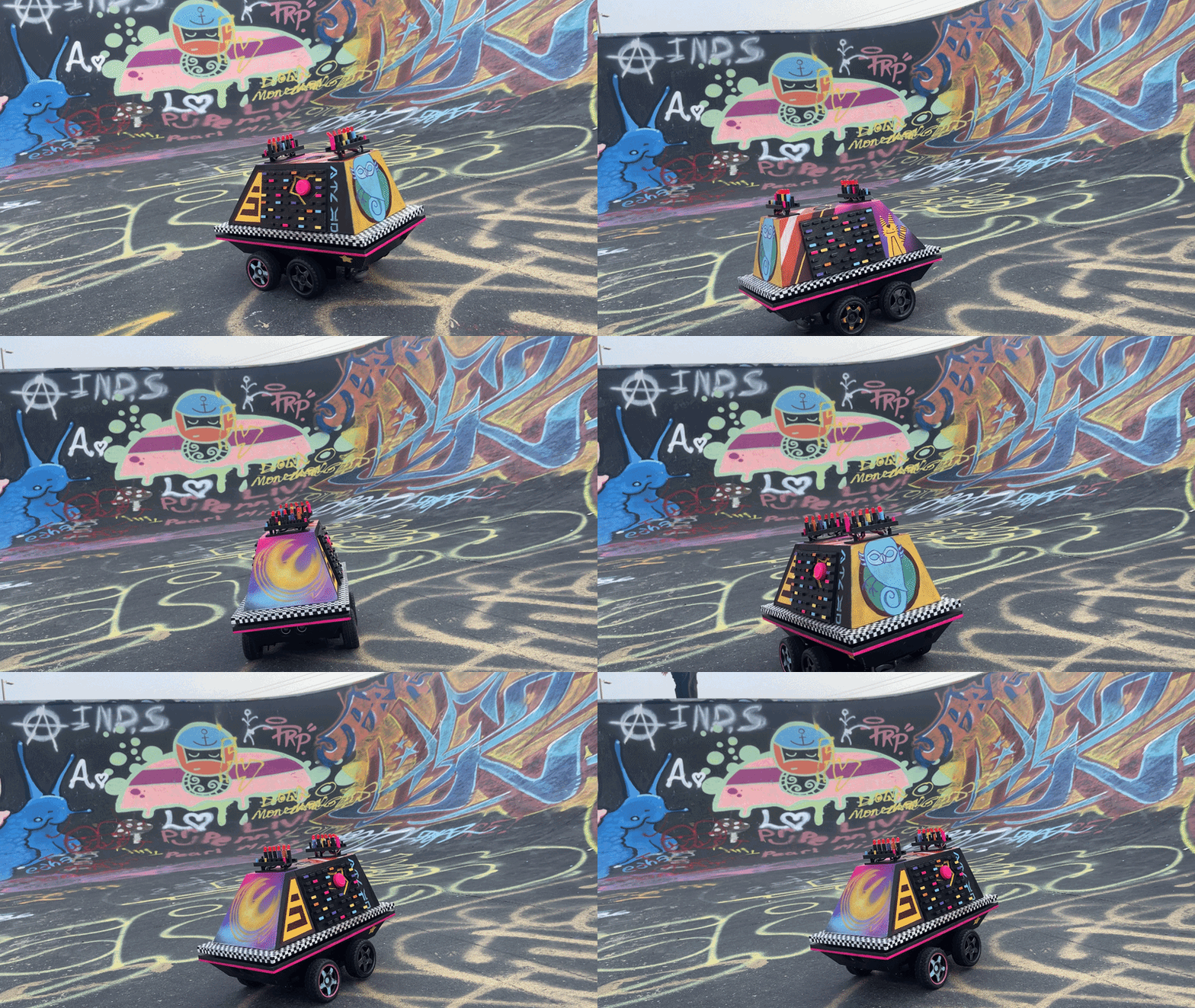
Cass has successfully reimagined the MSE-6, stripping away its rigid, authoritarian programming to transform it into a vibrant, autonomous, graffiti-covered "rebel rave machine." This project, which blends high-level 3D printing, custom autonomous robotics, and creative artistic expression, serves as a testament to the growing trend of makers taking ownership of pop-culture iconography to push the boundaries of hobbyist engineering.
The Genesis of a Rebel Icon
The conceptual framework for the project draws heavy inspiration from Star Wars Rebels, particularly the character Sabine Wren. Known for her Mandalorian heritage and her prolific skills as a graffiti artist, Wren is the quintessential symbol of personal expression within a galaxy oppressed by the Galactic Empire.
"What if an Imperial Mouse Droid got a makeover from Sabine Wren?" This was the central question that propelled Cass to dedicate hundreds of hours to the project. Rather than simply applying a fresh coat of paint to a pre-existing toy or static model, Cass opted for a complete ground-up build. The goal was to create a fully autonomous, functional robot that could navigate its environment, react to obstacles, and, perhaps most importantly, trigger a "party mode" on command.
A Deep Dive into the Engineering Architecture
To achieve the level of mobility and autonomy required for a high-functioning droid, the technical specifications had to be precise. The project relies on an Arduino UNO as its primary brain, providing the computational power necessary to manage sensor input and output commands.
Hardware and Sensory Systems
- The Brain: The Arduino UNO serves as the central processing unit, coordinating the droid’s decision-making logic.
- Audio Integration: A DFPlayer Mini MP3 module is integrated into the system, allowing the droid to produce sound effects or music, essential for its transformation into a "rave machine."
- Navigation: To traverse complex environments, the droid utilizes an ultrasonic distance sensor. This allows it to "feel" its way through rooms, detecting obstacles and pivoting to avoid collisions.
- The Chassis: The structural integrity of the droid is provided by a custom 3D-printed shell. While a flat metal Mecanum chassis was utilized in the early stages as a mounting point for the motors, the final iteration leans heavily into bespoke engineering.
Chronology of the Build: From Concept to Rave
The development of the Mouse Droid was not a linear path but a series of iterative design challenges.
Phase 1: Concept and Prototyping
The initial phase focused on the "Rebel Makeover." Cass studied the aesthetic of the Star Wars universe, aiming to mimic the weathered, personalized look of equipment that has been reclaimed by the Rebel Alliance. This involved meticulous 3D modeling to ensure the shell looked authentic yet stood out as a piece of art.
Phase 2: Chassis Development
Early in the build, Cass utilized a standard metal Mecanum chassis. This provided a "sturdy, reliable foundation" that allowed the motors and drive system to be tested independently of the aesthetic shell. During this stage, the focus was entirely on functionality—ensuring that the robot could move without stripping gears or losing power.
Phase 3: Integration and Programming
Once the chassis was finalized, the internal electronics were integrated. This was a challenging phase that involved coding the Arduino to handle the ultrasonic sensor data. The logic had to be tuned: the droid needed to be "curious" enough to move forward but "cautious" enough to avoid falling down stairs or bumping into furniture.
Phase 4: The "Party Mode" Implementation
The final stage was the addition of the "party button." This required custom code to interrupt the normal navigation routine, play a specific audio file, and engage the motors in a sequence that mimics a dance. This feature solidified the droid’s status as a party machine, marking the final departure from its rigid Imperial origins.
Supporting Data and Technical Insights
Cass’s commitment to "open-source" philosophy is a core component of this project. By documenting the build on platforms like Instructables, she has provided a blueprint for others to replicate the project.
According to technical logs provided by the creator, the shift to 3D printing was motivated by more than just aesthetics. "There is a nice practical benefit to designing everything myself," Cass notes. "It makes the project much more replicable. Someone else with a 3D printer can take the files and build their own version without having to track down a particular RC car or adapt an existing platform to fit."

The use of heat-set inserts represents a significant milestone in Cass’s personal engineering growth. Heat-set inserts—small metal threaded components that are melted into 3D-printed parts—provide a robust mounting point for screws, preventing the common issue of plastic threads stripping over time. This technical refinement ensures that the droid is durable enough to withstand the wear and tear of autonomous operation.
Official Responses and Community Impact
The project has garnered significant attention within the maker community, specifically among fans of robotics and Star Wars. The reception has been largely positive, with many praising the blend of artistic flair and technical competence.
"I just really enjoy building things from scratch!" Cass stated in a recent discussion. "I enjoy pushing my skills wherever I can." This sentiment resonates deeply with the community at Make: Magazine, where the project was featured. The discourse surrounding the build highlights a shift in hobbyist robotics: it is no longer enough for a robot to simply function; it must possess character, narrative, and a unique identity.
The project has also sparked interest in the potential for "autonomous art." By combining sensors with creative outputs (like the DFPlayer audio), makers are exploring how machines can interact with their environment in ways that are not merely utility-driven, but expressive.
The Implications of Autonomous Hobbyist Robotics
The "Rebel Mouse Droid" is more than just a fun weekend project; it represents the democratization of advanced robotics. A decade ago, creating an autonomous, sensor-equipped vehicle required specialized knowledge of industrial microcontrollers and expensive, proprietary hardware. Today, an Arduino UNO and a desktop 3D printer are all that is required to bring a complex machine to life.
The Rise of Replicable Design
Cass’s emphasis on replicability is a critical takeaway. By providing the CAD files and the code, she effectively lowered the barrier to entry for other enthusiasts. This "open-source" ethos is driving the next wave of DIY robotics, where a single successful prototype can lead to hundreds of variations across the globe.

Personalization vs. Standardization
The project highlights a philosophical battle inherent in the Star Wars universe—the struggle between the rigid standardization of the Empire and the messy, colorful individuality of the Rebellion. By taking a piece of "Imperial hardware" and customizing it, the maker is participating in a symbolic act of liberation. In the real world, this translates to the maker movement’s rejection of "black box" consumer technology, favoring devices that can be opened, repaired, and redesigned by the end-user.
Conclusion: A New Standard for Fan Projects
As the maker movement continues to mature, projects like the Rebel Mouse Droid will likely become the gold standard for fan-made props. We are moving away from an era of static, shelf-bound replicas toward a future where "living" props—robots that can interact, move, and play—are the norm.
For those inspired to follow in Cass’s footsteps, the path is clearly laid out. The full instructions, including the 3D-printing files and the Arduino code, are available for public use. Whether you are a fan of Star Wars or simply an enthusiast of autonomous robotics, this project offers a perfect entry point into the world of creative engineering.
As the Mouse Droid continues to patrol its new, rave-filled territory, it serves as a reminder that with enough determination, a soldering iron, and a 3D printer, anyone can turn a piece of cold, Imperial machinery into a beacon of creative rebellion.