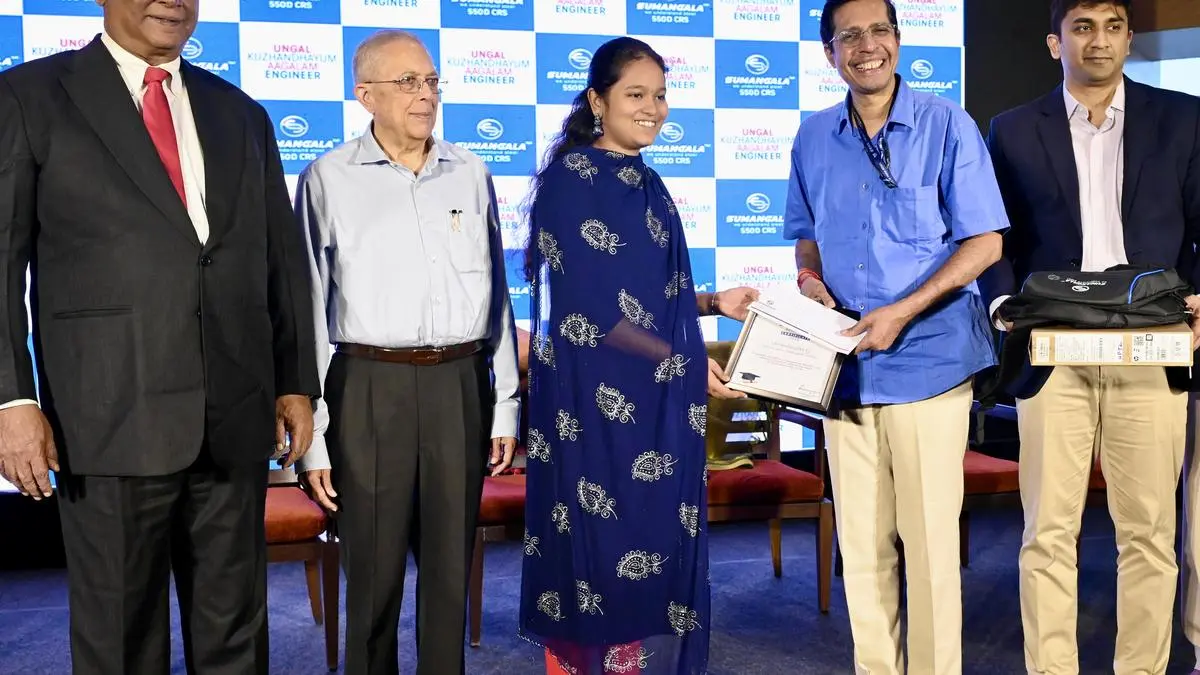
CHENNAI – In a significant move to strengthen the foundational pillars of India’s human capital, Chennai-based Sumangala Steel has reinforced its commitment to social equity through its flagship corporate social responsibility (CSR) program, the Sumangala Scholarship. The initiative, which provides comprehensive financial support to the children of construction workers, was celebrated at a recent event in Chennai, drawing attention to the critical role of rural outreach in achieving India’s national education targets.
The event, which saw the induction of the fourth cohort of scholars, underscored a growing corporate trend toward "impact-based philanthropy," where the focus shifts from general charitable donations to targeted investments in human potential.
The Core Mandate: Education as a National Imperative
The primary objective of the Sumangala Scholarship is to dismantle the financial barriers that often prevent the children of construction workers—the very individuals who build the nation’s infrastructure—from accessing quality technical and higher education.
"Villages are the symbol of India," remarked V. Kamakoti, Director of the Indian Institute of Technology (IIT) Madras, while addressing the gathering. His speech resonated with the urgency of inclusive growth. Dr. Kamakoti noted that for India to realize its ambitious goal of raising the Gross Enrollment Ratio (GER) in higher education to 50 percent by 2035, the country must look beyond urban centers.
"Scaling education and upskilling the nation’s population requires a robust outreach strategy that penetrates the deepest rural pockets," he emphasized. Dr. Kamakoti urged the scholarship recipients to become ambassadors of education in their own communities, proposing a "multiplier effect" model where each beneficiary takes the responsibility of mentoring and guiding at least two other students toward available financial aid resources.
Chronology of an Impactful Initiative
The Sumangala Scholarship program has evolved steadily over the past four years, moving from a nascent outreach effort to a structured pipeline of support for engineering students.
- The Genesis: Recognizing the immense struggle faced by families in the construction sector, the management of Sumangala Steel identified education as the most effective tool for long-term socio-economic mobility.
- The Pilot Phase: The initial launch focused on identifying meritorious students from families with limited household incomes, establishing the criteria for financial eligibility.
- Expansion and Stabilization: Over the next three years, the program grew in volume, consistently identifying students across various engineering disciplines.
- The Current Milestone: October 2024 marked a significant turning point. With the induction of the fourth batch, the scholarship now provides continuous, year-on-year support to students across all four years of their engineering curriculum for the first time.
This continuity is vital, as many students often drop out in their second or third years due to mounting financial pressures, even if their tuition is partially covered. By ensuring four-year coverage, Sumangala Steel has effectively "de-risked" the academic journey for its scholars.
Supporting Data and Financial Framework
The demographics of the scholarship recipients highlight the specific socioeconomic gaps the program seeks to bridge. The 20 students selected for the latest cohort all hail from households with an annual income of less than ₹6 lakh—a segment that often falls into the "missing middle," where families earn too much for some government aid but too little to comfortably afford private engineering tuition.
The support package includes:
- Tuition Coverage: Up to ₹1 lakh per academic year, covering the bulk of standard engineering fees.
- Technological Access: Each scholar is provided with a free laptop, ensuring they are equipped for the digital-first demands of modern engineering education.
- Cohort Mentorship: The program now supports 50 "Sumangala Scholars" from previous editions, creating a peer-to-peer network that fosters professional development and career guidance.
The success of the program is best illustrated by the fact that the first batch of beneficiaries is expected to graduate this year. This graduation will serve as the ultimate test of the program’s efficacy, providing the first set of data points regarding the career trajectory of these students in the professional engineering sector.
Official Perspectives: CSR as a Catalyst for Change
The event featured prominent industry leaders who framed the scholarship not merely as a donation, but as a strategic investment in the nation’s future.

The Perspective from N. Ravi
N. Ravi, Director of Kasturi & Sons Ltd and The Hindu group, provided a broader macroeconomic perspective. He lauded the initiative, stating that financing education is arguably the most "worthwhile" form of CSR.
"Enabling youth to pursue a course that may otherwise be beyond their reach does more than just help an individual," Mr. Ravi noted. "It provides them with advanced skill sets, equips them for high-value jobs, and ultimately raises the overall skill floor of the entire country." His comments reflect a growing consensus in corporate India that the return on investment (ROI) for educational CSR is measured in national competitiveness and socioeconomic stability.
The Vision of Rajendran Sabanayagam
Rajendran Sabanayagam, Chairman of Sumangala Steel, reflected on the emotional and logistical weight of the program’s expansion. "This year is even more special," he stated. "As we hand over these scholarships to the fourth batch, we are supporting students in all four years of their engineering education for the first time. It is a milestone that guarantees our commitment to these students is unbroken until they cross the finish line of graduation."
Implications: Scaling the Model
The success of the Sumangala Scholarship program raises critical questions about the future of private-sector involvement in Indian education.
1. The Multiplier Effect
Dr. Kamakoti’s call for a "multiplier effect" is a blueprint for scaling. In a country of 1.4 billion people, the state cannot be the sole provider of resources. If every corporate-sponsored student acts as a bridge for others in their village, the administrative burden on central and state scholarship boards is reduced, and information asymmetry—a major barrier for rural students—is eliminated.
2. Industry-Academia Synergy
The involvement of institutions like IIT Madras in CSR events indicates a shift in how elite academic institutions view their social responsibility. By aligning with corporate entities, universities can ensure that their rigorous research and pedagogical standards are accessible to students who have the merit but lack the means.
3. Sustainability of the Construction Sector
For a company like Sumangala Steel, this initiative serves as a profound acknowledgement of the labor force that drives the construction industry. By investing in the children of these workers, the company is not only performing a social good but also fostering a pipeline of future engineers who understand the grassroots realities of the infrastructure sector.
Conclusion: A Blueprint for the Future
As the first batch of Sumangala Scholars prepares to enter the workforce, the focus will shift from access to outcomes. Will these students find gainful employment? How will they contribute to their communities?
The early indicators are promising. By combining financial support, technological access, and the encouragement of a mentorship network, Sumangala Steel has created a model that is both scalable and sustainable. As Dr. Kamakoti aptly summarized, the goal is not just to educate a student, but to ignite a chain reaction of empowerment that begins in the village and ripples across the nation.
For India, a country with one of the youngest populations in the world, the Sumangala Scholarship is more than a CSR initiative; it is a vital step toward ensuring that the dream of higher education is a reality for every ambitious student, regardless of their family’s financial background. As the 2024 academic year progresses, the progress of these 50 scholars will be watched closely, serving as a beacon for other corporate houses to integrate similar educational investments into their own social mandates.